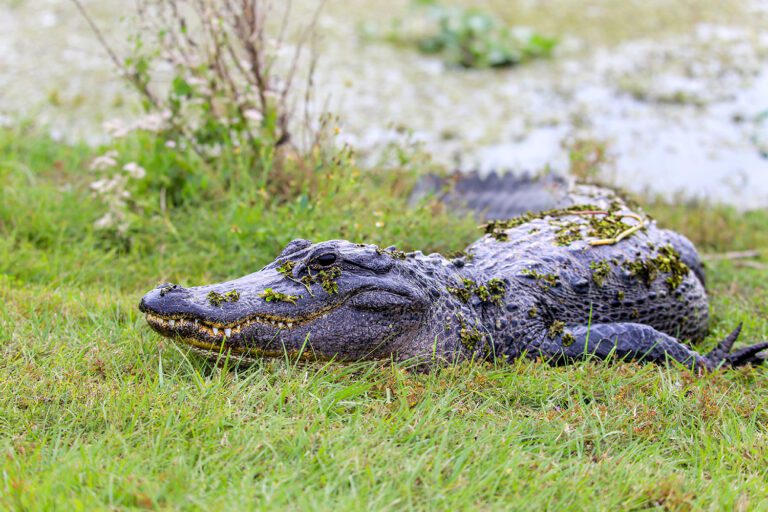
In 1938, Alabama made a quiet but momentous decision: it became the first state in the nation to legally protect the American alligator—decades before the creature would need federal rescue. That early move was just the beginning of what has become one of America's most compelling wildlife recovery saga, unfolding across Alabama's forests and waterways.
The Endangered Species Act, signed into law in 1973, gave America's states and federal agencies a powerful tool to bring species back from the brink. But Alabama didn't wait for Washington to act. Its foresight on alligators, combined with later efforts to restore bald eagles and protect countless other species, has made the state a quiet powerhouse in conservation. Known as America's Amazon for its extraordinary biodiversity, Alabama now faces the weight of that responsibility—it ranks third nationally in the number of endangered and threatened species, behind only Hawaii and California.
The American alligator's story shows what patience and commitment can achieve. "The American alligator faced near extinction in the early 1900s," said Wesley Anderson, an Alabama Extension wildlife specialist at Auburn University. "Thanks to decades of conservation efforts, alligator populations in Alabama are now thriving to the point where we have a regulated hunting season." By 1987, the species had recovered so dramatically that the federal government removed it from the endangered species list, though it remains federally protected as threatened because it resembles the still-endangered American crocodile.
The bald eagle's return is perhaps even more striking. For 40 years—from 1949 to 1991—bald eagles did not successfully nest anywhere in Alabama. Across the nation, the primary culprit was DDT, an insecticide that devastated bird populations by weakening eggshells. When the EPA banned DDT in 1972, the door opened for restoration. Beginning in 1984, the Alabama Department of Conservation and Natural Resources launched an aggressive reintroduction program, releasing 91 young eagles between 1985 and 1991 alone. Today, that work has borne remarkable fruit: more than 500 eagles have been released into Alabama's wild, and the state now hosts more than 100 active eagle nests.
The cultural impact runs as deep as the ecological one. "The recovery of the bald eagle is one of the most significant comeback stories in our state's history," Anderson noted. "We went from 40 years of no resident eagles to this year celebrating the 40th annual Eagle Awareness Weekend at Lake Guntersville State Park. That is a great example of how investments in conservation can go beyond just the environmental aspects to impact our social and cultural identities."
What makes Alabama's story particularly hopeful is that it shows recovery is not a distant dream. These aren't theoretical successes buried in academic journals—they're eagles nesting in parks where families gather, alligators thriving in waterways where people live. The Endangered Species Act's core philosophy, Anderson emphasizes, is never meant to keep species listed forever. Instead, the law mandates recovery plans with a clear goal: returning management to states once species have bounced back.
Yet the work remains unfinished. Many of Alabama's native plants and animals still face serious conservation risks. But the alligator and eagle prove that when people commit to restoration—combining legal protection, habitat work, and long-term investment—nature answers. Alabama has already written two chapters of an American comeback story. The question now is how many more it will add.