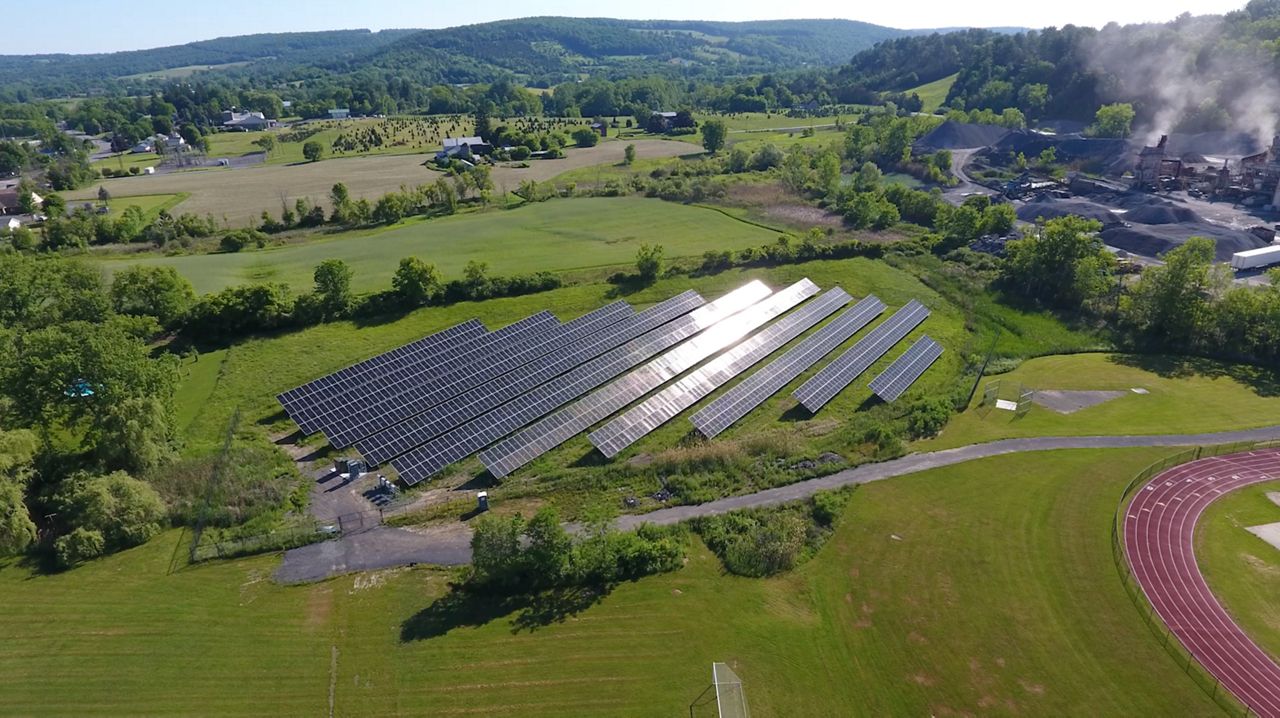
Dave Blanchard drives past the one-acre glow of solar panels behind Schoharie Central School District, a quiet field that now generates not just power, but $19,000 a month in savings—money once lost to electricity bills and now redirected to classrooms. What was once a hayfield on the edge of campus has become a lifeline for a rural district balancing tight budgets and big ambitions. In a state where school energy costs can strain local taxes, Schoharie’s transformation is part of a growing movement: turning unused land into clean energy assets. Across New York, districts are reimagining idle spaces—beside bus garages, along athletic fields, on forgotten plots—as potential solar sites, driven by both fiscal sense and student-led environmental passion.
The shift isn’t just about sustainability—it’s about survival. For Schoharie, the $2.4 million solar project was funded largely through state aid after a voter-approved capital vote, a process that took over a decade and required approvals from the New York State Energy Research and Development Authority and coordination with National Grid. But the payoff is already clear. “The solar field will pay for our power, which right now our energy is about $19,000 a month,” Blanchard says. “Now that’s getting paid for entirely by the solar field.” That’s not just a cost cut—it’s a reinvestment in students, shielding the district from future tax hikes or state funding cuts.
The momentum is spreading. Brian Fessler, chief advocacy officer for the New York State School Boards Association, notes that student advocacy has played a key role in pushing districts toward solar. “A lot of that is coming from our students,” he says, highlighting how younger generations are reshaping institutional priorities. From small rural towns to suburban campuses, schools are identifying underutilized spaces as ideal for solar development. A bus garage buffer zone, an overgrown field—these are no longer wasted land, but opportunities.
The impact extends beyond the meter. The Schoharie array is expected to power the district for at least 20 years, offering long-term financial stability in an era of uncertainty. And as more districts eye similar projects, the School Boards Association is working to reduce barriers—streamlining approvals, advocating for state incentives, and helping schools navigate the upfront costs that can deter action.
“This kind of insulates us from further taxation locally,” Blanchard says, “or if there are state cuts to the budget.” In a world where education funding often feels like a zero-sum game, Schoharie’s solar field is proof that creativity can generate both energy and equity. As sunlight hits the panels each morning, it doesn’t just spark electrons—it sparks possibility.