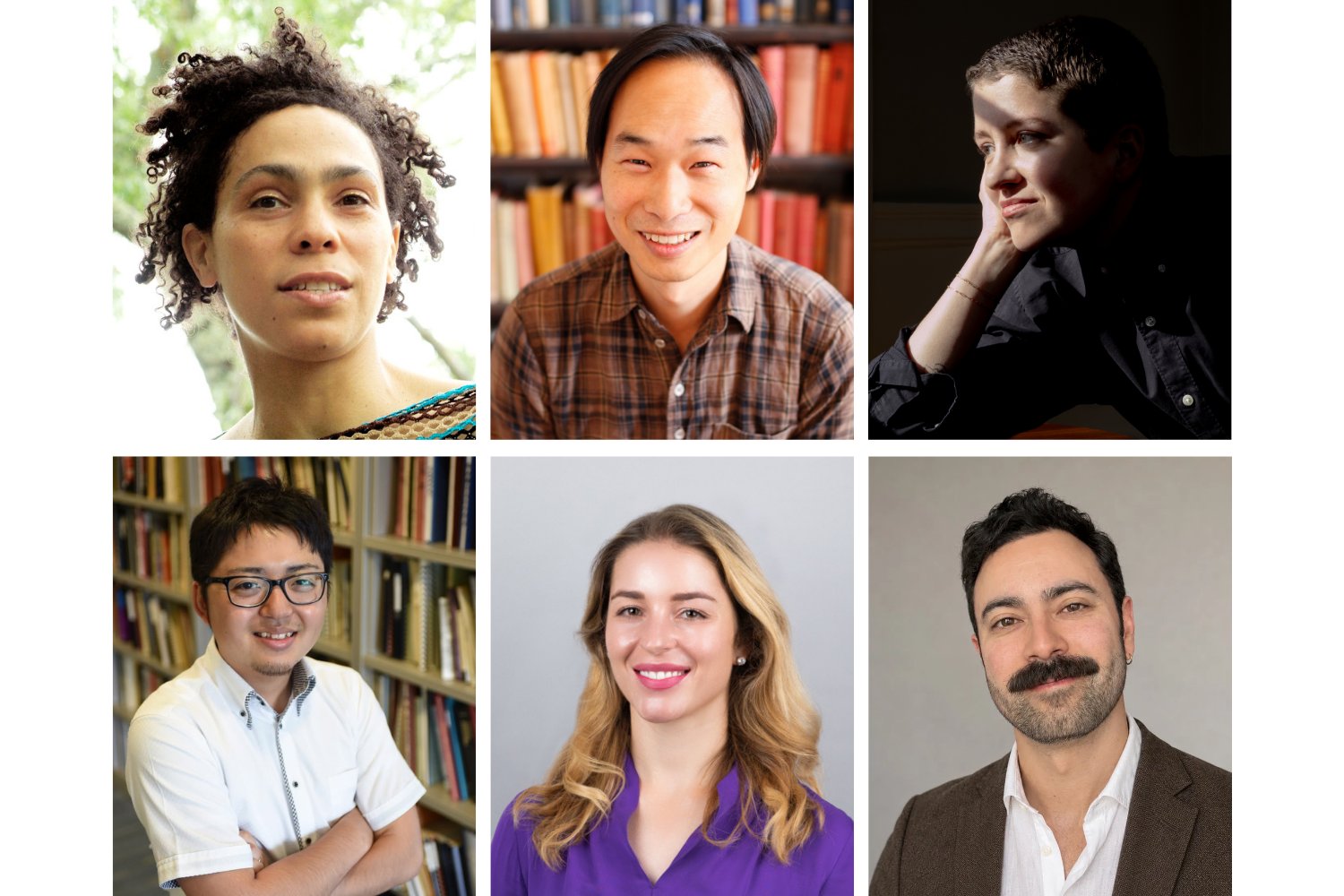
When Grisha Coleman first started exploring what she calls "the tensions between our physiological, technological, and ecological systems," she probably didn't imagine she'd one day join MIT. But that's exactly where she and five other remarkable thinkers are headed in 2026.
MIT's School of Humanities, Arts, and Social Sciences (SHASS), led by Dean Agustín Rayo, just announced six new faculty members bringing expertise in everything from medieval music to artificial intelligence. It's a lineup that reads like a who's-who of boundary-pushing scholarship.
Coleman, who arrives from Northeastern University, has spent her career studying how human movement connects to the machines we build and the places we inhabit. Her work has earned serious backing from some of the biggest names in arts funding: the Doris Duke Foundation, Creative Capital, the National Endowment for the Arts, and even the storied MacDowell artist colony. She's already teaching in the Music and Theater Arts Section.
Then there's Claire Luchette, a novelist who won the prestigious Whiting Award and was named a National Book Foundation "5 Under 35" honoree. Luchette's debut novel "Agatha of Little Neon" turned heads in literary circles, and she already has a second novel called "Swans" and a story collection called "Big Whoop" on the way. She'll join the Comparative Media Studies program as an assistant professor.
Lindsey Raymond brings a different kind of firepower. A fresh MIT PhD graduate (class of 2024), she's a Schmidt Sciences AI2050 Early Career Fellow studying how new technologies reshape jobs and competition. Before returning to Cambridge, she spent two years as a staff economist at the White House Council of Economic Advisers and did postdoctoral work at Microsoft Research.
Tung-Hui Hu, a poet and digital media scholar, has written five books including the recent "Digital Lethargy: Dispatches from an Age of Disconnection." His research on data centers, AI, and burnout has appeared in WIRED and even caught the attention of BBC Radio 4.
Linguist Shota Momma joins from UMass Amherst, specializing in how the brain produces sentences. And Makoto Harris Takao, who plays the viola da gamba (a seven-stringed ancestor of the violin), studies what Japanese Catholicism sounded like in the 1500s.
Together, these six scholars represent a remarkable range of human inquiry, from ancient religious music to the future of work in an AI-powered world.