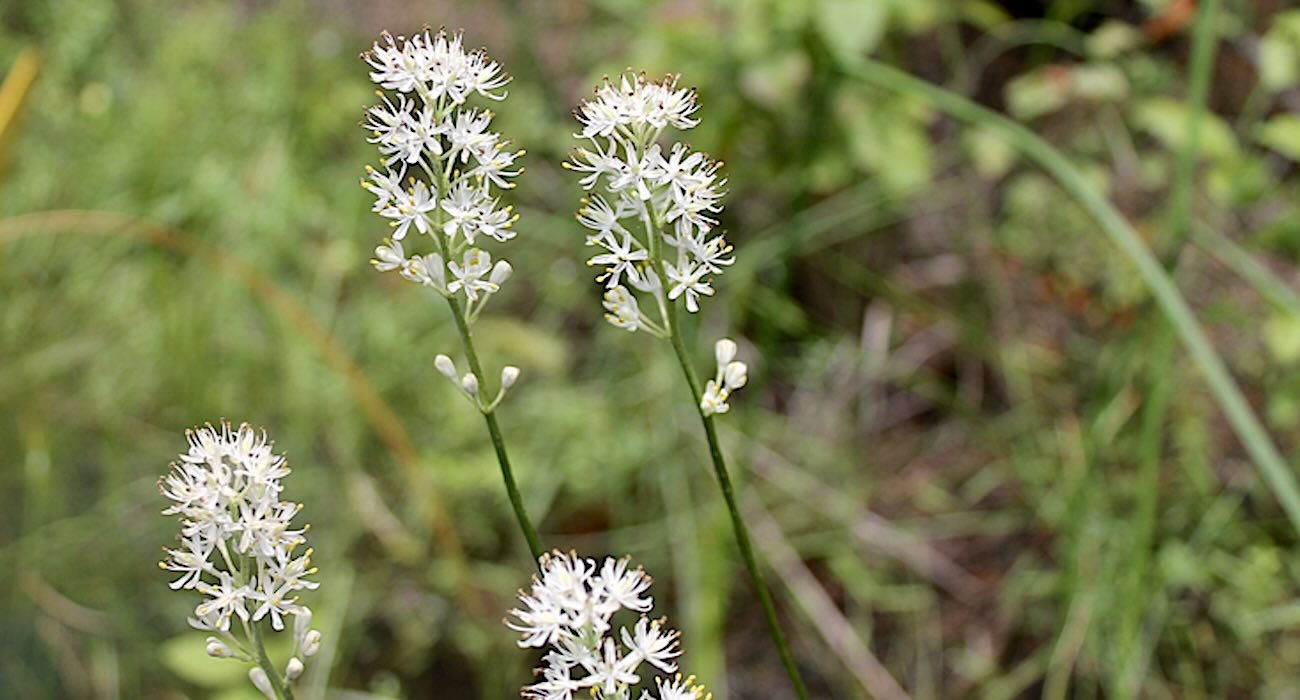
After more than a decade of genetic detective work, Temple University researcher Sasha Eisenman has unveiled a wildflower that has hidden in plain sight across New Jersey's Pine Barrens—a flower that belongs to no other species anywhere on Earth. The plant, now formally named Triantha × novacaesariensis, was previously mistaken for a species typically found hundreds of miles south, a misidentification that delayed its recognition and protection by years.
The discovery matters because it reveals that even in one of the most studied regions of North America, nature still holds surprises. The Pine Barrens National Reserve—a landscape stretching nearly a million acres across southern New Jersey—harbors rare habitats and plant life so distinctive that it ranks among the region's ecological treasures. Yet within this well-examined terrain, a unique wildflower flourished unrecognized, tucked between clusters of thin, strap-like leaves and crowned with delicate white six-petaled flowers that rise above the surrounding grasses.
For years, botanists classified the plant as Triantha racemosa, or suspected it might be a hybrid of that species and Triantha glutinosa. Eisenman, an associate professor in horticulture, set out to test this assumption. He combined genetic analysis, fieldwork, and historical plant records, studying preserved samples from herbarium collections across the US and Canada. He compared museum specimens with fresh field samples from New Jersey and related populations spanning Maine, New York, New Brunswick, Alabama, Georgia, and Florida. The evidence proved definitive: all three New Jersey plants carried a unique genetic signature and displayed distinct physical traits that separated them entirely from their closest relatives.
What struck Eisenman most was the isolation. The nearest known populations of T. glutinosa and T. racemosa live hundreds of miles away. His research suggests that these New Jersey plants originated thousands of years ago when the two southern species interbred, yet the resulting population established itself independently and has remained stable ever since. "It's been a stable population or group of populations for a long time," Eisenman explained. "It's not just a chance accident."
The formal identification, published in the journal Phytotaxa, transforms more than taxonomy—it opens a pathway to real protection. A plant without a name lacks legal standing and conservation priority. Once officially recognized as unique, land managers and researchers gain a clear mandate to steward it carefully. Eisenman emphasized this shift: "It's really important to have a name on a plant in order for it to be conserved and protected. Until it's been identified as unique and named with a unique identification, it doesn't have as much opportunity for protection and stewardship."
The work drew on a decade-long network of collaboration—herbarium curators, conservation partners, and researchers across the US and Canada pooled their expertise. That partnership reflects both scientific rigor and genuine commitment to understanding our world's botanical diversity.
For New Jersey, the next chapter is now unfolding: determining how best to protect this flower that exists nowhere else. In a region already celebrated for its ecological distinctiveness, this newly named wildflower represents a powerful reminder that discovery, and the protection it enables, can happen anywhere—if we look closely enough.