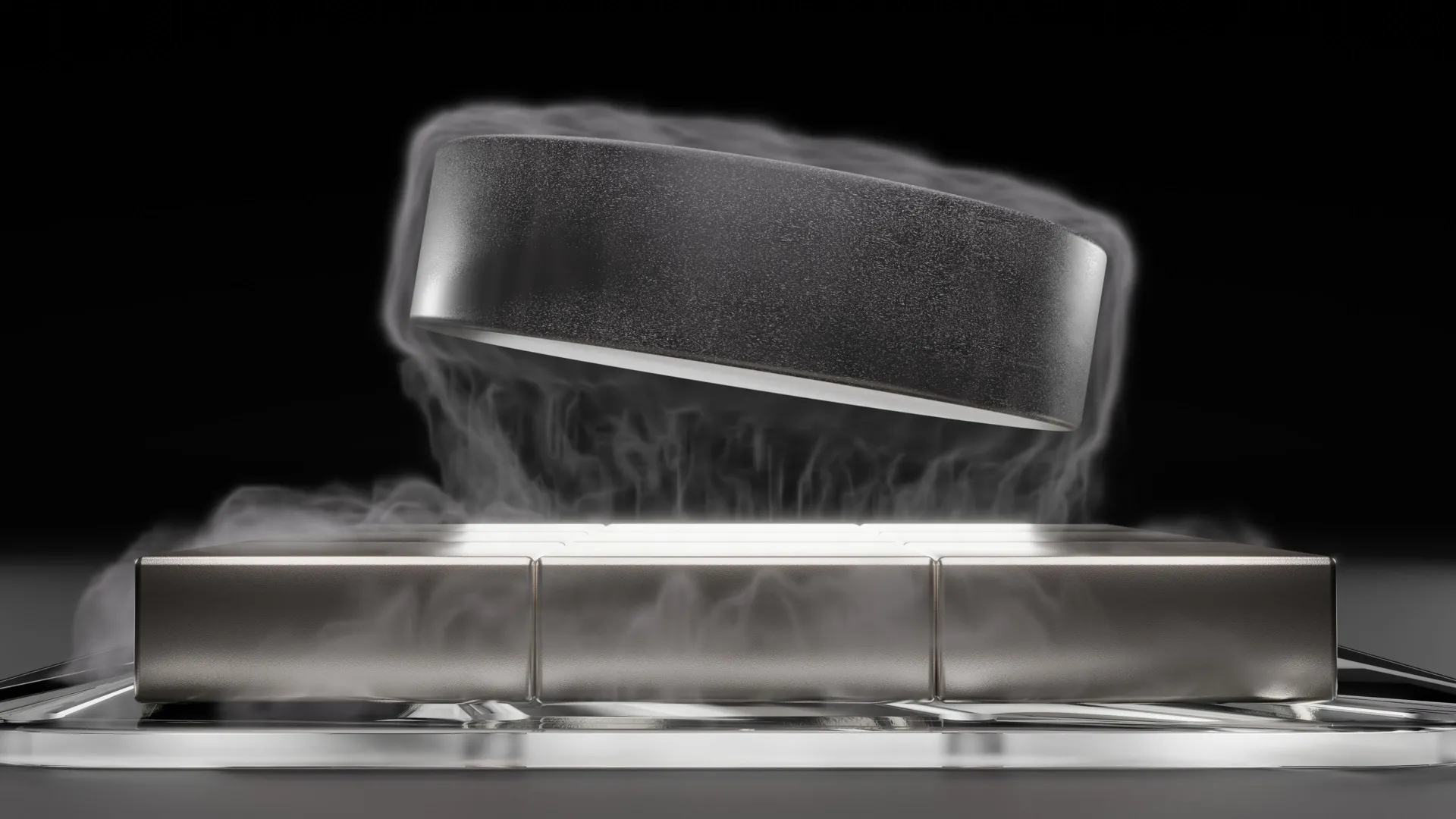
At the Texas Center for Superconductivity in Houston, physicists Ching-Wu Chu and Liangzi Deng have shattered a three-decade-old barrier, achieving zero-resistance electricity at 151 Kelvin—the highest temperature ever recorded for a superconductor operating at normal atmospheric pressure. The discovery, published in the Proceedings of the National Academy of Sciences, marks a watershed moment in a quest that has consumed the world's scientists for over a century: the pursuit of superconductivity at room temperature.
To understand why this matters, consider the hidden cost of every lightbulb you turn on. When electricity flows through power grids, about 8% of it dissipates as heat through resistance—a staggering waste that costs billions of dollars annually and unnecessarily strains the environment. Superconductors, materials that allow electricity to flow with absolutely zero resistance, could eliminate that waste entirely. Beyond the grid, they could revolutionize magnetic resonance imaging machines that hospitals rely on for diagnosis, unlock new possibilities in fusion energy research, and accelerate quantum computing and ultrafast electronics.
The problem has always been temperature. Most superconductors only function at extremely cold temperatures, requiring expensive and complex cooling systems that make them impractical for widespread use. The previous record, set in 1993, was held by a mercury-based copper-oxide ceramic called Hg1223, which achieved superconductivity at 133 Kelvin—or about minus 140 degrees Celsius. That material had held the ambient-pressure crown for more than 30 years. Chu himself had set a landmark record in 1987 when he and collaborators discovered that a material called YBCO could become superconducting at 93 Kelvin, igniting a global race to develop higher-temperature superconductors that continues to this day.
The breakthrough relies on a technique called pressure quenching, a method borrowed from other fields like diamond synthesis but relatively new to superconductivity research. Researchers subjected a material to extremely high pressure, which enhanced its superconducting properties and elevated its transition temperature. Crucially, while the material remained under that crushing pressure, it was cooled to a precisely chosen temperature before the pressure was suddenly released. That rapid decompression effectively froze the enhanced properties in place, allowing the material to maintain its superconducting state without the constant pressure support—a critical step toward practical applications.
The gap between this new record and room-temperature superconductivity at ambient pressure remains substantial: about 140 degrees Celsius separate 151 Kelvin from the roughly 300 Kelvin of everyday room temperature. Yet researchers see the achievement as a crucial milestone on that path. A companion perspective paper published in PNAS outlines six different approaches that could push superconducting temperatures even higher, with pressure quenching among the most promising.
"Room-temperature superconductivity has been seen as a 'holy grail' by scientists for over a century," Chu reflected. The work was supported by Intellectual Ventures, the state of Texas through TcSUH, and several foundations, reflecting the collaborative spirit that superconductivity research demands. With each incremental advance, the dream of a world where electrical systems operate with perfect efficiency grows less distant—and the scale of potential benefits expands.