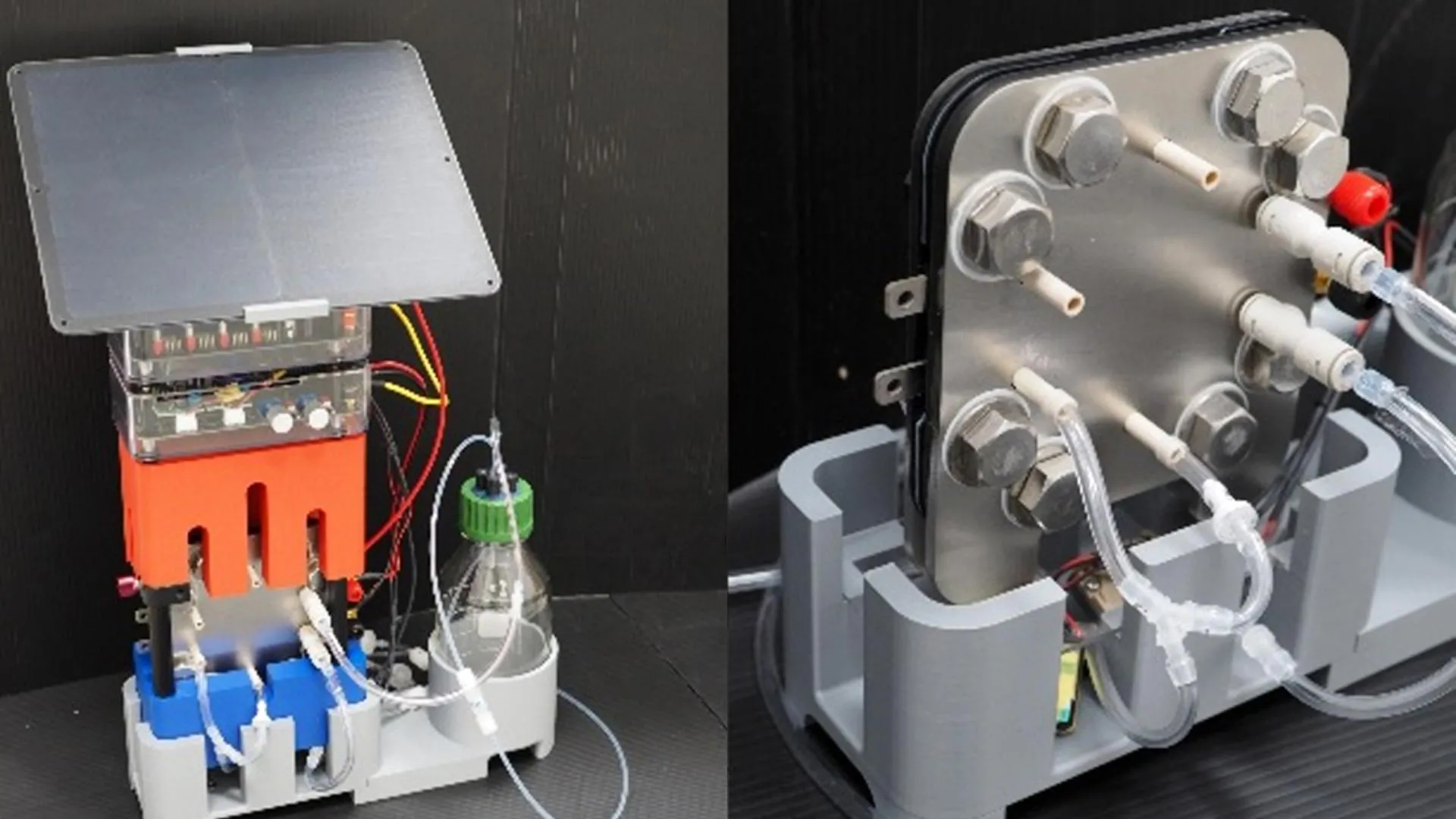
On a sunlit afternoon in Osaka, a small electrolyzer hummed quietly, transforming nothing but water, carbon dioxide, and sunshine into formic acid—a chemical that can power everything from miniature displays to future energy systems, all without a single battery in sight.
Researchers at Osaka Metropolitan University have achieved something that could reshape how we think about solar energy storage: they've created an artificial photosynthesis system that not only converts sunlight into fuel more reliably than before, but does so with remarkable elegance by eliminating the complex battery infrastructure that has long weighed down such technologies.
The challenge that artificial photosynthesis systems have faced for years is deceptively simple: sunlight is inconsistent. Clouds pass. Shadows fall. The sun moves across the sky. To maintain peak efficiency through these natural fluctuations, conventional systems have relied on Maximum Power Point Tracking—a sophisticated electronic method that continuously adjusts voltage and current to squeeze the most energy possible from solar cells. But that system demands batteries, converters, and additional electronics to smooth the erratic flow of power, adding both cost and complexity to the entire apparatus.
Associate Professor Yasuo Matsubara and Professor Yutaka Amao, working alongside collaborators at Iida Group Holdings Co., Ltd at the Research Center for Artificial Photosynthesis, took a radically different approach. Rather than fighting the sun's unpredictability with external electronics, they redesigned the electrolyzer itself—the heart of the system—to self-regulate. A specially engineered solid electrolyte built directly into the device now performs the balancing act automatically.
The physics behind it is elegant. As sunlight increases and the electrolyzer naturally warms, the system's electrical resistance drops, allowing electricity to flow more freely through the device. This isn't programmed behavior requiring computers or chips; it's simply what happens when the materials are shaped just right. "As sunlight increases, the electrolyzer naturally heats up," Professor Amao explained. "The system is designed so that this warming causes the electrical resistance to drop, allowing electricity to flow more freely." The result is that fuel production remains stable throughout the day while the system essentially runs itself—no batteries, no costly external components, no complex control equipment needed.
When the team tested their creation under real outdoor conditions, the proof was undeniable. The system consistently produced formic acid as sunlight levels fluctuated throughout the day. The work carried enough promise that it was showcased at the Osaka Kansai Expo 2025, where it successfully generated enough formic acid to power a miniature diorama, offering a tangible glimpse of how this technology could one day charge devices in our homes.
Formic acid itself is a remarkable bridge between present and future—it's simultaneously a practical fuel and an elegant form of energy storage, allowing the sun's power to be captured in chemical form and used whenever needed. The significance of this breakthrough lies not in inventing something entirely new, but in making the path toward sustainable energy systems simpler, cheaper, and more reliable. With fewer parts to maintain, fewer batteries to replace, and lower costs to overcome, artificial photosynthesis moves closer to practical reality. The findings, published in EES Solar, suggest that the future of solar energy storage may be less about fighting nature's variability and more about designing systems smart enough to flow with it.