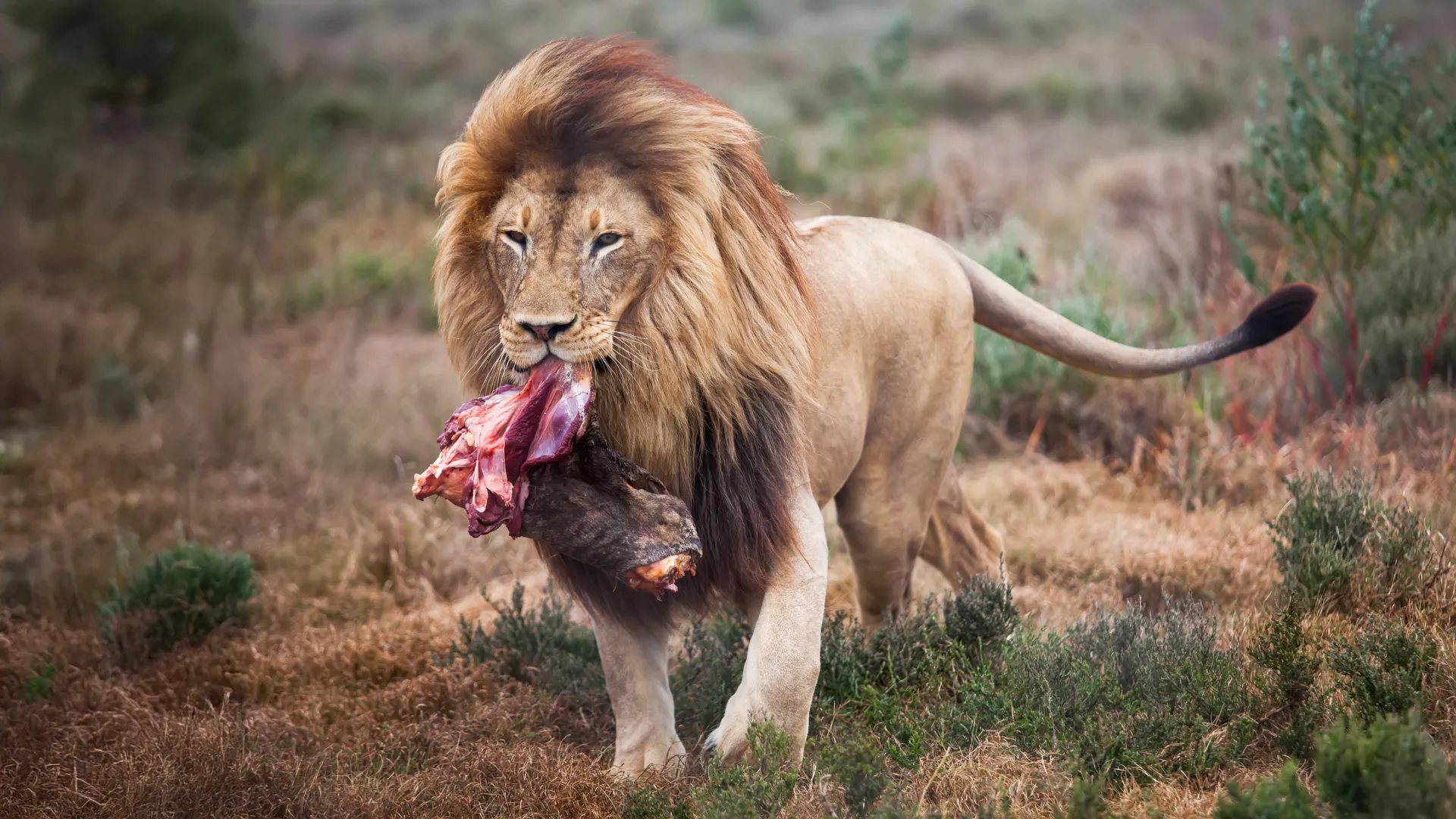
Lesia Hryhorenko watched as three massive African lions at Monarto Safari Park in South Australia tore into a whole kangaroo carcass, their powerful jaws ripping through muscle and sinew. For nearly three times longer than usual, the big cats were fully engaged—eating, pulling, pacing around their food. This wasn’t just a meal. It was a window into their wild instincts.
Most zoo animals are fed the same way every day: a predictable portion at a set time. But wild lions don’t live like that. They feast after a successful hunt, then fast for days. Researchers from the University of Adelaide and Monarto Safari Park wanted to see what would happen if zoo lions ate more like wild ones. So they introduced a new routine: every nine days, the lions got about 200 kilograms of whole animal carcasses, left out for up to three days, followed by a fasting period.
Over three months, eight infrared cameras recorded the lions 24 hours a day—the most detailed behavioral dataset of its kind for lions in human care. The results were clear. On carcass days, the lions spent almost three times longer eating. Afterward, they rested deeply, lying down more and moving less. As the fasting days passed, their activity slowly rose again, mirroring the natural rhythm of wild lion life.
"Wild lions don't eat at the same time every day. They experience natural periods of feasting and fasting depending on hunting success," said Hryhorenko, lead author and researcher at the University of Adelaide’s School of Animal and Veterinary Sciences.
The carcasses didn’t just change how the lions ate—they unlocked natural behaviors. Tearing, chewing, and manipulating food over hours gave them mental and physical stimulation missing from pre-cut meals. And despite concerns, there was no increase in aggression. The social group stayed stable.
Even the lions’ pacing—a behavior sometimes linked to stress—didn’t spike because of hunger. Instead, it increased around keeper routines, like when staff arrived or moved the animals. That suggests the lions weren’t anxious from fasting, but responsive to familiar daily cues.
Co-author Associate Professor Alexandra Whittaker emphasized that this study looked beyond the first hour after feeding. "Our results show that feeding schedules can influence behavior for days afterwards," she said. Most zoo studies only watch animals right after meals, but this one tracked the full cycle—feast, rest, fast, repeat.
The findings offer a simple but powerful idea: small changes in how we feed zoo animals can bring out their wild nature. Future research could pair behavior with health markers like hormone levels to see how these rhythms affect overall well-being. For now, one thing is clear—when lions eat like lions, they act like lions.