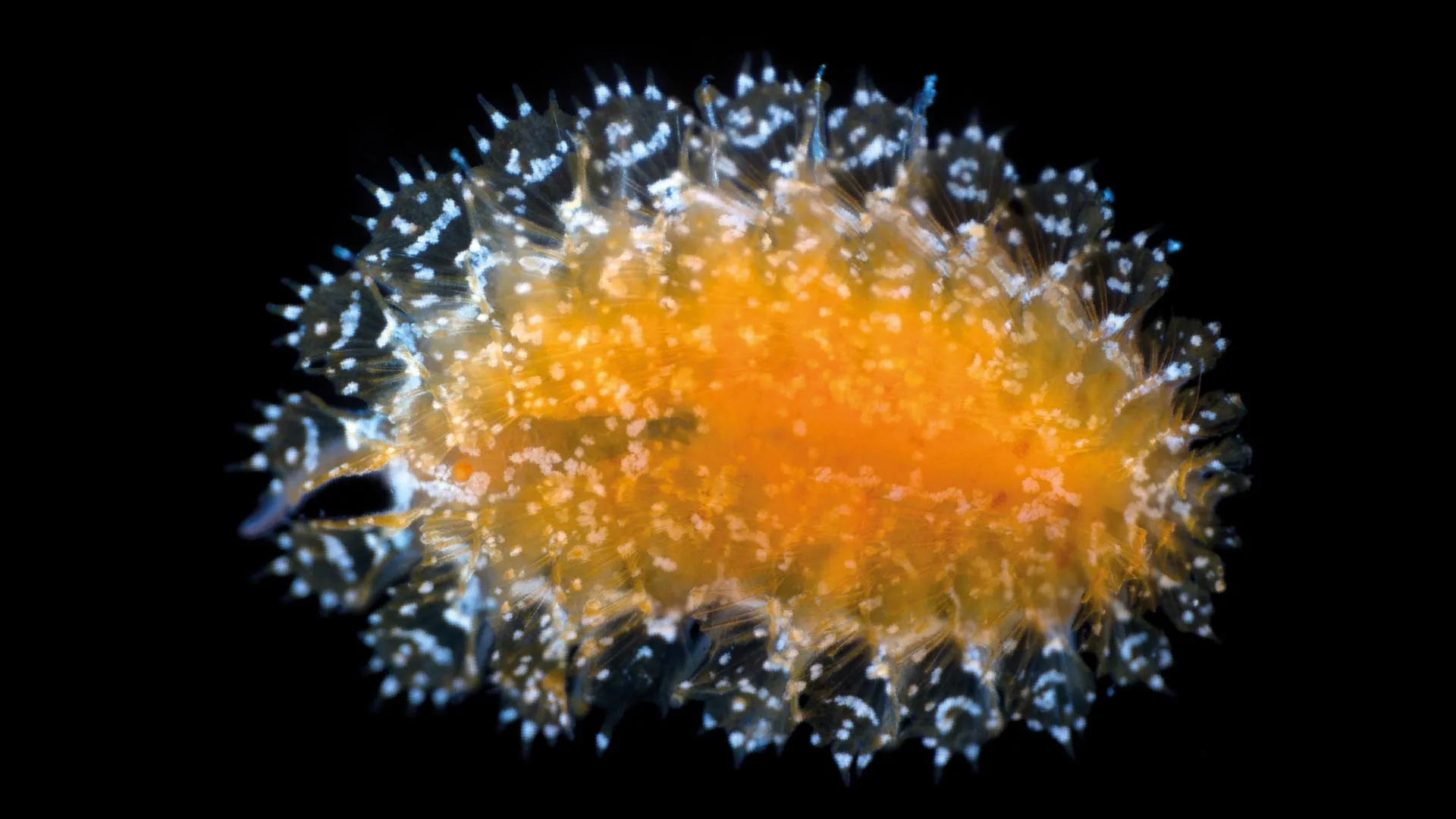
Veleropilina gretchenae was pulled from the crushing dark of the Aleutian Trench at 6,465 meters, a fragile mollusk no bigger than a thumbnail, yet carrying within it the weight of a scientific revolution. This newly named creature is one of 14 never-before-seen marine invertebrates unveiled by an international team of over 20 researchers, each discovery a quiet triumph in the race to document life in Earth’s least-explored frontier — the deep sea. With millions of ocean species still unknown and many vanishing before they’re named, the delay between discovery and description has long been a fatal bottleneck in marine science. Now, through the Ocean Species Discoveries platform — a streamlined, open-access initiative led by the Senckenberg Ocean Species Alliance (SOSA) — that delay is collapsing from decades to months.
The new species, detailed in the Biodiversity Data Journal, span the globe and the depth spectrum: from intertidal zones in Australia to hydrothermal vents near the Galápagos Rift, and from shallow coral reefs to abyssal plains deeper than 5,000 meters. Among them is Myonera aleutiana, a carnivorous bivalve found between 5,170 and 5,280 meters — setting a new depth record for its kind. For the first time, its entire anatomy was mapped using non-invasive micro-CT scanning, generating over 2,000 cross-sectional images that reveal intricate soft-tissue structures without dissection. This marks only the second time a bivalve has been documented this way, setting a new standard for precision and preservation in taxonomy.
At the Senckenberg Discovery Laboratory in Frankfurt, scientists wield tools like confocal imaging, molecular barcoding, and electron microscopy to extract maximum data from each specimen. These technologies allowed Veleropilina gretchenae to become one of the first Monoplacophorans with a high-quality genome sequenced directly from its holotype — a milestone in deep-sea genomics. Another standout, the parasitic isopod Zeaione everta, bears a bizarre crown of popcorn-like bumps on its back, a feature so distinctive it warranted not just a new species name, but an entirely new genus. Its name, derived from Zea, the corn genus, is a nod to its uncanny appearance.
The discoveries also honor scientific pioneers. The amphipod Apotectonia senckenbergae, found at 2,602 meters in a Galápagos hydrothermal vent field, pays tribute to Johanna Rebecca Senckenberg, whose 18th-century support for medicine and natural science helped lay the foundation for today’s Senckenberg Society. Meanwhile, the tusk shell Laevidentalium wiesei was found hosting a sea anemone on its shell — a symbiotic relationship never before seen in its genus, hinting at complex, hidden ecologies in the deep.
Each of these species is more than a name on a page; it’s a data point in a growing map of life beneath the waves. As climate change, mining, and pollution threaten even the most remote ocean zones, rapid documentation is no longer just academic — it’s urgent. With every scan, sequence, and publication, Ocean Species Discoveries is helping ensure that the deep sea’s secrets are revealed not too late, but in time to protect them.