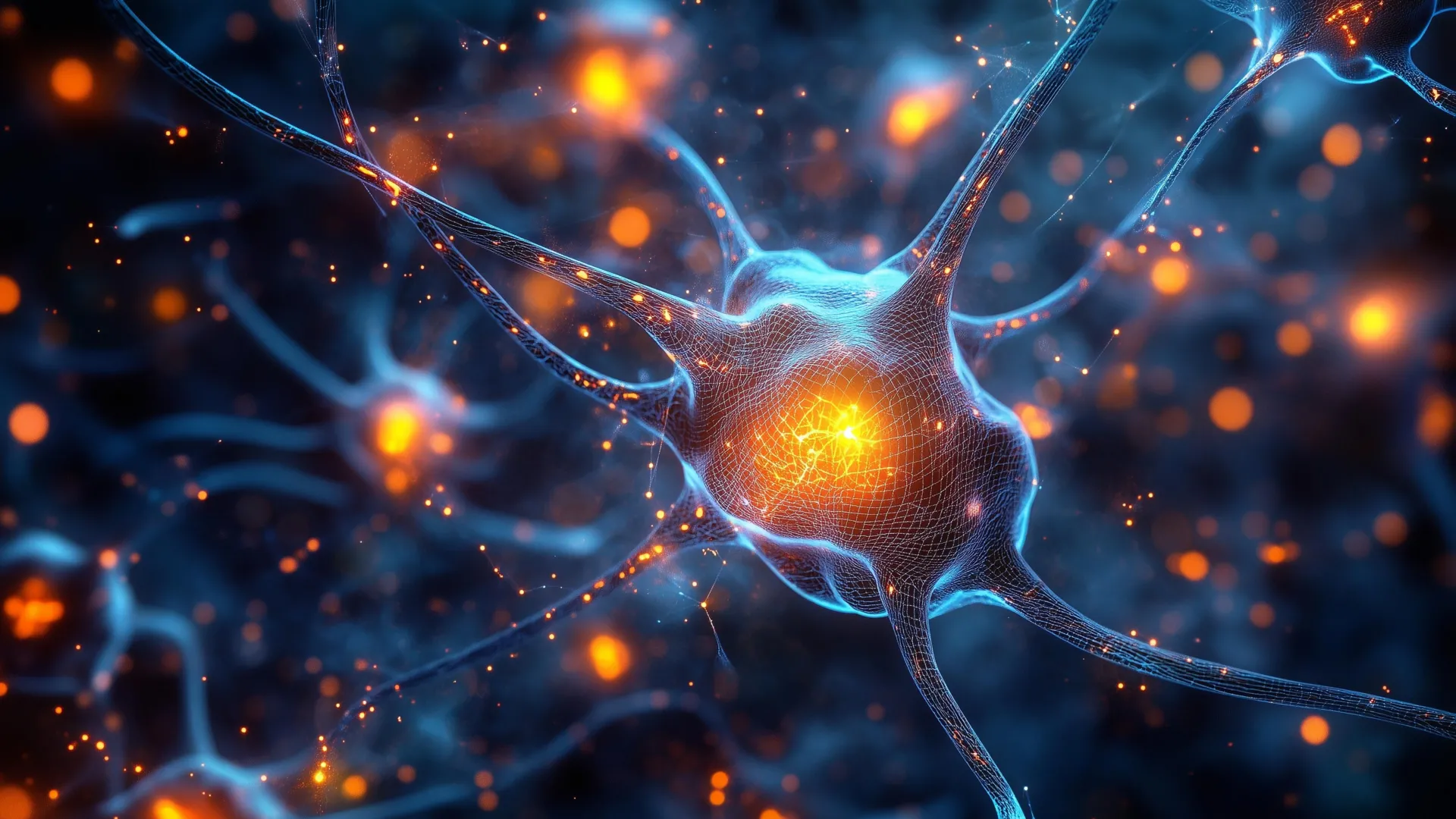
When scientists at Johns Hopkins University in Baltimore switched off a cluster of neurons in a mouse’s brainstem, the animal suddenly couldn’t ignore a flicker on the edge of its vision — even when a reward depended on focusing straight ahead. The change was instant: a focused creature became distractible, its attention unraveling like a thread pulled loose. These neurons, nestled in one of the oldest parts of the brain, act as a precision filter, helping animals determine what sensory input matters most. Their discovery, led by neuroscientist Shreesh Mysore and postdoctoral fellow Ninad Kothari, challenges long-held beliefs about where attention begins and could reshape how we understand disorders like ADHD.
For decades, scientists assumed attention was governed by the prefrontal cortex — a sophisticated brain region well-developed in humans and primates. But that theory struggled to explain how birds, fish, and reptiles, which lack such advanced forebrains, can still focus. Evolution, it turns out, found a solution much earlier. The team pinpointed a network of inhibitory neurons in the brainstem — a region conserved across vertebrates for over 400 million years — that functions as an “attentional selection engine.” When these neurons were silenced in mice, the animals couldn’t suppress distractions, even strong visual cues, despite no changes in vision or movement. The impairment was specific: they lost the ability to weigh competing signals and choose the most relevant one.
Published in Nature Communications and selected as an editorial highlight, the federally funded study builds on earlier work in birds and frogs, where Mysore first observed similar circuits. In mice, the team used optogenetics to temporarily deactivate the neurons while the animals performed a visual task: respond to a cue in front, ignore flickers to the side. With neurons active, mice succeeded about 75% of the time. When silenced, performance dropped sharply — not because they couldn’t see, but because they couldn’t choose what to see. “A hallmark of ADHD is that even faint distractors draw attention away — and that’s exactly what we see here when these neurons are silenced,” Mysore said. “But the very next day, when the neurons are turned back on, the same animal can ignore distractors again, even very strong ones.”
The findings suggest a shared biological mechanism across species, one that may underlie human attention as well. While the team hasn’t yet tested this in people, the brainstem structure exists in humans, and its function may be similar. Future research will explore whether these neurons behave differently in individuals with ADHD or autism, conditions marked by attentional challenges. If confirmed, this could lead to therapies that target the root circuitry of distraction — not just symptoms. For now, the discovery reframes attention not as a high-level cognitive feat, but as a deeply rooted survival tool, fine-tuned by evolution to help any creature, from a zebrafish to a teenager in a crowded classroom, find clarity in chaos.