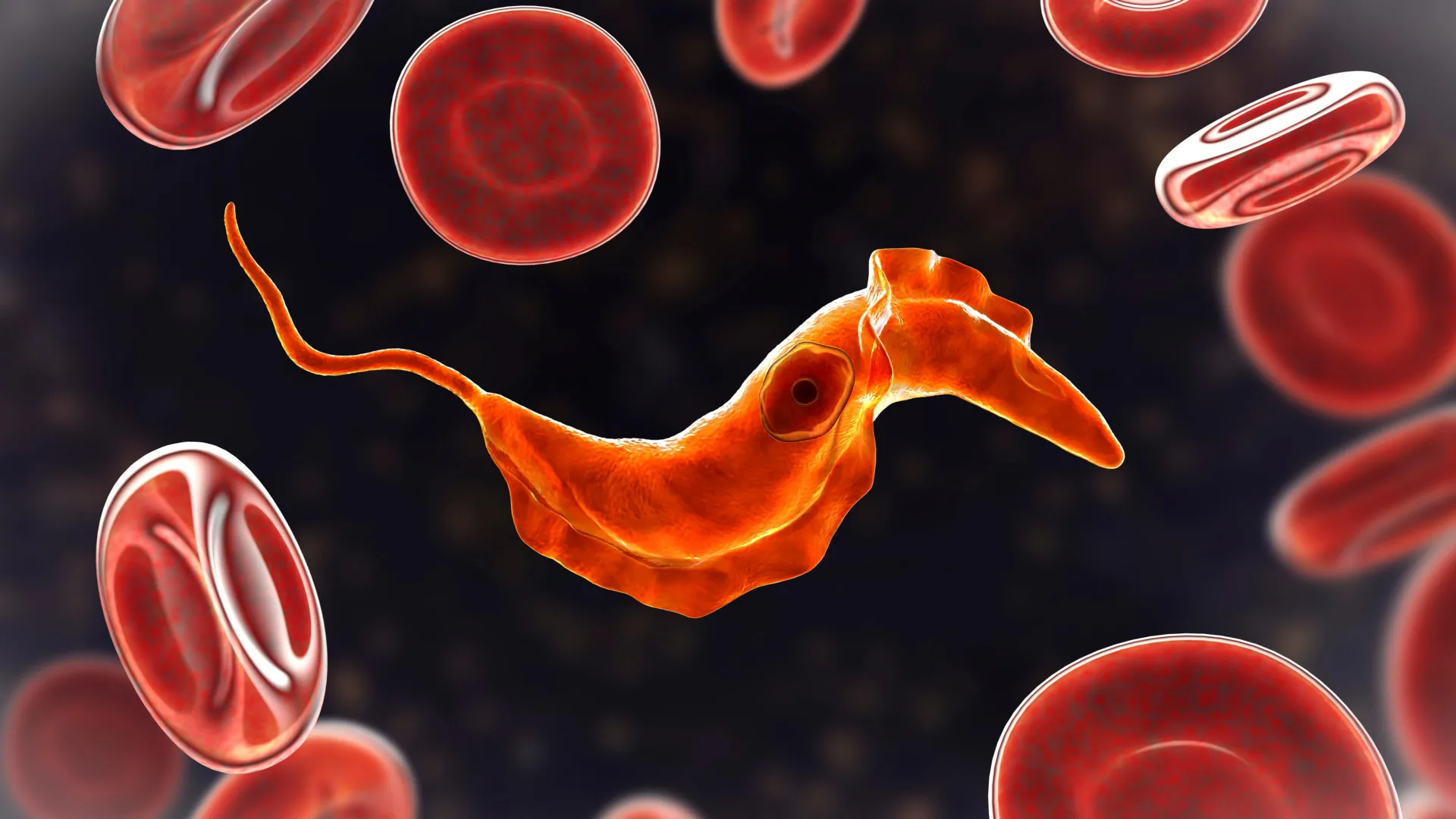
Inside every drop of your blood flows a microscopic echo of life from 700 million years ago — ancient single-celled ancestors that never quite disappeared. Researchers at Kyoto University have traced this astonishing lineage by mapping the evolutionary family tree of human blood cells, discovering that the immune and blood cells circulating in your body today are direct descendants of organisms that existed long before multicellular animals walked the Earth.
The question of where blood cells came from has long puzzled scientists. While researchers understand well how blood works in humans and mice, the deeper puzzle — how and when these cells first appeared — remained unsolved. A team led by Hiroshi Kawamoto decided to tackle this by developing a new analytical approach that compared gene expression patterns across many types of cells and animal species. They built evolutionary family trees for blood cell lineages and looked for connections between modern cells and their possible single-celled ancestors.
The findings were striking. Among human blood cell types, macrophages — immune cells that engulf harmful microbes and cellular debris — showed the strongest similarities to unicellular organisms. This suggests that the earliest blood cells may have actually resembled macrophages, meaning these microscopic defenders became a template for everything that followed. More specifically, the researchers traced the gene FOS, which appears across blood cells in many animal species, back to a unicellular ancestor that lived approximately 700 million years ago, placing the emergence of the first blood cells right around the time multicellular animals first appeared on Earth.
What happened next was evolutionary innovation built on ancient foundations. Early animals essentially recycled genetic material inherited from those single-celled ancestors, creating new blood cell types through a process that still shapes your biology today. Mast cells evolved from macrophages. T cells and red blood cells later branched off from mast cells. B cells split directly from macrophages in a separate lineage. By reconstructing this deep history, the Kyoto team created a 700-million-year family tree showing how modern blood and immune cells are not separate inventions, but variations on an ancient theme.
"When I let it sink in that this legacy from so long ago is circulating within my body as blood cells, I feel closer to our distant ancestors," says Yosuke Nagahata, first author of the study and researcher at the Institute of Evolutionary Biology in Spain. His reflection captures something profound: the cells defending your body right now are the living continuation of organisms that existed in Earth's oceans before dinosaurs, before fish, before forests. They represent an unbroken chain of biological purpose stretching backward through incomprehensible time.
The implications extend beyond wonder into practical medicine. The team believes their new analytical method could help researchers investigate the evolutionary origins of cancer and other diseases, potentially leading to better understanding of disease mechanisms and new treatments. When cancer cells go haywire, they often revert to ancient patterns of behavior — and understanding those ancient origins might help us fight back more effectively.
Hiroshi Kawamoto, team leader, said the findings "illustrate that the differentiation pathways of vertebrate blood cells reflects the 700-million-year evolutionary history of these cells." The research will be published May 29, 2026, in the Proceedings of the National Academy of Sciences of the United States of America, offering a reminder that we are never as separate from Earth's history as we might think.