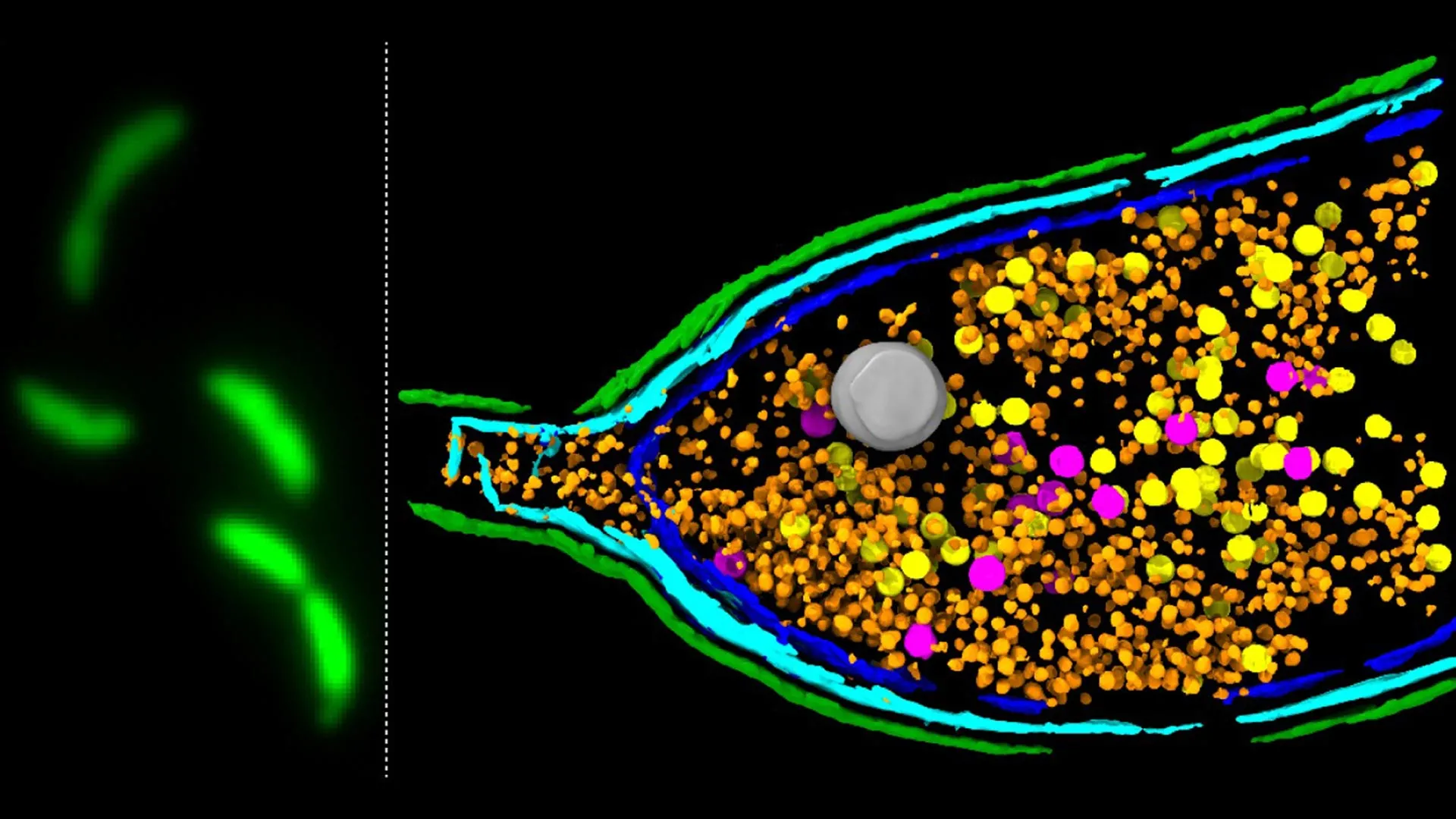
In a laboratory in Norwich, England, a tiny bacterium named Caulobacter crescentus is quietly rewriting what we know about how life shares its genetic secrets. Scientists at the John Innes Centre have discovered a remarkable mechanism by which bacteria use virus-like particles called gene transfer agents—or GTAs—to shuttle DNA between cells, including genes that confer resistance to antibiotics. The findings, published in Nature Microbiology, reveal a three-gene control hub called LypABC that acts as the master switch for this genetic exchange, answering a long-standing question about how GTA particles escape their host cells to deliver their cargo.
GTAs resemble bacteriophages, the viruses that infect bacteria, but these particles are no longer invaders. Over evolutionary time, bacteria have domesticated these ancient viral remnants and repurposed them as molecular couriers, picking up fragments of DNA from one cell and delivering them to neighbors nearby. This process, known as horizontal gene transfer, allows bacteria to rapidly share advantageous traits—sometimes with troubling consequences for human health. When one bacterium shares genes for antibiotic resistance with another, it can essentially arm its neighbor against the drugs we rely on to treat infections.
What makes the John Innes Centre discovery particularly striking is that the LypABC system looks remarkably like a bacterial immune system designed to defend against viruses. The proteins it produces contain domains typically associated with anti-phage defense. Yet instead of fending off genetic invaders, bacteria have apparently co-opted this system to help release GTA particles and promote gene sharing. When the researchers deleted the lypABC genes in Caulobacter crescentus, the bacteria lost the ability to lyse, or break open, to release their GTA particles. When they overactivated the system, cells burst open in great numbers—a sign that LypABC sits at the central control point for this delicate process.
"What's particularly interesting is that LypABC looks like an immune system, yet bacteria are using it to release GTA particles," said Dr. Emma Banks, first author of the study and a Royal Commission for the Exhibition of 1851 Research Fellow. "It suggests that immune systems can be repurposed to help bacteria share DNA with each other—a process that can contribute to the spread of antibiotic resistance."
The research, conducted in collaboration with the University of York and the Rowland Institute at Harvard, also uncovered that tight regulation of the LypABC system is essential for bacterial survival, as improper activation becomes highly toxic to cells. Understanding this mechanism matters because antimicrobial resistance has become one of the most pressing global health threats of our time, with bacteria increasingly evading the drugs designed to treat them.
The team is now working to unravel exactly how the LypABC system is switched on and how it orchestrates the rupture of bacterial membranes. While the findings reveal a mechanism underlying antibiotic resistance spread, they also open new avenues for potentially disrupting that process—offering, in the fight against superbugs, an unexpected place to look.