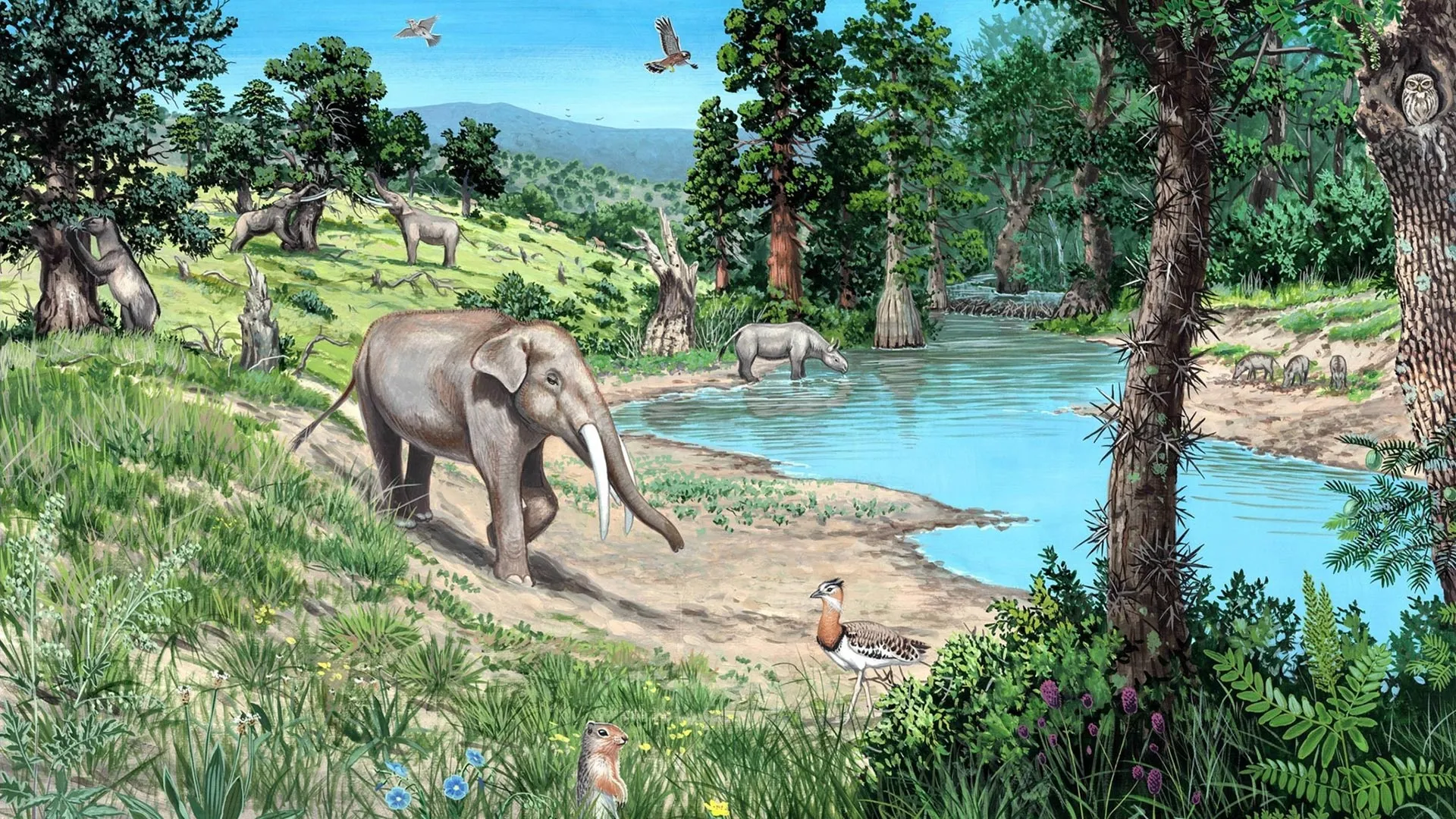
For more than 20 million years, Europe’s landscapes were not simply vast, dark forests: they were mosaics of trees, sunny grasslands and flowering meadows, shaped in part by large grazing animals. That picture, drawn from a major study led by Aarhus University, challenges a long-held idea about what the continent looked like before people changed it.
The idea is often called the “closed-forest paradigm”: the belief that dense woodland, with tree canopies covering nearly all the ground, was Europe’s natural state. It has helped guide conservation and reforestation plans, which may focus on letting trees spread across open land or planting dense forests. The new findings suggest those plans can miss habitats that have been part of Europe’s ecological story for millions of years.
Published in Biological Conservation, the study reaches back to the Miocene epoch, which began around 23 million years ago, and follows the evidence through the pre-industrial era. To rebuild this long history, researchers combined several kinds of clues rather than relying on a single record. They examined fossil pollen and larger plant remains, charcoal from ancient fires, and chemical traces in the teeth and bones of plant-eating animals. Fossil insects and mammals, along with ancient environmental DNA preserved in sediments, added further evidence.
Each clue offers a different view of the past. Together, they point to changing combinations of woodlands, shrubs, grasslands and open spaces, rather than continuous, dense forest across the continent. The study found that these mixed landscapes dominated for more than 20 million years. Large herbivores helped keep them varied by grazing, browsing and disturbing vegetation, limiting the spread of trees and shrubs in some places. The open habitats also supported species such as birds and butterflies, alongside plants and animals adapted to wooded areas.
The research was led by Aarhus University, with senior author Professor Jens-Christian Svenning of its Center for Ecological Dynamics in a Novel Biosphere. Lead author Szymon Czyzewski, an Aarhus University PhD student, said combining different records made it possible to trace vegetation and the influence of large herbivores with greater confidence than studies using only one method.
The findings matter for current choices about restoring nature. In Denmark, Svenning said, subsidies are granted only for planting dense forests. He warned that this approach could harm biodiversity and conflict with the ecosystems Europe’s species evolved in over millions of years. The study does not say forests have no place in restoration; it questions treating dense forest as the only model of a healthy landscape.
As governments and conservation groups plan new forests, the researchers’ long view offers a reason to make room for more than trees. Restoring a range of habitats—including open woodland and grassland—could better reflect the varied landscapes that shaped Europe’s wildlife. The ancient record is not a blueprint for every place, but it shows that Europe’s natural history has always included sunlight, open ground and a shifting balance between trees and grazing animals.