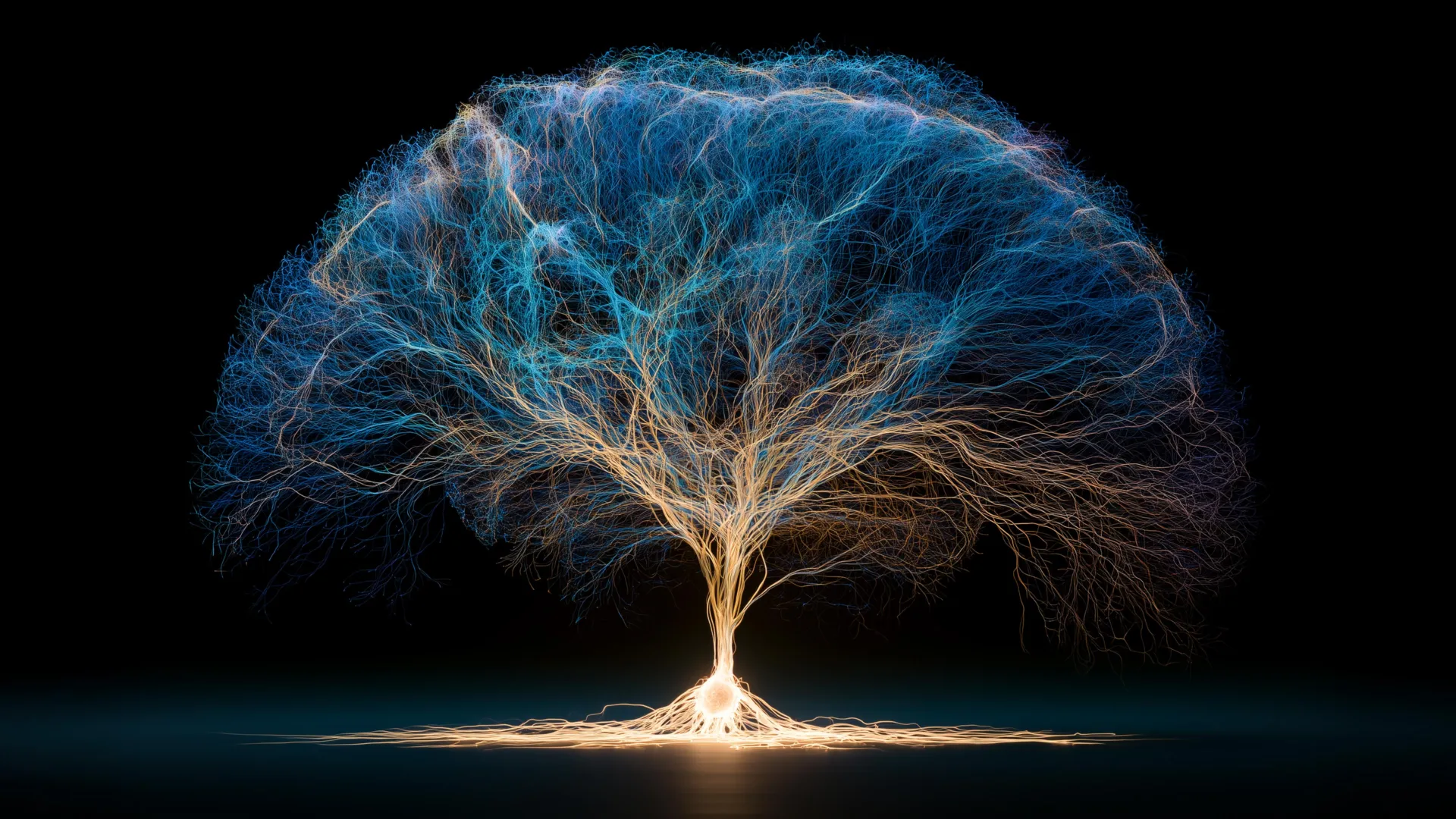
Stan Kerstjens remembers staring at a petri dish and wondering how a single cell could ever give rise to something as intricate as the human brain—a structure of roughly 170 billion cells, each in its proper place, wired with astonishing precision. At Cold Spring Harbor Laboratory, Kerstjens and his mentor, Professor Anthony Zador, have uncovered a surprisingly elegant answer: brain cells use their family history—lineage—as a built-in GPS during development. This discovery, published in Neuron and developed with collaborators from Harvard University and ETH Zürich, challenges decades-old assumptions about how cells find their way in the growing brain.
For years, scientists believed chemical signals were the primary guide, with molecules diffusing through tissue to tell cells where they were and what to become. But this model has a flaw—chemicals weaken over distance, making it hard to explain how cells deep inside a rapidly expanding brain receive accurate instructions. The new research suggests cells don’t rely solely on signals from afar. Instead, they inherit positional information through ancestry. Much like human populations spread across continents, with descendants settling near their ancestors, brain cells stay close to their progenitors. This creates geographic patterns of relatedness—neighborhoods of cells with shared lineage—that serve as a scalable map for development.
To test this idea, the team developed a "lineage-based model of scalable positional information." They began with mathematical simulations, confirming the theory could hold. Then, they examined gene expression patterns in developing mouse brains, analyzing both individual cells and larger clusters. The data revealed that cells with similar lineage were consistently located near one another. They repeated the experiment in zebrafish—a species with a much smaller brain—and found the same pattern, suggesting this mechanism is conserved across species and brain sizes.
The implications stretch far beyond neuroscience. If lineage acts as a blueprint for organization, the principle could apply to other biological systems, including tumor growth, where rogue cells proliferate in structured ways. Even artificial intelligence may draw inspiration: future self-replicating AI systems could use generational information transfer to maintain order, much like developing brain cells. But perhaps the most profound impact lies in understanding intelligence itself. As Kerstjens puts it, "The brain somehow makes us intelligent. How did it manage to accumulate this capability, not just over its developmental time, but over evolutionary time?" This discovery offers a new lens through which to explore that mystery—one cell, and one generation, at a time.