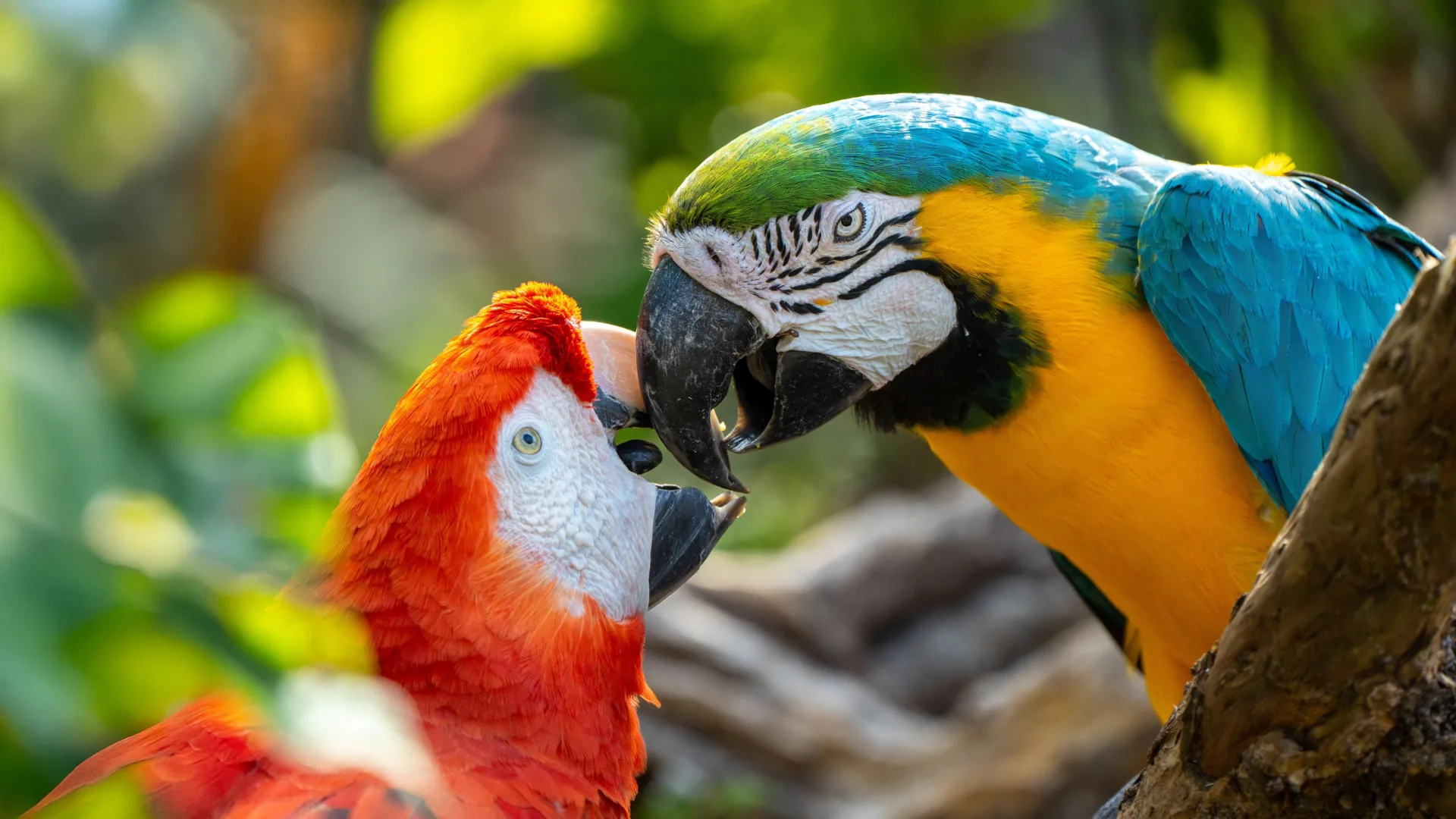
Lauryn Benedict didn't trek into rainforests or scale canopies to study how parrots use language—she looked closer to home, examining recordings from more than 880 birds living in human households and facilities. What she found suggests that parrots may use names the way we do, not as mindless mimicry but as a way to identify and communicate with specific individuals. The discovery, published in PLOS ONE, offers a striking window into animal cognition that challenges our assumptions about who truly understands the power of a name.
For decades, researchers have wondered whether animals use vocal signals to recognize and address particular individuals, much like humans rely on names to navigate social relationships. But studying wild parrots in their natural habitats has proven difficult. Benedict, a biology professor at the University of Northern Colorado, partnered with Christine Dahlin at the University of Pittsburgh at Johnstown and colleagues from Austria to take a different route: analyzing data from the ManyParrots project, a collaborative network that collects surveys and audio recordings of parrots learning and living alongside people.
The team examined survey responses from 889 parrots, with participants submitting 413 recordings that captured name use. Among those recordings, 88 showed clear evidence of birds using names as labels for particular people or animals. What's striking is what the researchers found—or rather, didn't find. Many parrots weren't simply calling out broad categories like "people." Instead, they associated specific names with specific individuals, suggesting a cognitive leap beyond simple repetition.
The recordings revealed something more intriguing: parrots weren't confined to using names the human way. Some birds repeated their own names to attract attention, a completely different social purpose. Others appeared to use names when referring to individuals who weren't even present—a sign they may be truly communicating about someone rather than just responding to a sound they've learned. This flexibility suggests that parrots possess both the vocal skills and cognitive abilities to adapt names for different contexts and social needs.
Yet Benedict and her collaborators are careful not to overstate their findings. Christine Dahlin noted that while the evidence is compelling, researchers cannot simply equate parrot signals with human naming systems. The patterns are different, and without deeper understanding of intent, drawing direct parallels remains speculative. The study ultimately illuminates as much about what we don't know as what we do—differences between species, and even among individual birds of the same species, suggest that vocal naming may work in ways we're only beginning to understand.
What emerges from this research is not proof that parrots have cracked human language, but something perhaps more fascinating: evidence that they have developed their own complex, flexible system for identifying and communicating about the individuals in their lives. As these birds live more frequently in human spaces, they may be adapting our own naming conventions to suit their social needs. The question of how and why animals use names to refer to one another remains largely open—but thanks to 880 parrots and their talkative households, we're listening more closely than ever.