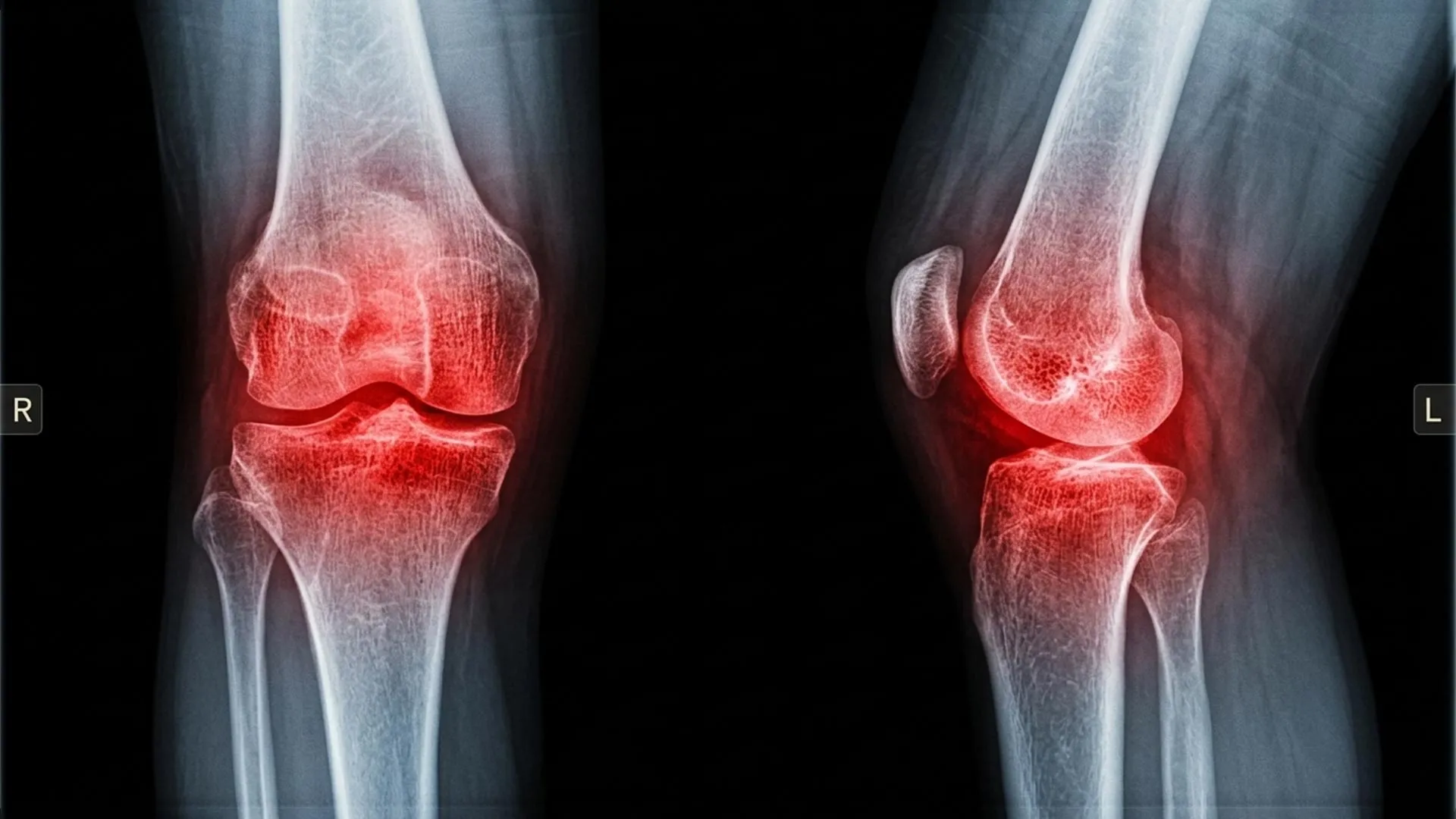
Nearly one in four adults over 40 walks through the world with pain they've learned to accept as inevitable: the grinding wear of osteoarthritis, a disease that gradually erases the cartilage cushioning their joints. For decades, the medical response has been limited—medication to mask the symptoms, or eventually, surgery to replace the joint altogether. But researchers at the University of Utah, New York University, and Stanford University have discovered something unexpected in a yearlong clinical trial: the solution might be as simple as the way you angle your foot.
The study, published in The Lancet Rheumatology and led by Scott Uhlrich of the University of Utah's John and Marcia Price College of Engineering, represents a significant shift in how we think about treating joint damage. Participants with mild to moderate knee osteoarthritis who received gait retraining—learning to adjust their foot angle while walking—reported pain relief comparable to medication. More strikingly, MRI scans showed they had less cartilage deterioration than those in the placebo group. This was the first placebo-controlled trial to demonstrate that a biomechanical intervention could both relieve symptoms and potentially slow the underlying joint damage.
The insight seems straightforward: since higher loads on the knee accelerate osteoarthritis progression, and since changing foot angle can reduce that load, why not simply retrain the way people walk? The answer, Uhlrich explains, lies in biology's stubborn individuality. The best foot-angle adjustment isn't universal. Some people benefit from turning their toes slightly inward; others need to point them outward. For the wrong person with the wrong adjustment, the intervention can fail entirely or even worsen the painful area of the knee.
This is why the researchers took a personalized approach that set their trial apart. During initial visits, participants walked on a pressure-sensitive treadmill while motion-capture cameras tracked their gait mechanics. Using these precise measurements, researchers determined whether each individual would benefit more from an inward or outward rotation, and whether a five-degree or ten-degree adjustment would be optimal. They even excluded participants whose biomechanics suggested they were unlikely to benefit—a methodological rigor that may explain why previous studies of foot-angle interventions showed murkier results.
Of the 68 participants enrolled, half received genuine gait retraining while the other half underwent a sham treatment—assigned their natural walking pattern—to control for placebo effects. Both groups attended six weekly training sessions in the lab, where a vibration device on the shin provided real-time feedback to help them maintain their assigned foot angle. After the formal training ended, participants practiced their new walking pattern at home for at least twenty minutes daily, allowing the adjustment to become automatic.
The findings open a door that has long seemed closed: the possibility that osteoarthritis progression might not be a one-way street. While doctors cannot yet reverse cartilage damage, this research suggests they might slow it—not through pharmaceuticals or surgery, but through a change so simple it seems almost improbable. As related research demonstrates that foot-angle changes can soon be measured outside the lab with wearable sensors, the intervention could eventually move from university treadmills into everyday life, offering millions of people a way to walk with less pain.