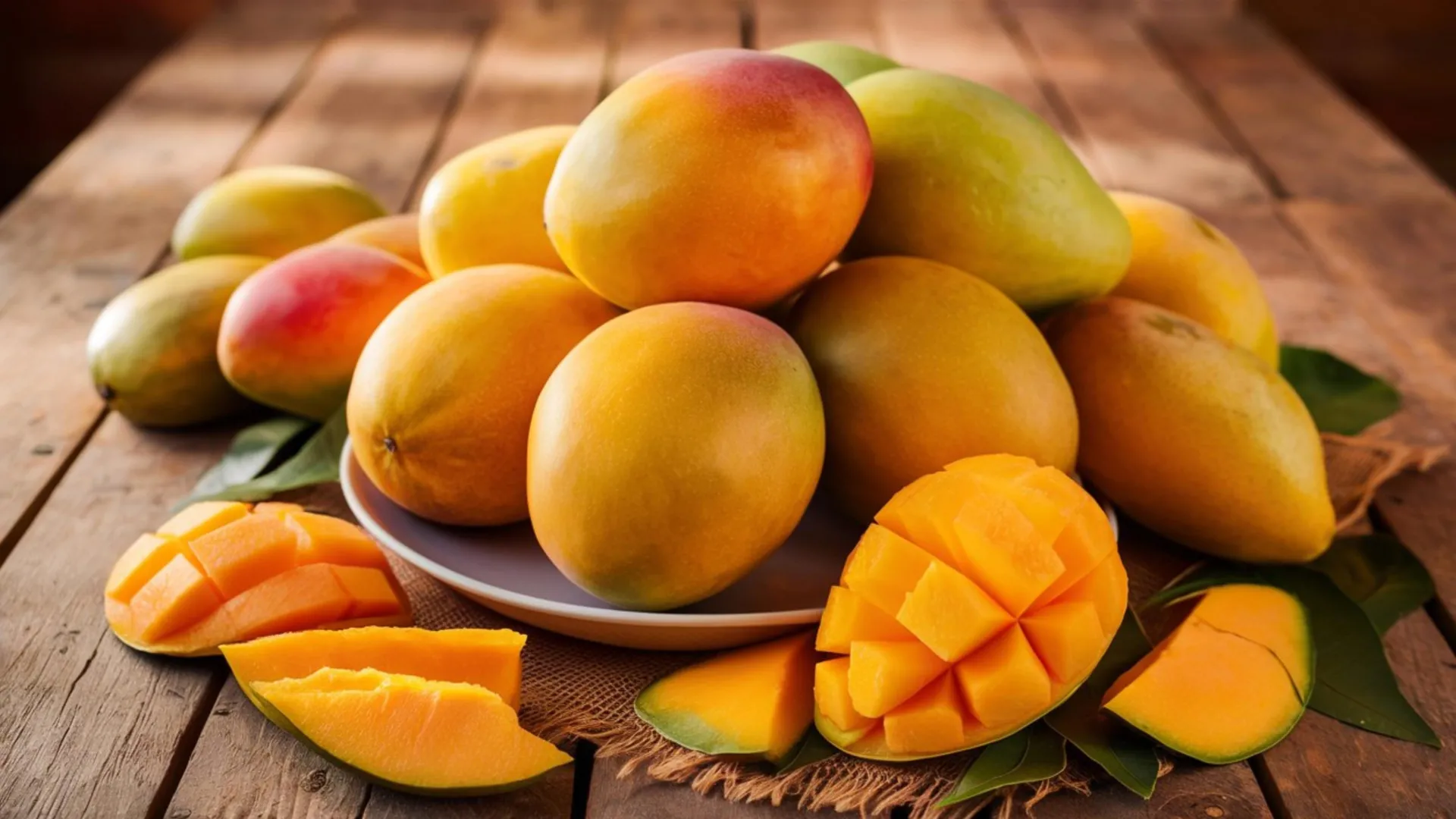
At Hainan University in China, researchers have solved a problem that has frustrated mango farmers and shippers for decades: how to keep one of the world's most beloved fruits from spoiling during its journey from tree to table. The answer is surprisingly precise—12°C (54°F)—and the science behind it reveals an elegant biological story about how a simple adjustment in temperature can preserve an entire fruit's cellular structure and activate its natural defenses against decay.
Mangoes are among the world's most popular tropical fruits, prized for their sweetness and nutritional richness, but they're also notoriously fragile once picked. A harvested mango continues ripening rapidly, softening within days and losing water and flavor along the way. In tropical regions, the conventional approach has been to transport mangoes at temperatures between 26°C and 30°C (79°F to 86°F)—warm enough to avoid chilling damage, but warm enough to accelerate the very spoilage growers hope to prevent. The result is significant waste and spoilage across global supply chains.
The Hainan University team suspected that 12°C offered a sweet spot for preservation, but they wanted to understand exactly why. Over 24 days, they compared mangoes—specifically the 'Tainong No. 1' variety—stored at 12°C against fruit kept at the conventional 30°C, measuring everything from color and firmness to sugar content, acidity, and the activity of protective antioxidant enzymes deep within the fruit's cells.
The differences were striking. During the first 12 days, both batches looked similar. But after day 16, the contrast became dramatic. Mangoes stored at 30°C yellowed rapidly as chlorophyll broke down, while those at 12°C maintained their color far longer. More tellingly, the warmer fruit lost more than 17% of its weight through water loss, while the cooler-stored mangoes shed less than 4%. At the cellular level, mangoes kept at 12°C retained intact cell walls and starch granules even after nearly a month, whereas the warmer fruit showed early cell wall thinning, starch depletion, and eventual cell collapse.
But the real revelation came from examining the fruit's antioxidant system. At 12°C, mangoes maintained higher levels of vitamin C, phenolics, and flavonoids—natural protective compounds. Gene analysis revealed increased activity in antioxidant-related genes including MiAPX1, MiAPX2, MiSOD1, and MiSOD2, which strengthen the fruit's defense systems and maintain the delicate chemical balance needed to prevent oxidative stress and cellular damage. Simultaneously, the cooler temperature reduced the buildup of harmful molecules like reactive oxygen species and malondialdehyde, both linked to spoilage.
The practical implications are significant. If mangoes can be stored and shipped at 12°C without suffering chilling damage—a risk that once made cooler temperatures seem impossible for tropical fruits—the industry could harvest fruit earlier, transport it over longer distances, and ripen it closer to final markets while dramatically reducing waste. For a global fruit trade that loses billions to spoilage annually, this simple temperature adjustment represents both economic opportunity and environmental benefit.
The research, published in Tropical Plants and supported by multiple Chinese government and university funding sources, points to a future where precision temperature control becomes standard practice in cold-chain logistics, allowing consumers around the world to enjoy fresher, higher-quality mangoes while significantly reducing agricultural waste.