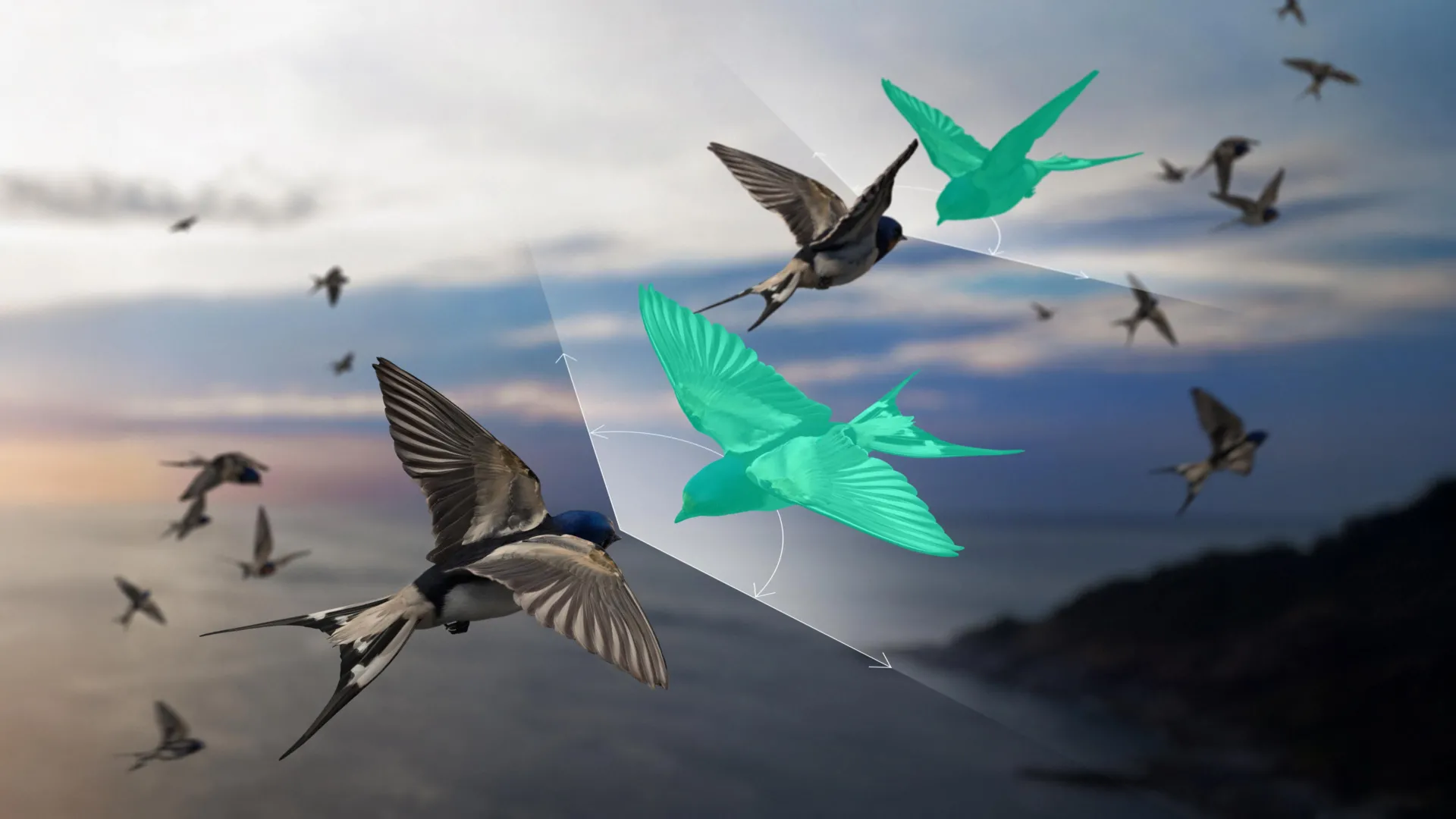
Ricard Alert imagines a flock of starlings twisting over a Tuscan valley, each bird adjusting its flight not to the one behind, but to its neighbors ahead and beside—silent, seamless, and, until now, impossible to fully simulate using classical physics. This everyday marvel of nature, repeated in murmurations across the globe, has long puzzled scientists because it appears to break a 300-year-old rule: Newton’s third law, which demands that every action has an equal and opposite reaction. When a bird shifts left, no bird pushes back—there’s no reciprocity. And yet, the flock holds. Now, a team in Dresden has cracked the code.
For centuries, physics has relied on reciprocal interactions to model everything from rolling balls to orbiting planets. But living systems—bird flocks, bacterial swarms, human crowds—don’t play by those rules. They respond selectively, creating one-way dynamics that traditional theories can’t capture. This gap has limited scientists’ ability to simulate and understand collective behavior in biology and beyond. Enter Marín Bukov, Ricard Alert, and Roderich Moessner, who have built a bridge between classical mechanics and the messy, directional reality of life in motion.
Their breakthrough, published in Nature Physics, introduces a clever workaround: fictitious partners. For every real bird in the simulation, they add an imaginary one—positioned directly in front, facing the opposite direction. These ghost birds aren’t real, but mathematically, they restore balance. By transforming non-reciprocal interactions into reciprocal ones using these artificial variables, the team can now apply well-established physics tools to systems that once defied them. It’s like giving Newton a new language to describe nature’s most fluid dances.
The implications stretch far beyond avian flight. Alert, a biophysicist, sees applications in tissue dynamics and cell migration, where cells pull forward without equal pushback. Moessner, director at the Max Planck Institute for the Physics of Complex Systems and Principal Investigator at the Würzburg-Dresden Cluster of Excellence ct.qmat, wonders if quantum matter might harbor similar asymmetries—potentially leading to new states of matter or lossless energy transport. The same framework could one day help design better models for crowd control, robotic swarms, or even traffic flow.
This isn’t just about fixing a simulation gap. It’s about expanding the grammar of physics. By embracing the one-sidedness of life’s movements and answering it with mathematical symmetry, the Dresden team hasn’t just explained a flock—they’ve opened a door. And what lies beyond could reshape how we understand everything from cells to cities.