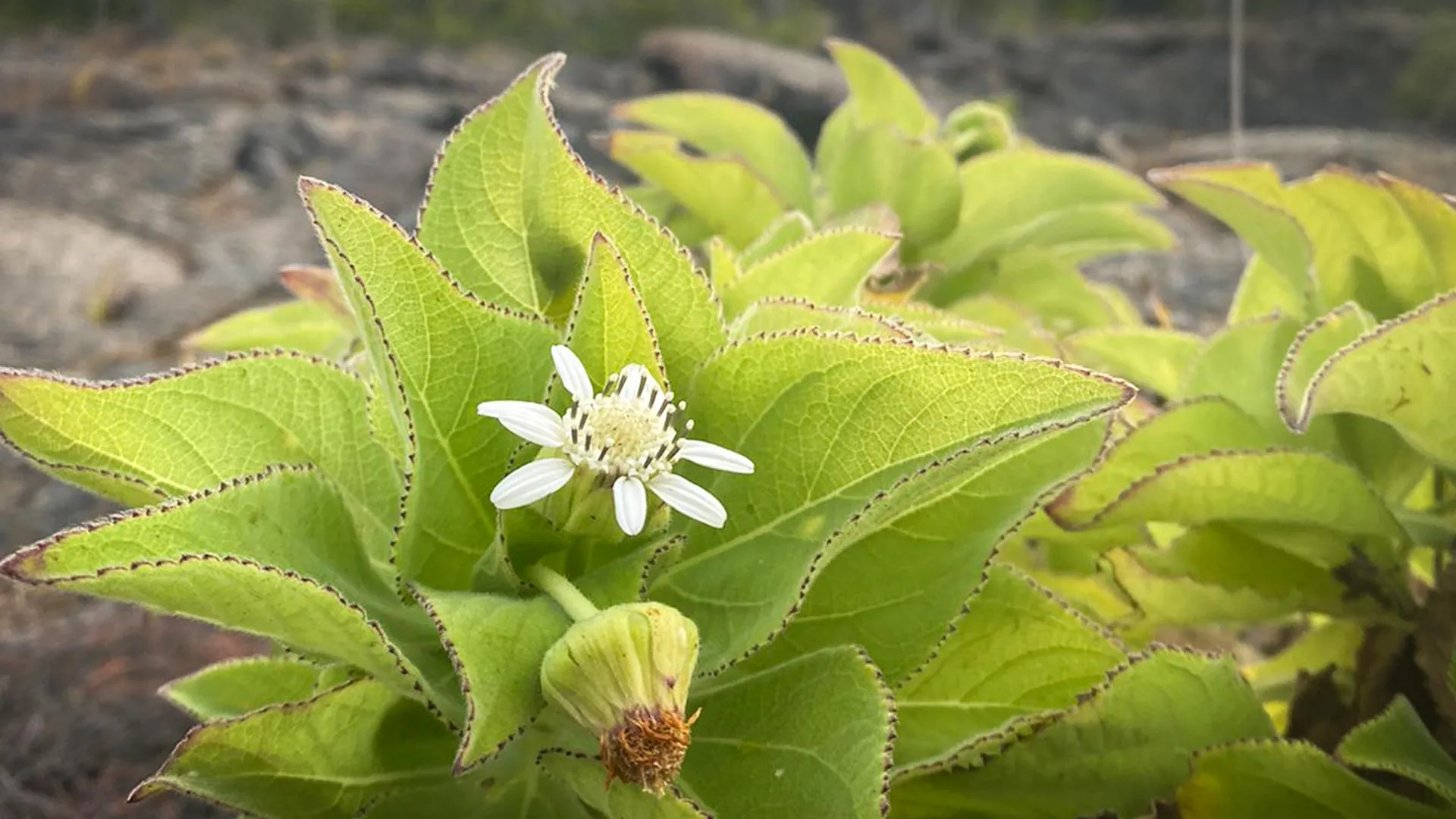
On the same islands that inspired Charles Darwin, scientists have discovered something that would have fascinated the famous naturalist himself: plants are finding the same solutions to survival challenges, but each time through completely different genetic pathways.
Researchers investigated Scalesia, a group of plants nicknamed the Galápagos giant daisies. These plants arrived on the islands from mainland South America and, in evolutionary terms, became a success story almost overnight. Every Scalesia species alive today emerged within just one million years — a blink of an eye in the 4.5-billion-year history of Earth.
"Just like Darwin's famous finches, these plants evolved rapidly," said Vanessa Bieker, a researcher at the Royal Botanic Gardens, Kew, and lead author of the study published in Nature Communications.
The team analyzed the complete genetic blueprints of every known Scalesia species. They found that deeply lobed leaves — leaves with intricate, serrated edges — evolved separately multiple times across different branches of the plant family tree. Scientists believe this leaf shape helps plants survive in hot, dry conditions by reducing water loss and releasing heat more effectively.
But here is what surprised the researchers: each time these helpful lobed leaves appeared, they developed through different genes. Nature was solving the same problem over and over, but using different tools from its genetic toolbox each time.
"This provides a clear example of parallel evolution: nature arriving at the same solution multiple times, but through different genetic pathways," Bieker said. "Instead of being controlled by a single 'master gene', evolution appears to draw on an entire network of interacting genes, tweaking different components to produce similar outcomes."
Professor Michael D. Martin from the Norwegian University of Science and Technology, who co-authored the study, put it this way: "More than 150 years after Darwin's work on the Galápagos transformed our understanding of life on Earth, these islands continue to reveal new biology."
The findings suggest the evolutionary story of Scalesia may not be finished. Populations of the same species show surprisingly large genetic differences, having been isolated from each other for long periods. Scientists believe new species could be developing right now, with many Scalesia populations representing distinct evolutionary lineages that have not yet been formally described.
For conservation efforts, this means each isolated population may deserve its own protection plan. What happens to one group might not affect another, since they have already begun following separate evolutionary paths.
The research team included scientists from the Royal Botanic Gardens, Kew; the University of California, Davis; the University of Copenhagen; the Charles Darwin Foundation in Galápagos; the University of Georgia; the University of British Columbia; and several other institutions.