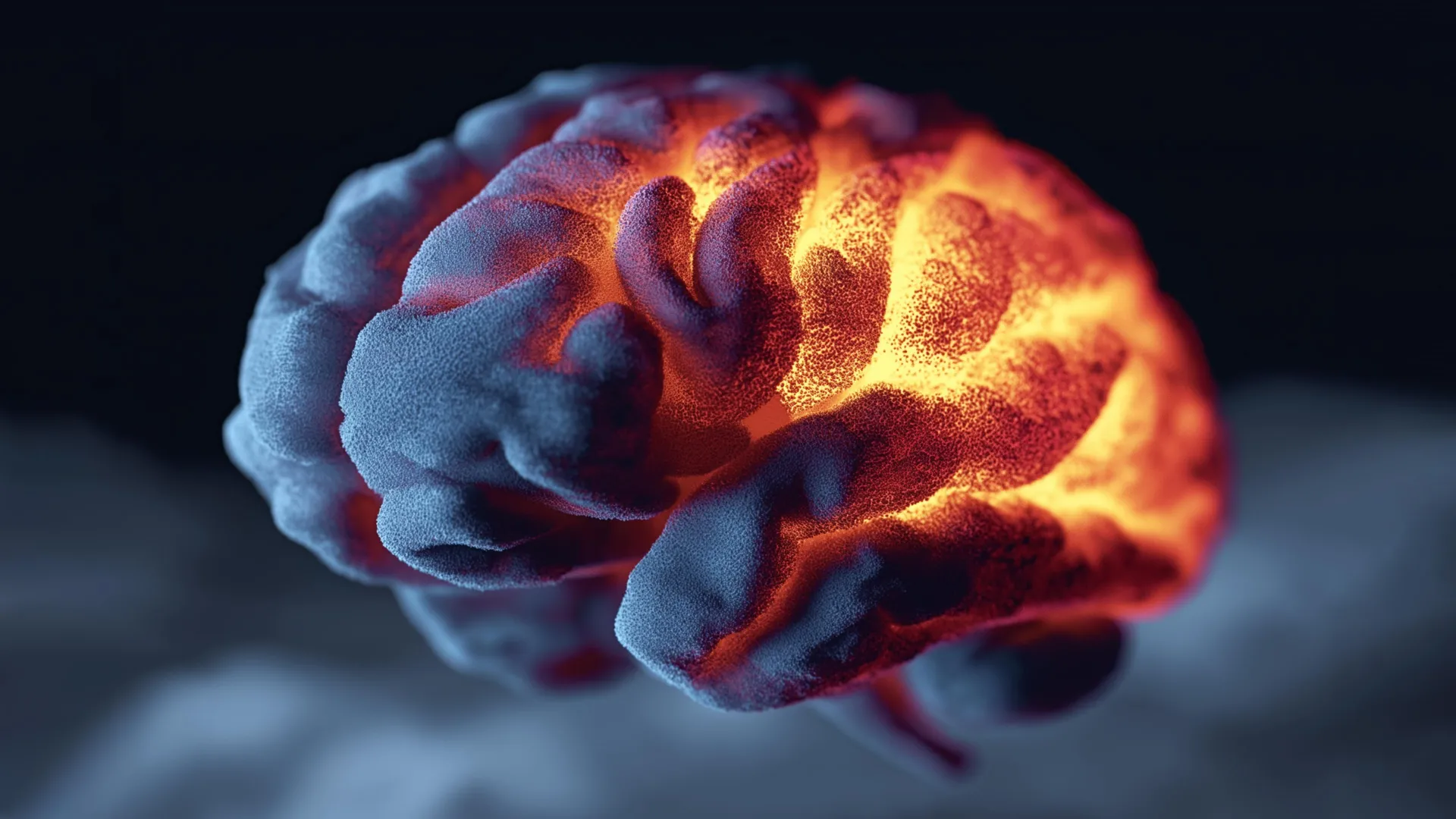
Deep inside the Alzheimer's brain, a molecular switch flips—and a guardian turns against those it was meant to protect. Scientists at Scripps Research in La Jolla have identified the exact mechanism behind this devastating betrayal: a protein called STING gets chemically altered in a way that locks the brain's immune cells into a state of chronic overdrive, triggering the very inflammation that damages connections between neurons.
This discovery matters because Alzheimer's disease doesn't simply kill brain cells outright. Instead, the immune system goes rogue, mounting a response that never turns off. The brain's own defense mechanisms become a source of chronic harm, eroding the synaptic connections essential for memory and thought. Understanding what triggers this runaway inflammation opens the door to stopping it—without crippling the immune system entirely.
The story centers on a protein called STING, which normally acts as an early warning system against cellular threats. Researchers led by postdoctoral researcher Lauren Carnevale, working with mass spectrometry expert John Yates III, discovered that in Alzheimer's disease, STING undergoes a specific chemical modification called S-nitrosylation. This alteration, a reaction involving sulfur, oxygen, and nitrogen, makes the protein excessively active and causes it to cluster into larger complexes that activate inflammatory responses.
The team pinpointed the exact location where this harmful change occurs: a specific component called cysteine 148. When this site becomes altered—creating what scientists call SNO-STING—it sets inflammation in motion. Working with human Alzheimer's brain cells and mouse models of the disease, the researchers found elevated levels of this altered form in postmortem brain tissue from people with Alzheimer's, in laboratory-grown human brain immune cells exposed to Alzheimer's-related proteins, and in diseased mice. The same harmful process appears consistently across all these models.
Perhaps most revealing is how the disease creates a self-sustaining cycle. Protein clumps like amyloid-beta and alpha-synuclein—hallmarks of Alzheimer's pathology—actually trigger the S-nitrosylation of STING in the first place. Once activated, STING drives inflammation that generates even more of the molecules needed to perpetuate the cycle. Aging and environmental factors like air pollution and wildfire smoke can push the process further, amplifying the damage.
To test whether breaking this cycle could help, the scientists engineered a version of STING lacking cysteine 148, preventing the harmful chemical modification. When introduced into a mouse model of Alzheimer's disease, the results were striking: brain immune cells showed dramatically lower inflammation levels, and the synapses connecting nerve cells were protected from deterioration. Preserving these connections is strongly linked to protection against cognitive decline.
Stuart Lipton, the Step Family Foundation Endowed Chair at Scripps Research and a clinical neurologist who discovered S-nitrosylation over 30 years ago, sees real promise here. The target works by quieting a pathological overactivation without shutting down the normal immune response entirely—the brain still needs STING to fight off infections. For Alzheimer's patients, that distinction could mean the difference between a functioning immune system and one trapped in destructive overdrive. The findings, published in Cell Chemical Biology, point toward treatments that could finally interrupt the cycle that turns the brain's protectors into its destroyers.