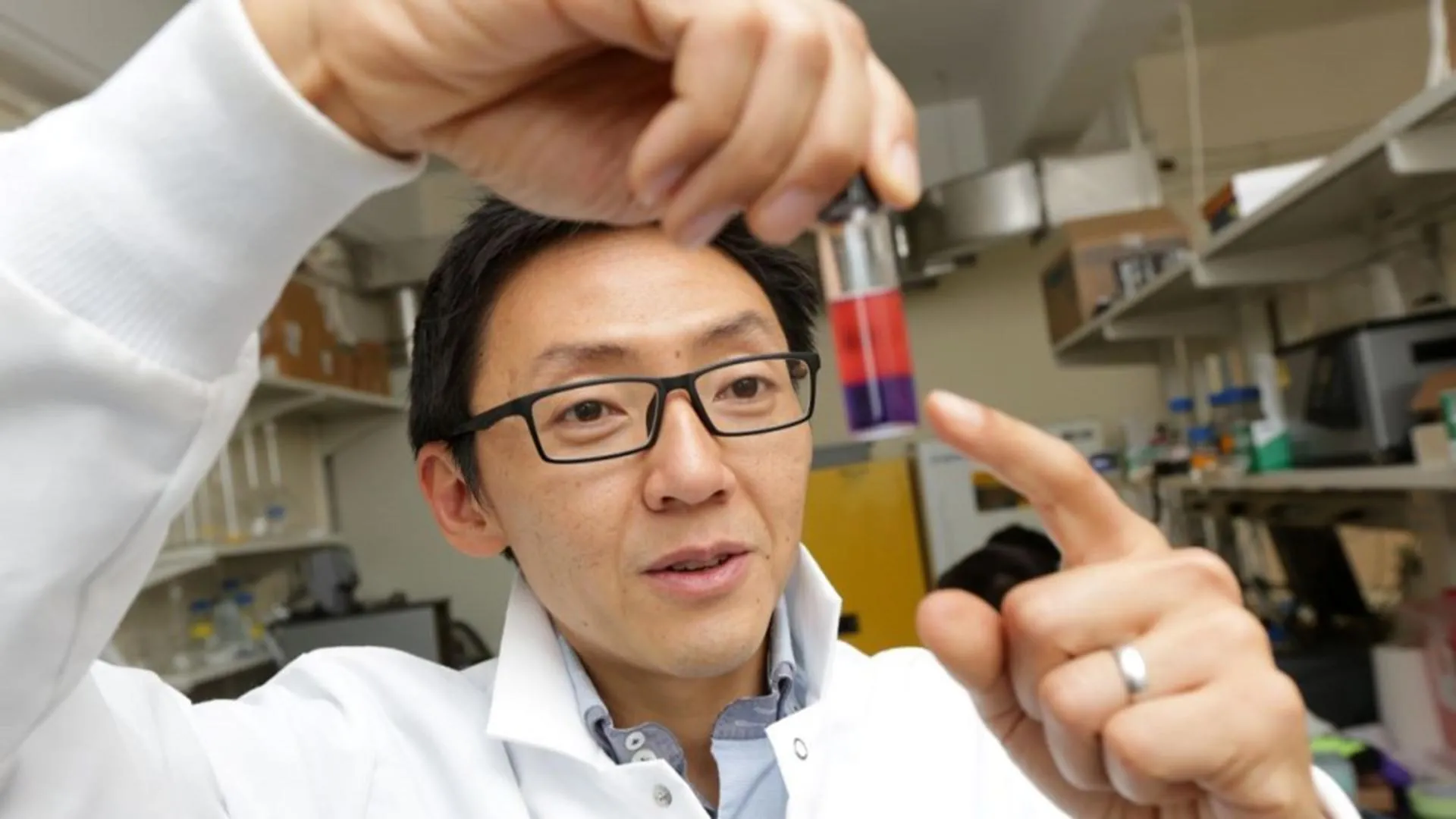
At California's Salton Sea, beneath the desert floor, lies enough lithium to power more than 375 million electric vehicle batteries — but extracting it has been nearly impossible until now. Researchers at Columbia Engineering have just unveiled a breakthrough technology that could finally tap these vast reserves and reshape how the world produces the critical mineral that powers the clean energy transition.
The problem is urgent. As automakers race to electrify their fleets and renewable energy systems demand ever-larger battery storage, global lithium demand is soaring. Yet most of the world's supply still comes from solar evaporation ponds — sprawling outdoor basins where brine is left to sit under the sun for months or years while water slowly evaporates. This approach works only in a handful of arid regions like Chile's Atacama Desert and parts of Nevada, and it devours vast quantities of water in regions already facing scarcity. Worse, it cannot work at all in places like the Salton Sea, where geological conditions make traditional extraction impossible.
The Columbia team's solution is called S3E — switchable solvent selective extraction. Published in the journal Joule, the method uses a temperature-responsive solvent to pull lithium directly from underground brines, even when lithium concentrations are low or mixed with difficult-to-separate minerals. What makes it revolutionary is simplicity. Rather than relying on specialized binding chemicals or extensive post-processing, S3E works by harnessing how lithium ions interact with water molecules inside a solvent that changes properties based on temperature. At room temperature, the solvent absorbs lithium and water from the brine. Heat it up, and the system releases purified lithium and water while regenerating the solvent for reuse.
During testing, the results were striking. S3E extracted lithium at rates up to 10 times higher than sodium and 12 times higher than potassium — key contaminants in lithium brines. The team also successfully removed magnesium, one of the most stubborn impurities, through a chemical precipitation step. When researchers tested the system using synthetic brines mimicking Salton Sea conditions, they recovered nearly 40 percent of the lithium after four extraction cycles using the same solvent batch, a result suggesting the technology could eventually support continuous large-scale operation.
Ngai Yin Yip, the La Von Duddleson Krumb Associate Professor of Earth and Environmental Engineering who led the research, emphasized that the technology could run on low-grade heat from waste sources or solar collectors — making it not just faster and cleaner than evaporation ponds, but also powered by renewable energy itself. The researchers are candid that the project remains at the proof-of-concept stage and has not yet been fully optimized for maximum efficiency or lithium recovery. But they see it as a viable alternative to both evaporation ponds and hard rock mining, which currently dominate global production despite serious environmental costs.
As battery demand accelerates worldwide, the stakes for cleaner extraction have never higher. The supply chains powering the green energy transition have rarely faced public scrutiny, yet some remain surprisingly dirty. S3E represents a crucial step toward making that transition genuinely sustainable — not just in what the batteries power, but in how they're made.