Gang Wu stands in a laboratory at Washington University in St. Louis, pointing to a catalyst made from rhenium phosphide and molybdenum phosphide—two materials that, when combined, could help unlock a cheaper way to make hydrogen from water and electricity. It's a quiet breakthrough that addresses one of clean energy's most stubborn problems: how to ditch the expensive, platinum-based systems that have long dominated hydrogen production.
The world is racing to decarbonize, and hydrogen produced from renewable electricity could play a crucial role—serving as an energy carrier for industries that are notoriously hard to electrify, from steel manufacturing to long-distance transport. But today's hydrogen production systems rely heavily on platinum group metals, exotic elements that make the technology prohibitively expensive for widespread adoption. Wu's team at the McKelvey School of Engineering has spent years tackling this exact problem: how to replace platinum without sacrificing performance.
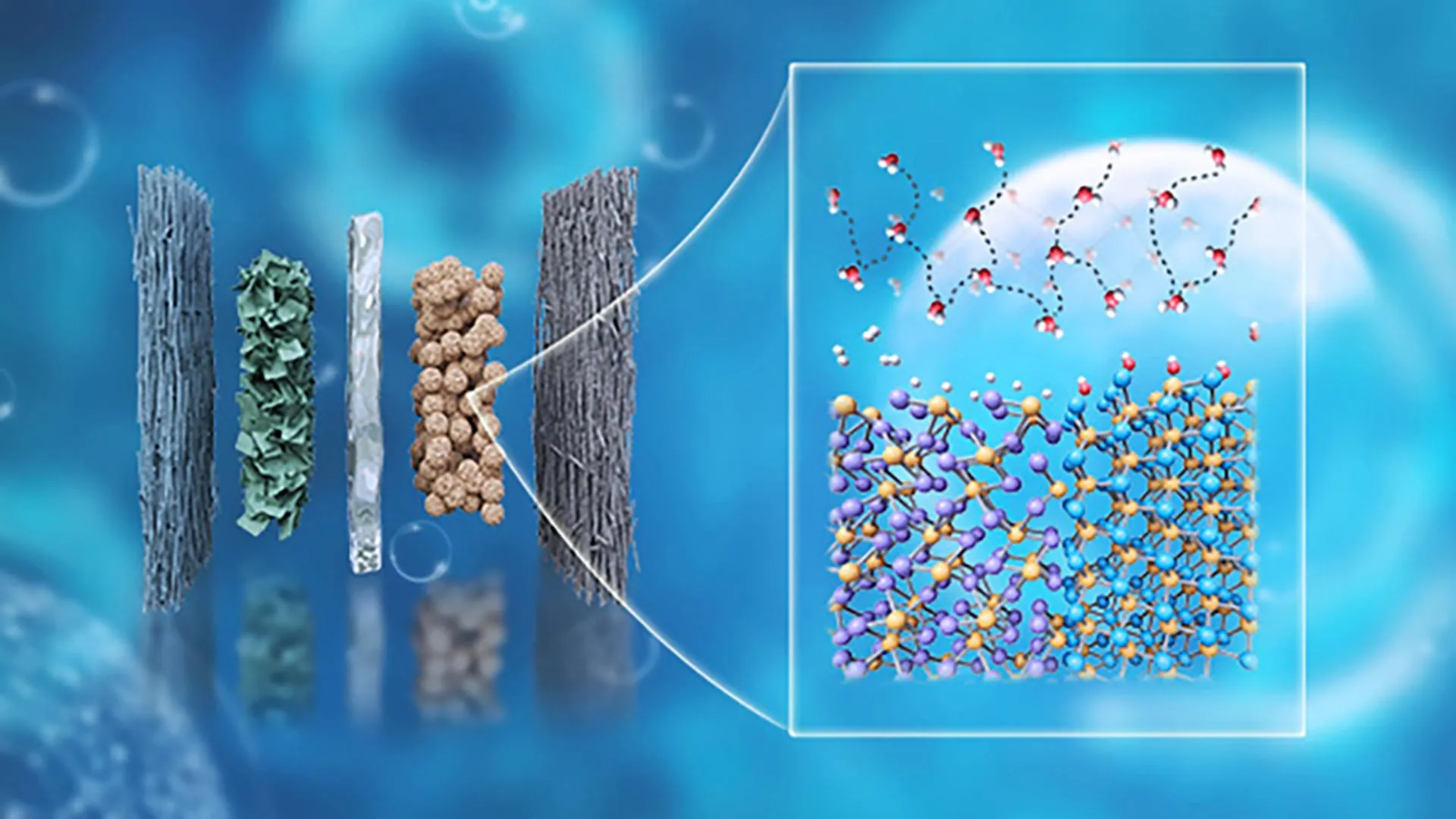
Their solution emerged from careful chemistry. By pairing rhenium phosphide (Re2P) with molybdenum phosphide (MoP), Wu's group created a composite catalyst that outperformed leading platinum-based alternatives in laboratory tests. The two materials work in tandem—rhenium helps hydrogen attach to and release from the catalyst surface, while molybdenum accelerates the splitting of water molecules in the alkaline electrolyte. The result is what the team calls an anion-exchange membrane water electrolyzer (AEMWE), a device that uses electricity from sunlight, wind, or water sources to split water into hydrogen and oxygen.
What makes this breakthrough genuinely significant is durability. The new catalyst operated for more than 1,000 hours at industry-level current densities—1 and 2 amperes per square centimeter—making it one of the most durable platinum-free cathodes developed so far for this type of electrolyzer. That's the difference between a clever laboratory experiment and something that could actually work at scale. "Hydrogen itself can be used as an energy carrier and is useful for different chemical industries and manufacturing," Wu explained, noting that the ability to store renewable energy as hydrogen opens new possibilities for sectors that currently have few clean alternatives.
The performance metrics tell their own story. Wu's team found that their catalyst showed the lowest electrical resistance across the tested range, suggesting the fastest hydrogen adsorption kinetics among comparable systems. This translates to efficiency gains that could make hydrogen production economically viable in ways it hasn't been before. The work was supported by Wu's startup fund at Washington University, a modest investment with potentially far-reaching implications.
Of course, this remains laboratory-scale work. The researchers haven't yet demonstrated that their approach can be scaled to industrial production levels, and that's the next frontier. But the foundation they've laid—a durable, platinum-free catalyst that outperforms platinum-based alternatives—represents a genuine step forward in making clean hydrogen accessible. As the world grapples with how to transition away from fossil fuels while maintaining the industrial capacity modern economies depend on, cheaper ways to produce hydrogen from renewable electricity aren't just nice to have. They're essential. Wu's team has shown that it's possible to build them without relying on materials so scarce and costly they limit deployment. What happens next will be watched closely by energy researchers and industry players alike.