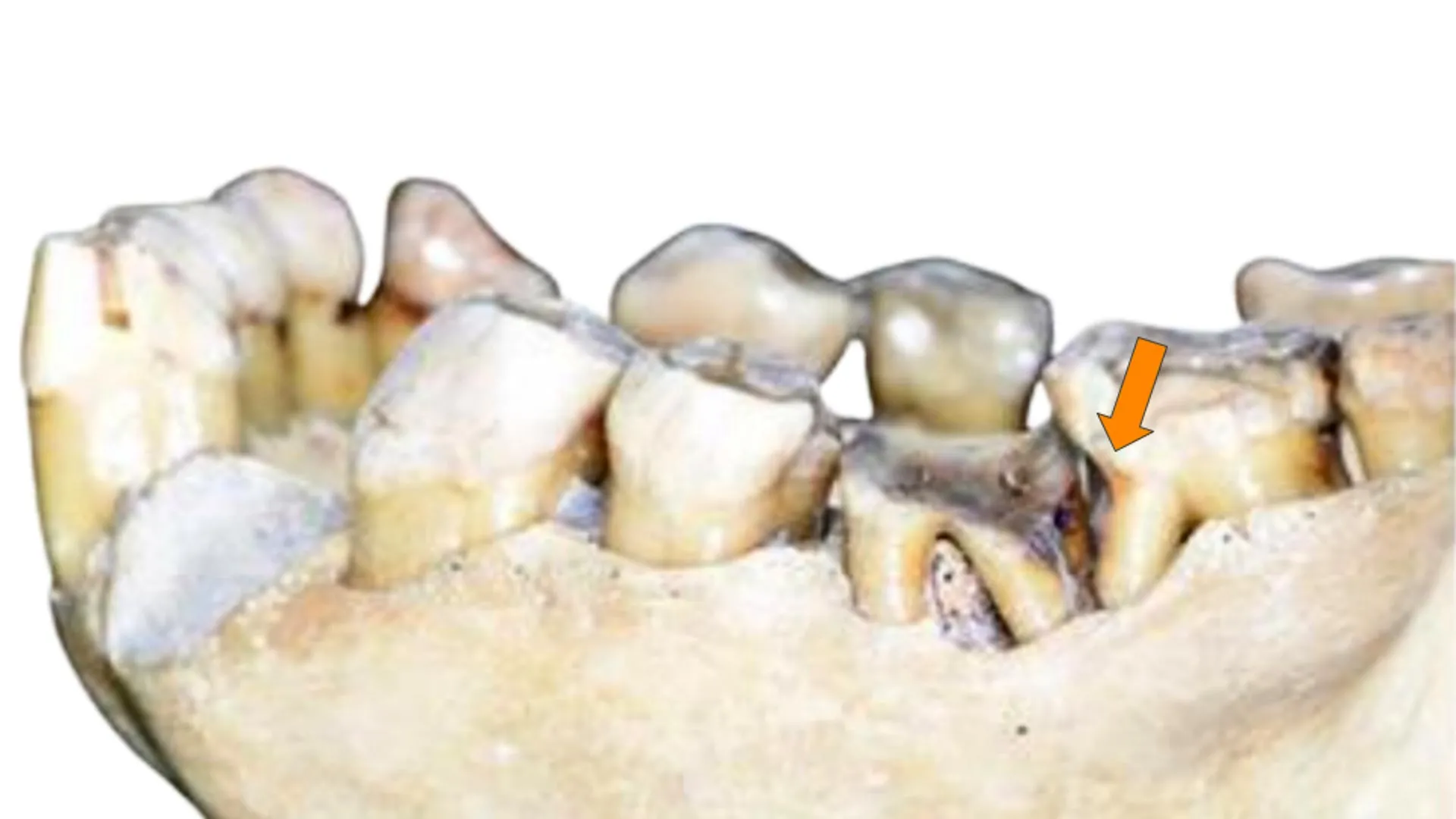
When scientists examined the teeth of more than 500 wild primates across 27 species, they discovered something that rewrites a cornerstone assumption about human evolution: those tiny grooves once celebrated as proof of our ancestors' tool use may be nothing of the sort.
For over a century, anthropologists have studied small grooves etched across the roots of ancient human teeth and confidently labeled them "toothpick grooves," interpreting them as evidence that our forebears deliberately cleaned their teeth with sticks or fibers as far back as 2 million years ago. It seemed like the oldest human habit, a marker of tool use and dental care that distinguished us from the rest of the animal kingdom. But research published in the American Journal of Biological Anthropology challenges this narrative by looking at evidence no one had properly examined before: the teeth of our closest living relatives.
The study's revelation is both humbling and clarifying. When researchers analyzed teeth from gorillas, orangutans, macaques, colobus monkeys, fossil apes and other wild primates—ensuring all specimens came from animals untouched by toothbrushes, processed foods, or modern dental care—they found that roughly 4% of individuals displayed lesions resembling the very grooves that anthropologists had attributed to deliberate toothpicking. Some were nearly identical, complete with fine parallel scratches and tapering shapes. This means the grooves can form naturally, through ordinary chewing, abrasive foods, or even swallowed grit, without any tool use whatsoever.
But the study uncovered something even more striking: not a single wild primate showed abfraction lesions—those deep, wedge-shaped notches near the gumline that are commonplace in modern dental clinics. This absence, consistent across species with remarkably tough diets and powerful chewing forces, points to an uncomfortable truth about human progress. Abfraction lesions, often caused by forceful brushing, acidic drinks, and processed diets, appear to be a uniquely human problem—a dental signature of our modern lives rather than evidence of our evolution.
The implications ripple outward in two directions. For anthropology, the findings demand humility: not every groove in a fossil tooth represents a deliberate cultural behavior. Before interpreting marks as signs of toothpicking, researchers must consider whether natural forces—wear, diet, even the particles primates swallow—can explain them just as well. For modern health, the pattern reveals how profoundly our contemporary lifestyles have altered our bodies in ways that separate us from other primates. Abfraction lesions join impacted wisdom teeth and misaligned teeth as distinctly human afflictions, rare in the wild but epidemic in civilization.
This emerging field, called evolutionary dentistry, flips the usual script. Rather than looking backward to understand our ancient ancestors, it looks backward to understand ourselves—mining our evolutionary past to decode why our mouths break down in such distinctly modern ways. The research suggests that future dental prevention might learn more from studying wild primates than from studying fossils, offering insights into how to protect our teeth from the hidden costs of processed food, forceful hygiene, and acidic beverages. What appeared to be humanity's oldest habit may have been our longest misunderstanding.