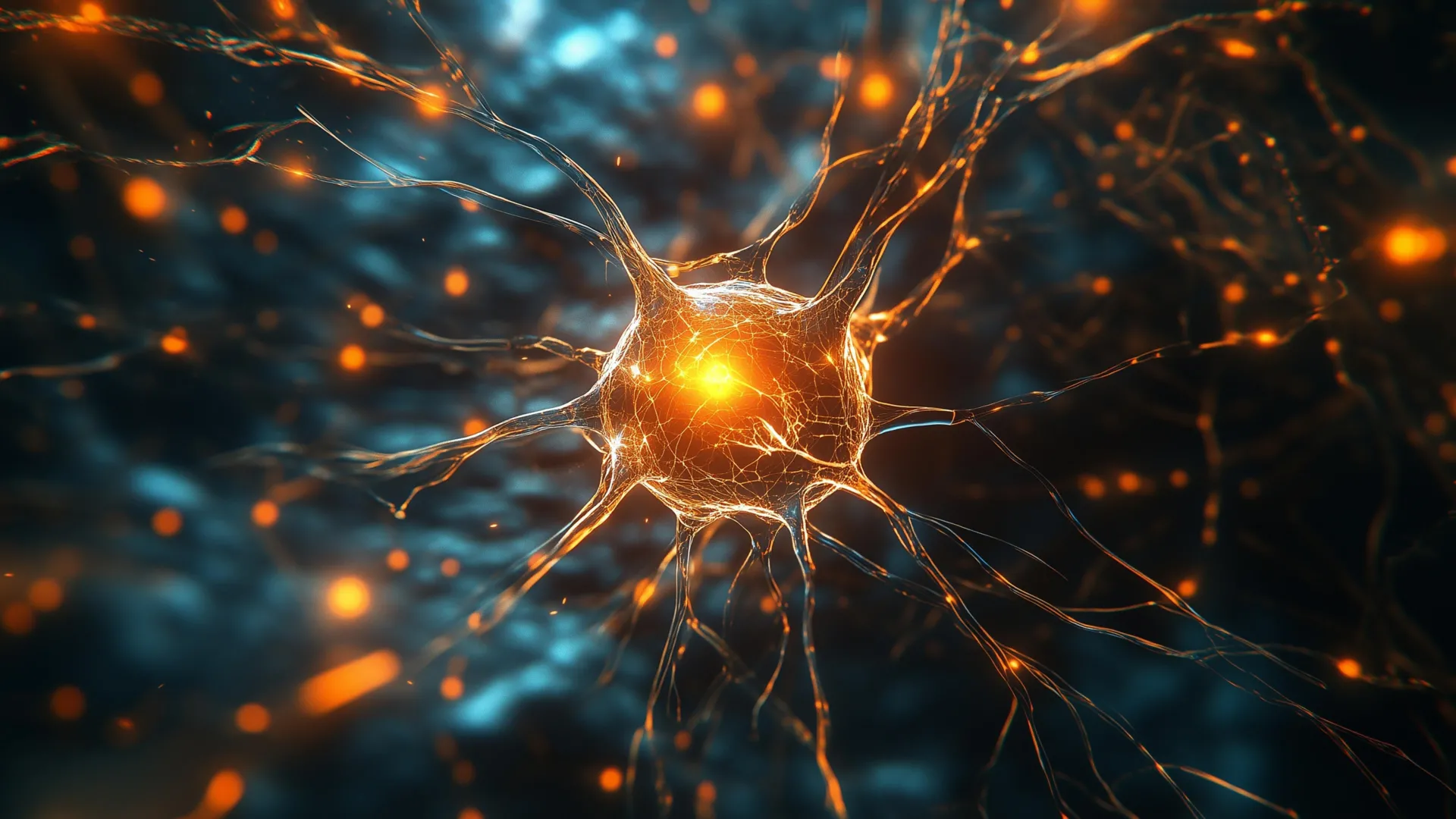
Ryan Julian and his team at the University of California, Riverside were staring not at brain scans or plaques, but at the quiet drama unfolding inside a single neuron—where a rogue protein may be hijacking a vital cellular system. For decades, Alzheimer’s has been framed as a story of two culprits: amyloid beta and tau. But what if the real spark isn’t the buildup of these proteins in the brain, but a molecular tug-of-war happening deep within nerve cells? That’s the compelling new theory emerging from UCR, one that could reshape how we understand—and ultimately treat—the disease.
Alzheimer’s has long been associated with amyloid beta plaques outside neurons and tangled clumps of tau inside them. Yet thousands of clinical trials targeting amyloid beta have failed to halt cognitive decline, leaving scientists searching for a deeper mechanism. Julian’s team focused on a critical but overlooked detail: tau normally stabilizes microtubules—tiny intracellular highways that shuttle nutrients and signals across neurons. Without functioning microtubules, neurons falter and die. The researchers noticed something striking: the part of tau that binds to microtubules bears a close structural resemblance to amyloid beta. Could amyloid beta, too, be latching onto these essential structures?
Using fluorescent tagging, the scientists watched as amyloid beta attached to microtubules with the same strength as tau. When both proteins were present, they competed for the same binding sites. As amyloid beta accumulates—especially as the brain’s cleanup system, autophagy, slows with age—it can displace tau from microtubules. Once unmoored, tau begins to misfold, clump, and drift into abnormal regions of the cell, forming the tangles long associated with Alzheimer’s. This suggests the disease may not start with plaques or tangles at all, but with a disruption in the neuron’s internal transport system.
The implications are profound. If amyloid beta’s real danger lies in its interference with tau’s role on microtubules, then treatments focused solely on clearing plaques may be missing the mark. Instead, future therapies could aim to protect microtubules or enhance the cell’s ability to remove amyloid beta before it infiltrates neurons. Intriguingly, lithium—previously linked to lower Alzheimer’s risk—has been shown to stabilize microtubules, lending indirect support to the team’s model.
Published in the Proceedings of the National Academy of Sciences, Nexus, this research offers more than a new hypothesis—it ties together decades of fragmented findings into a coherent narrative. As Julian puts it, "This idea helps make sense of many results that previously seemed unrelated." For a field long frustrated by dead ends, this discovery opens a fresh path forward, not just toward understanding Alzheimer’s, but toward stopping it where it begins: inside the fragile machinery of the neuron.