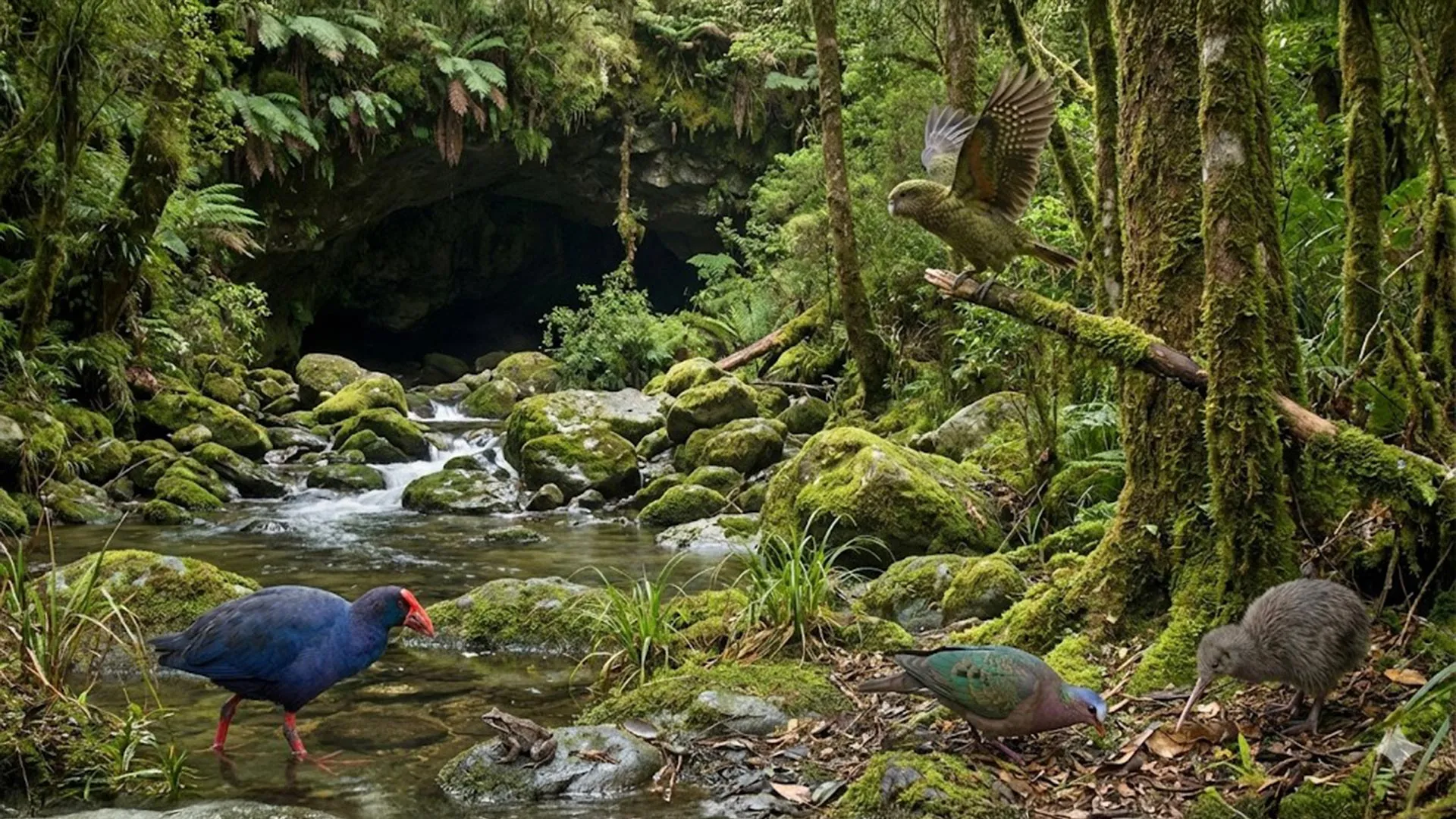
Deep within a limestone cave in Waitomo, New Zealand, a single fossilized bone—no larger than a thumbnail—has cracked open a million-year-old secret. Buried between layers of ancient volcanic ash, the remains of long-lost birds and frogs have emerged, revealing a vanished world that thrived long before humans set foot on Aotearoa. This extraordinary trove, unearthed by scientists from Flinders University and Canterbury Museum, captures a moment in time around 1 million years ago, offering the first comprehensive look at terrestrial life from this missing era in New Zealand’s history.
For decades, paleontologists have puzzled over a vast gap in the fossil record—one stretching from 16 million to 1 million years ago. While the St Bathans fossil site in Central Otago offered glimpses into life 20 million years ago, what followed remained largely unknown. "This wasn't a missing chapter in New Zealand's ancient history, it was a missing volume," says Dr. Paul Scofield of Canterbury Museum. Now, thanks to this discovery, that volume is being rewritten.
The cave yielded fossils from 12 bird species and four frog species, including a previously unknown parrot, Strigops insulaborealis—a flying ancestor of today’s flightless kākāpō. Unlike its modern relative, which relies on powerful legs to climb and move through dense forest, this ancient parrot had weaker limbs, suggesting it may have still been capable of flight. Also uncovered were remains of an extinct takahē ancestor and a pigeon related to Australia’s bronzewing—evidence of a rich, dynamic ecosystem shaped by powerful natural forces.
The precise dating of the fossils was made possible by their position between two volcanic ash layers—one from an eruption 1.55 million years ago, the other from a colossal event around 1 million years ago. This geological “sandwich” allowed researchers to pinpoint the age of the fossils with rare accuracy. During this tumultuous period, scientists estimate that 33–50% of species disappeared, driven not by humans, but by volcanic upheaval and rapid climate shifts. "These extinctions were driven by relatively rapid climate shifts and cataclysmic volcanic eruptions," says Dr. Scofield.
The discovery reshapes our understanding of New Zealand’s ecological past, showing that dramatic change is nothing new. Long before human arrival, the islands’ wildlife was in constant flux, with new species evolving as old ones vanished. As Associate Professor Trevor Worthy of Flinders University puts it, "This is a newly recognized avifauna for New Zealand, one that was replaced by the one humans encountered a million years later."
Now, as conservationists work to protect species like the kākāpō from extinction, this ancient record offers a deeper perspective—one that reminds us that resilience, adaptation, and loss are all part of the natural story of life.