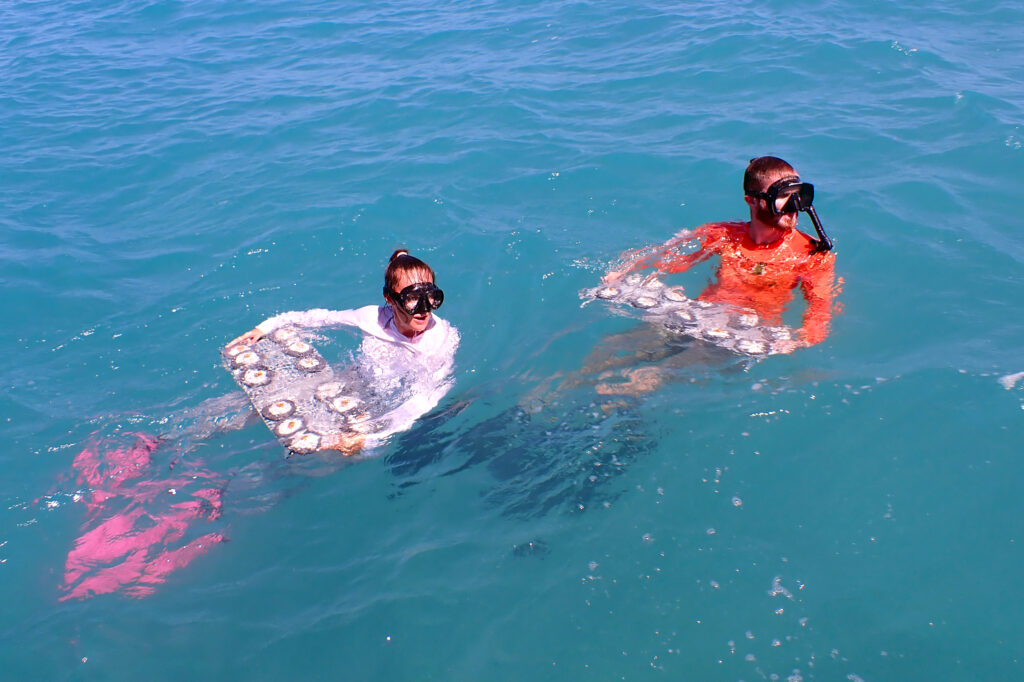
Nearly three dozen lab-grown elkhorn corals arrived at Florida's Dry Tortugas National Park by cooler and boat this April, marking a turning point in the race to save a species that vanished almost overnight. Among them were the "Flondurans"—the first experimental cross-breed of Florida and Honduran elkhorn corals ever planted in U.S. waters—genetic newcomers born in laboratory tanks from a deliberate fusion of two ocean ecosystems separated by over 500 miles.
The outplanting effort arrives against a backdrop of ecological crisis. In 2023, a months-long marine heatwave swept through Florida's coastal waters and triggered an unprecedented bleaching event that wiped out nearly all of the state's elkhorn corals, along with other reef-building species like staghorn corals. "Almost every single elkhorn coral that was still alive on Florida's coral reef died," said Keri O'Neil, senior scientist and director of the Coral Conservation Program at The Florida Aquarium. The scale of the loss was so complete that scientists now say elkhorn corals are functionally extinct in the Florida Keys and Dry Tortugas—too few healthy, reproductively active colonies remain for the species to sustain itself through natural reproduction alone.
Faced with potential extinction, Andrew Baker, a marine biologist and professor at the University of Miami's Rosenstiel School, looked beyond Florida's borders for salvation. He had learned of a peculiar reef thriving in Tela Bay along Honduras' Caribbean coast, where locals call it a "rebel reef." Elkhorn corals there flourish not only in unusually warm waters but also in heavily polluted conditions plagued by nutrient-filled agricultural runoff from nearby oil palm plantations. Baker theorized that if these exceptionally resilient Caribbean corals could be cross-bred with Florida's elkhorn, the resulting offspring might inherit a genetic advantage—the ability to withstand the heat waves that destroyed their Florida cousins.
In 2024, Baker's team traveled to Honduras and collected elkhorn colonies from Tela Bay, bringing them back to Florida. At The Florida Aquarium, Baker and O'Neil attempted something never before done in the U.S.: breeding elkhorn corals from different countries. During carefully controlled spawning events, researchers collected eggs and sperm from both Florida and Honduran corals, fertilized them in laboratory tanks, and created the first generation of "Flondurans"—a living experiment in genetic rescue.
Now those corals face their real test. In April, doctoral student Bailey Marquardt transported the two-year-old corals—half Flondurans and half bred exclusively from Florida parents—to Dry Tortugas National Park, roughly 70 miles southwest of Key West. The team attached the corals side by side on cinder blocks at several reef sites. "These babies have been raised on land since conception," Marquardt said, describing the moment they entered the ocean.
Last year, 35 Flonduran corals were outplanted near Key Biscayne, where many continue to thrive. This year, Marquardt is leading efforts to plant at least 300 more elkhorn colonies throughout Florida. The side-by-side comparison of Flondurans and pure Florida corals will reveal which lineages show the greatest promise for survival. "This is a critical step in field-testing measures to help reefs adapt to increased ocean temperatures," Baker said. "By testing these Flonduran and Floridian corals side-by-side on different reefs, we can begin to identify suitable source populations for future breeding efforts."
For the first time since the catastrophic 2023 bleaching, Florida's coral researchers are not simply recovering from loss—they are engineering hope.