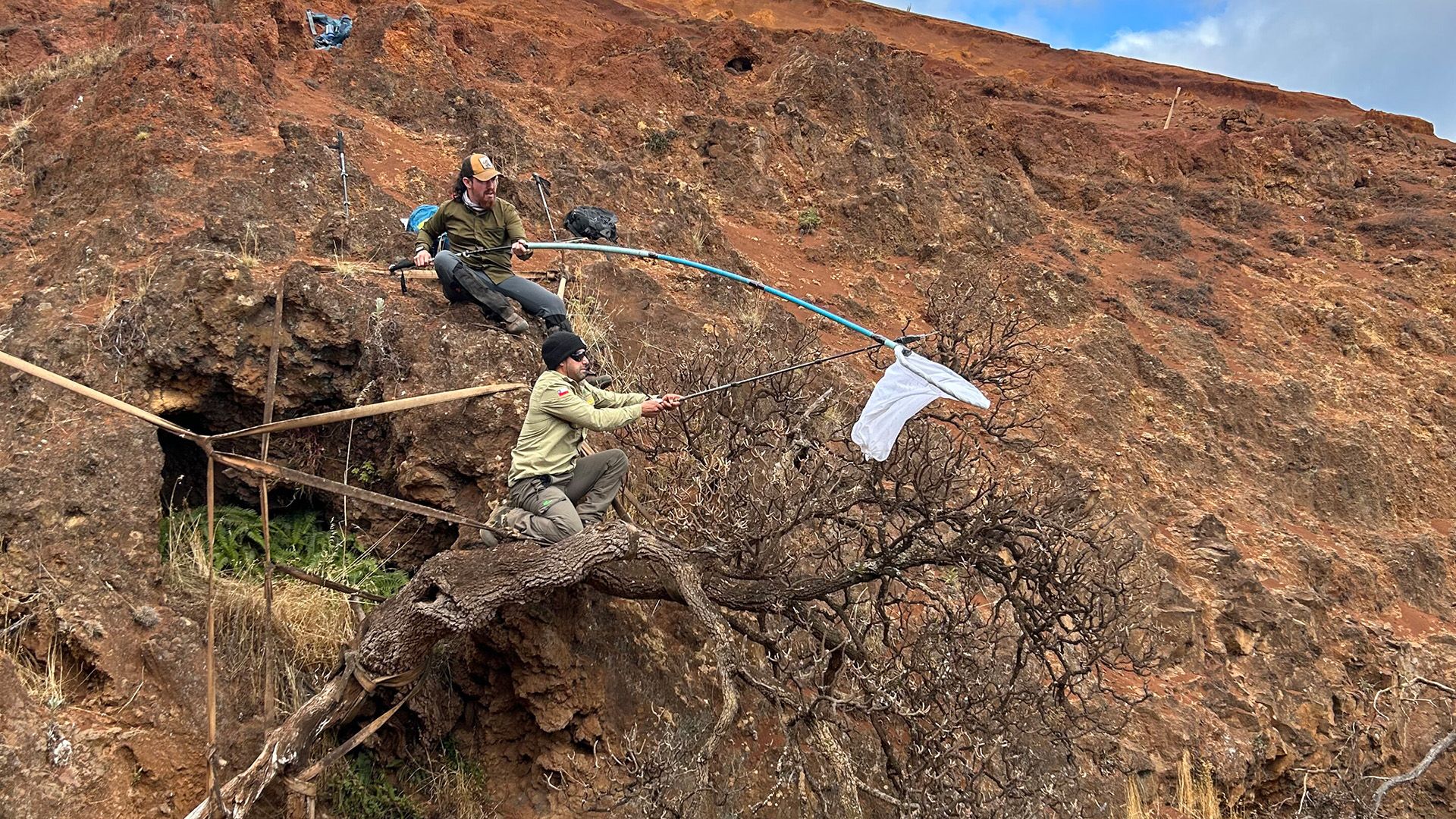
High on a windswept cliff on Chile's Robinson Crusoe Island, a solitary tree clings to existence—and it may just be humanity's last chance to save an entire species from erasure. Scientists have successfully collected hundreds of seeds from Dendroseris neriifolia, the world's rarest tree, with only one known individual remaining in the wild. This desperate rescue mission offers fragile hope for a plant that has been pushed to the absolute edge of extinction.
Dendroseris neriifolia is native to the Juan Fernández Islands, a remote volcanic archipelago about 420 miles off the coast of mainland Chile. Once scattered across the lowland forests of Robinson Crusoe Island, the species has been systematically erased by the weight of centuries of human impact. Habitat loss, erosion, invasive species, grazing animals, devastating fires, and historic forest clearing have all conspired to reduce an entire population to a single specimen—a stark reminder of how quickly a living thing can vanish from Earth.
The collection of these seeds represents a critical turning point in the fight to preserve Dendroseris neriifolia. By gathering hundreds of viable seeds from this last survivor, scientists have created a genetic lifeline that could eventually restore the species to the landscape it once inhabited. Seed banks and botanical institutions now hold biological material that makes restoration programs possible—something that would have been impossible had that final tree succumbed to the countless threats that surround it.
The story of this tree encapsulates larger conservation challenges facing island ecosystems around the world. Remote islands like the Juan Fernández archipelago are laboratories of evolution, home to plants and animals found nowhere else on Earth. They are also extraordinarily vulnerable to disruption. When invasive species arrive on an island with no natural predators, when introduced animals overgraze native vegetation, when human settlement fragments habitats—the endemic species that evolved in isolation have nowhere to go and no evolutionary defenses to deploy.
What makes this seed collection significant is that it transforms a narrative of loss into one of possibility. The scientists who ventured to Robinson Crusoe Island and secured these seeds are part of a growing global movement to use seed banking and botanical science as insurance against extinction. If propagation efforts succeed, if saplings can be grown in nurseries, and if habitat restoration occurs on Robinson Crusoe Island and elsewhere in the Juan Fernández Islands, Dendroseris neriifolia could return to its native home. It would not be a full recovery—the species would remain dependent on human stewardship—but it would be resurrection rather than extinction.
The urgency of this work cannot be overstated. For countless plant and animal species around the globe, this is the moment where intervention still matters, where a few dedicated scientists and conservationists can still change the outcome. The rescue of these seeds is not a final victory, but it is proof that extinction is not inevitable—that even for the rarest of creatures, hope remains possible if we act quickly enough.