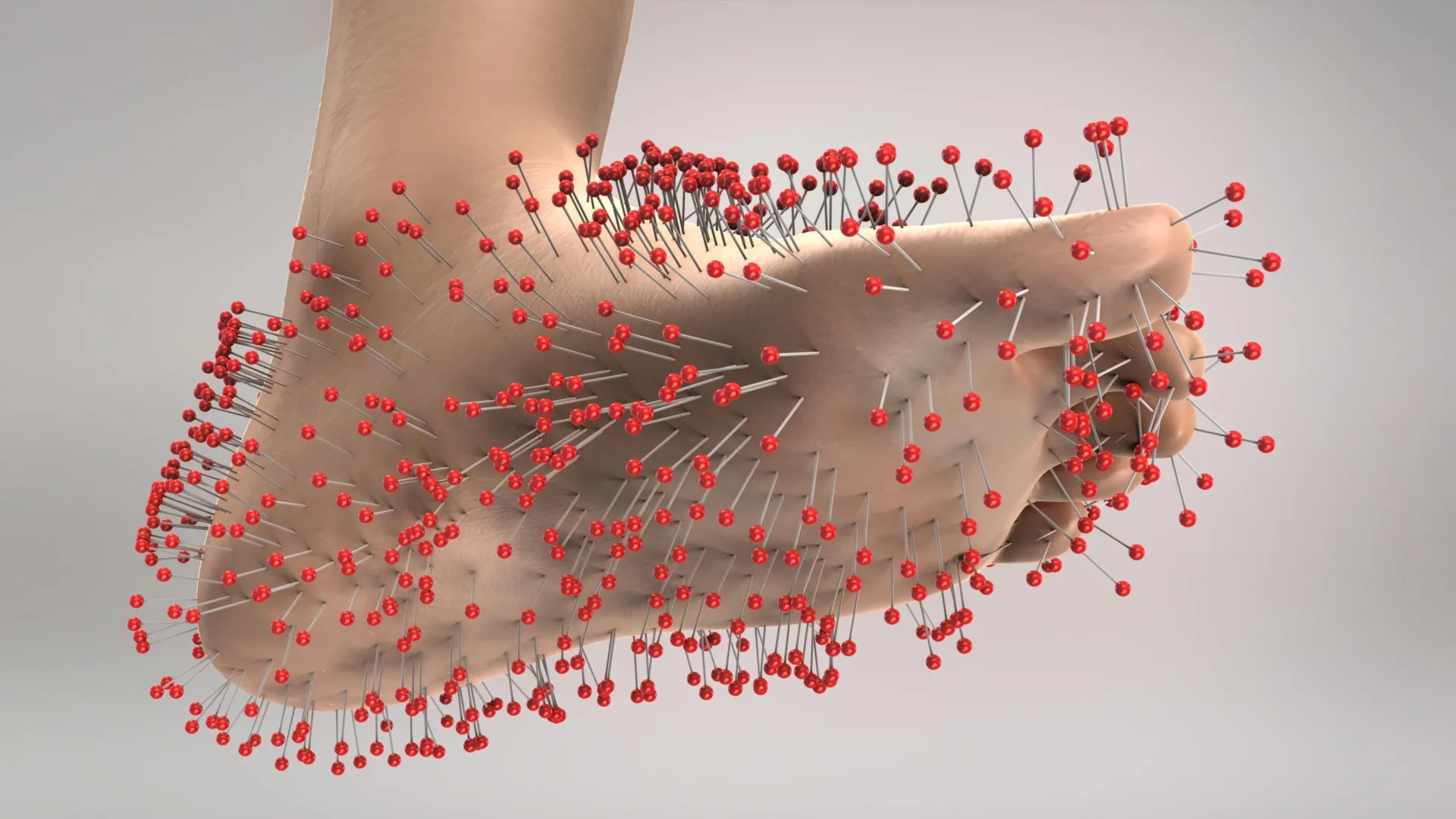
In the dorsal root ganglia—clusters of nerve cells deep inside the body where sensory information begins its journey to the brain—researchers at Duke University School of Medicine discovered something unexpected: nerve cells don't have to suffer alone. When scientists injected healthy mitochondria, the tiny cellular power plants that fuel human life, directly into damaged nerves, pain dropped by as much as 50 percent in mouse models. For millions of people living with relentless chronic nerve pain, where even the gentlest touch feels like fire, this finding offers something rare: hope that pain might be treated by fixing what's broken, rather than simply masking the hurt.
Chronic nerve pain has long puzzled scientists. The condition can arise from diabetes, from chemotherapy that saves lives but scars nerves, or from countless other sources that damage the delicate fibers extending through hands and feet. Researchers have suspected for years that something goes wrong with mitochondria in these damaged nerves—that the energy supply cells need to survive simply dries up. But the Duke team, led by senior author Ru-Rong Ji, director of the Center for Translational Pain Medicine at Duke School of Medicine, moved beyond theory. Working with both human tissue samples and living mice, they tested whether restoring mitochondrial function could actually reverse the pain itself.
The mechanism they uncovered reveals an elegant natural system that cells have been using all along. Surrounding and supporting sensory neurons are satellite glial cells, and these cells have a hidden superpower: they can pass healthy mitochondria directly into nerve cells through impossibly tiny tunnels called nanotubes. When this transfer works properly, nerve cells stay energized and healthy. When it breaks down, the nerve fibers deteriorate, triggering the tingling, numbness, and pain that characterizes conditions like diabetic neuropathy. "By sharing energy reserves, satellite glial cells may help keep neurons out of pain," Ji explained. The researchers found that when they increased this mitochondrial transfer in mice, the results were striking.
The team also took a more direct approach, injecting isolated mitochondria from both human donors and mice into damaged nerves. The results revealed something crucial: quality matters enormously. Healthy donor mitochondria reduced pain significantly, with relief lasting up to 48 hours in some cases. But when researchers used mitochondria from people with diabetes, the treatment produced no benefit—a finding that underscores how disease alters cellular function at the most fundamental level.
Working alongside lead author Jing Xu and collaborator Caglu Eroglu, a Duke professor known for studying glial cells, Ji's team also identified a protein called MYO10 that appears critical for creating the nanotubes through which mitochondria travel between cells. This discovery points toward a future where treatments might be designed to boost this natural transfer process.
The findings, published in Nature, represent a paradigm shift in how scientists think about nerve pain. Rather than developing drugs that simply block pain signals—a approach that often brings side effects—this research suggests treatments could target one of pain's root causes by restoring the energy that nerve cells desperately need. More research is required, the scientists acknowledge, including high-resolution imaging to fully understand how mitochondrial delivery works inside living tissue. But the path forward is becoming clearer: a way to treat chronic pain not by numbing it, but by healing it.