For decades, scientists assumed Earth was something of a cosmic melting pot — a planet assembled from bits and pieces that drifted in from far across the young Solar System, including water-rich debris from beyond Jupiter. A new study from ETH Zurich rips up that picture, and the researchers behind it admit they were caught off guard. "We were truly astonished," says Dan Bower.
Bower and his colleague Paolo Sossi took a fresh look at existing measurements of isotopes — sibling atoms of the same element that weigh slightly different amounts — drawn from meteorites across the Solar System, including samples linked to Mars and the asteroid Vesta. Where this isotope "fingerprint" matches, so does the object's birthplace. Earlier work had suggested that up to 40 percent of Earth's building material came from the outer Solar System, beyond Jupiter. That mattered because it seemed the easiest way to explain how our planet got its water.
But Sossi and Bower found something striking. Their calculations, published in Nature Astronomy, indicate that Earth formed almost entirely from material in the inner Solar System. Matter from beyond Jupiter accounts for less than two percent of Earth's mass — possibly none at all. "Our calculations make it clear: the building material of the Earth originates from a single material reservoir," Sossi says.
The key to the discovery was a much bigger dataset. Earlier studies usually looked at just two isotope systems. The ETH Zurich team analyzed ten of them at once. "Our studies are actually data science experiments," Sossi explains. "We carried out statistical calculations that are rarely used in geochemistry." That approach allowed scientists to sort meteorites into two families: non-carbonaceous ones born in the inner Solar System, and carbonaceous ones from the outer Solar System, richer in water and carbon. Earth, the team concludes, is built entirely from the non-carbonaceous kind. They found no sign of the material exchange between inner and outer regions that earlier theories relied on.
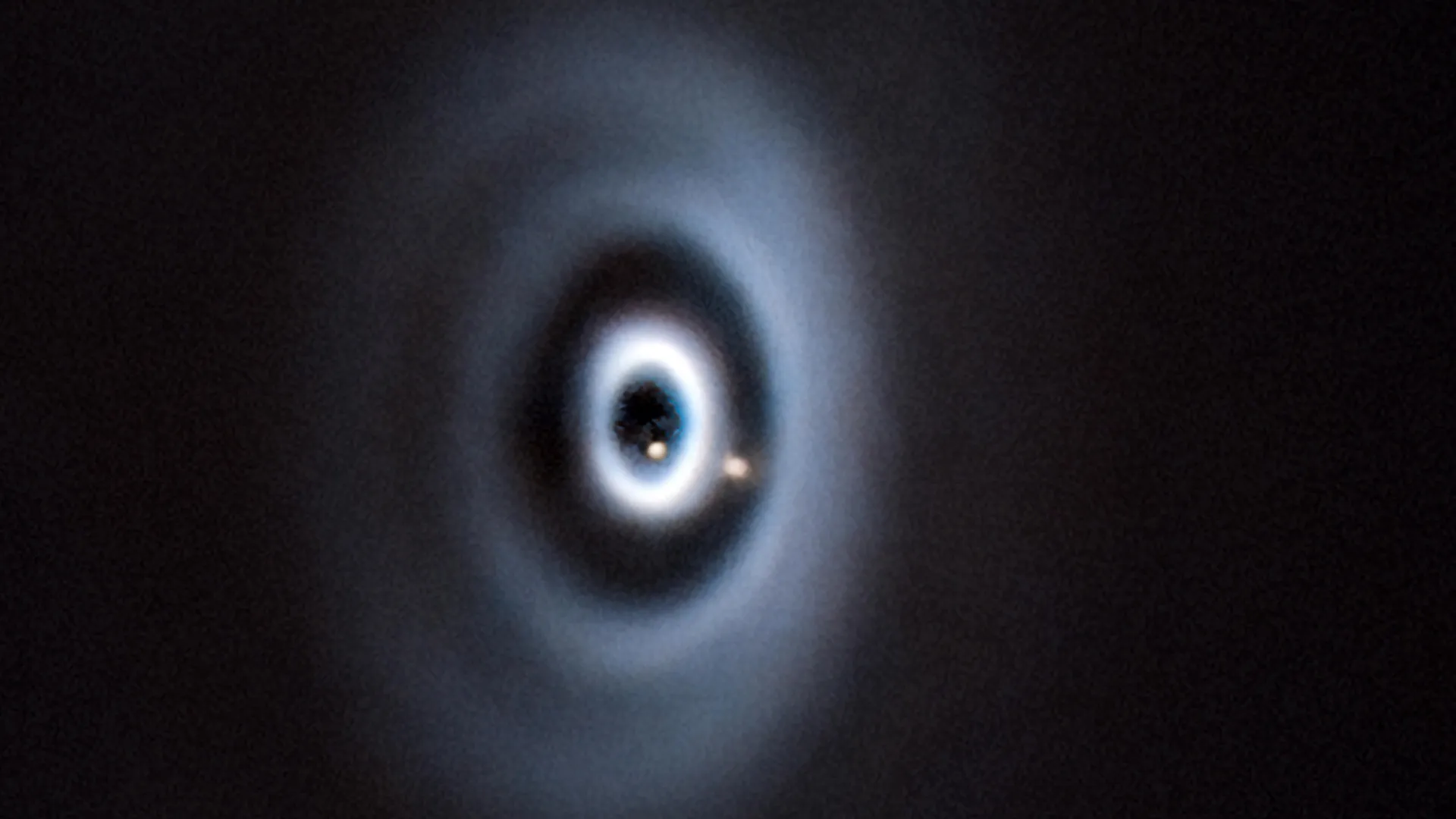
So why did the Solar System stay so neatly divided? The likely culprit is Jupiter. As the giant planet ballooned in size, its powerful gravity carved a gap in the ring of gas and dust swirling around the young Sun — the protoplanetary disc where planets are born. Jupiter acted like a fence, blocking most outer material from ever reaching Earth's neighborhood. "Our calculations are very robust and rely solely on the data itself, not on physical assumptions," Bower emphasizes.
The findings match up with Earth's resemblance to Mars and Vesta, and the researchers think Mercury and Venus probably follow the same pattern. That prediction can't be tested directly — no rock samples exist from those two planets. But it also opens a fresh mystery. If Earth didn't get its water from far away, then enough of it must have already existed in the searing hot inner Solar System. Where that water came from is now one of the most exciting open questions in planetary science. As our own planet's origin story gets rewritten, Earth turns out to be a far more self-contained world than anyone imagined.