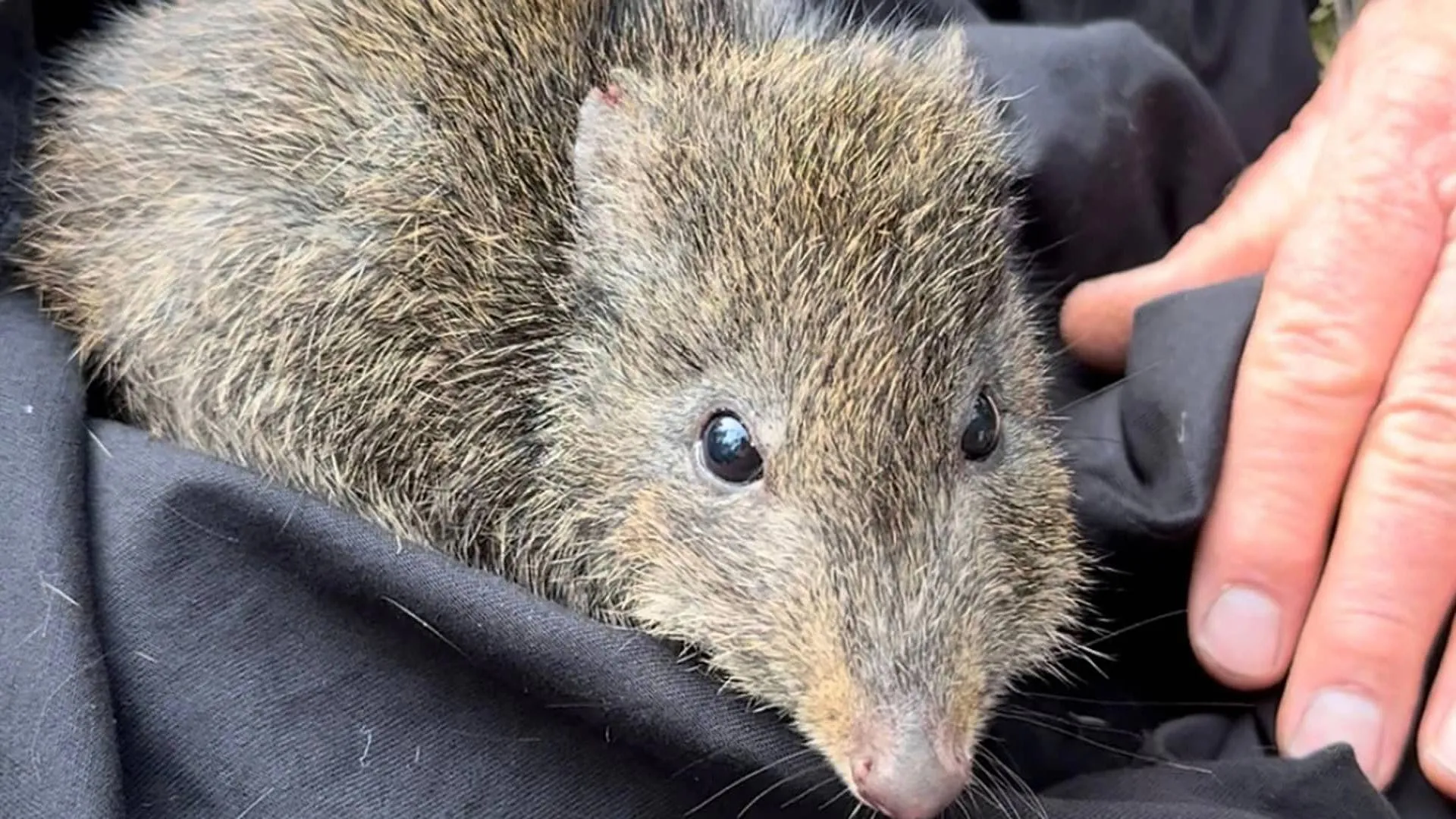
In a remote corner of Western Australia's Two Peoples Bay, scientists are studying poop to save a species on the brink of extinction. The Gilbert's potoroo, a small marsupial that once vanished entirely from the earth, now survives in fewer than 150 wild individuals—making it the world's rarest. Researchers at Edith Cowan University have turned to an ingenious solution: analyzing DNA from potoroo scat to understand what these finicky creatures eat, and in doing so, unlock the secret to their survival.
The story of the Gilbert's potoroo is one of near-total loss and painstaking recovery. Scientists believed the species had disappeared forever until 1994, when it was rediscovered in a single population in Two Peoples Bay. Since then, conservation teams have struggled to save it from complete extinction. Early attempts at captive breeding failed, largely because Gilbert's potoroos proved extraordinarily selective about their food. That selectivity became both curse and clue—the key to understanding where these animals could genuinely survive in the wild.
PhD student Rebecca Quah and her colleagues at Edith Cowan University, working alongside the Department of Biodiversity, Conservation and Attractions, developed a novel approach to cracking this dietary mystery. Rather than the traditional method of manually sorting through scat samples—an imprecise task especially when hunting for fungal spores—they deployed environmental DNA metabarcoding. The technique requires only fresh feces collected from the environment, allowing researchers to identify every fungal species a potoroo has eaten without ever disturbing the animal itself. "It's a non-invasive way of studying diet," Quah explains, "and all you need are fresh scats from the environment."
The findings revealed something crucial: the Gilbert's potoroo shares significant dietary overlap with three other fungi-eating mammals that inhabit the same regions—the quokka, quenda, and bush rat. Most importantly, researchers discovered that areas where all three common species thrive together signal the presence of suitable habitat and food resources for potoroos. This insight transformed translocation strategy. Rather than guessing where to relocate potoroos, conservationists can now look for places where other mycophagous mammals already flourish, confident that the fungi the potoroo depends on will be there too.
The timing of this breakthrough could not be more critical. In 2015, a catastrophic bushfire destroyed 90 percent of the core habitat in Two Peoples Bay, the only location where Gilbert's potoroos lived in the wild. Fortunately, far-sighted conservation teams had already established insurance populations on Bald Island and in a fenced enclosure at Waychinicup National Park. Today, the species is spread across four locations, and researchers are actively searching for a new mainland site to establish yet another population, adding another layer of protection against extinction.
The work also shines a light on why fungi-eating mammals matter far beyond the fate of a single species. As Quah notes, these animals are ecosystem engineers. By burrowing for fungi, they turn soil and help fungi spread their spores—processes essential to healthy forests and woodlands. Fungi themselves form mutually beneficial relationships with plants, making mycophagous mammals vital to entire ecosystems. With introduced predators like cats and foxes threatening Australia's native wildlife, protecting species like the Gilbert's potoroo is about far more than preserving one remarkable animal. It is about maintaining the intricate web of life that supports forests and feeds the creatures within them. Through patient science and creative thinking, researchers are writing a different ending to a species that almost disappeared forever.