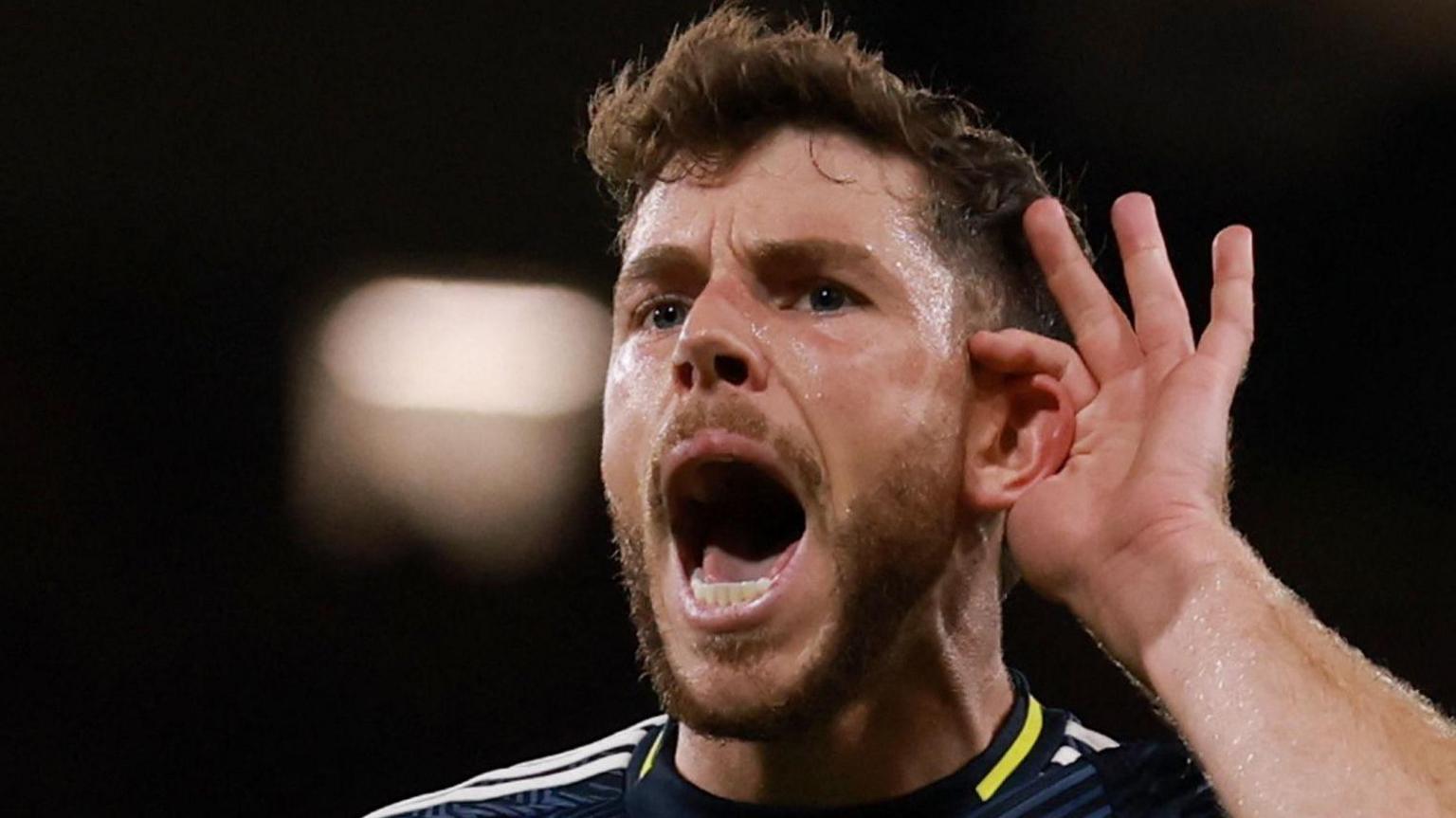
Ryan Christie brought the ball down in the final moments of Scotland's Euro 2024 match against Hungary, only to be dispossessed before he could take the throw-in. Referee Facundo Tello blew his whistle, and with it went Scotland's hopes—a 100th-minute Hungarian goal sending the Tartan Army home in devastation. That sting of deflation, etched on every player's face in the Stuttgart stands, hasn't faded. Two years later, as Scotland prepares for their first World Cup in 28 years, that heartbreak has crystallized into something sharper: determination.
Christie, now 31, carries that moment like a weight he's determined to transform. "A few of us left that thinking 'what could have been,'" he reflected on The Wayne Rooney Show. "So I think this time we've got a bit of a chip on our shoulder that we are going to do something at this tournament." The hurt runs deep enough that it's become fuel. For Christie and his teammates, the World Cup represents a chance to break Scotland's pattern of near-misses—to finally get out of the group stage and create the kind of history a nation has been waiting for.
What makes this moment different, however, is not just the players' hunger but the foundation beneath it. Head coach Steve Clarke has fundamentally reshaped Scottish football over his years at the helm, and the evidence is visible in how players speak about him. When Christie first joined the national setup, younger and quieter then, he couldn't wait to leave. Now, the culture he describes is almost unrecognizable. "If we're meeting up on a Monday, everyone flies up on the Saturday night to spend an extra day with each other," he said. "It's brilliant."
That transformation didn't happen by accident. Clarke's loyalty to his players—both on and off the pitch—has built a squad that trusts him implicitly. He extends that trust in return, even in the small moments. He trusts them to take a day off for golf without taking advantage. More importantly, he's kept faith with players through multi-year journeys. Most of the World Cup squad has been with Clarke for five, six, even seven years, creating a bond that goes far beyond tactics and formations.
The turning point came during the Denmark match—one of the rare occasions Christie has seen Clarke properly smile and enjoy himself. For the players, they understood immediately what that moment meant to him. The smile itself was a kind of victory, a tick on a list the manager desperately wanted to check off. In Christie's view, Clarke deserves a place among Scotland's greatest managers, a judgment earned not through flashy rhetoric but through quiet, consistent belief in his team.
As Scotland enters this World Cup, they arrive not as long-suffering underdogs hoping for scraps, but as a squad forged through shared experience and mutual trust. The chip on their shoulder isn't bitterness—it's purpose. The question now is whether that purpose, combined with Clarke's steady hand and a squad that has finally learned to believe, can push them past the ghosts of tournaments past.