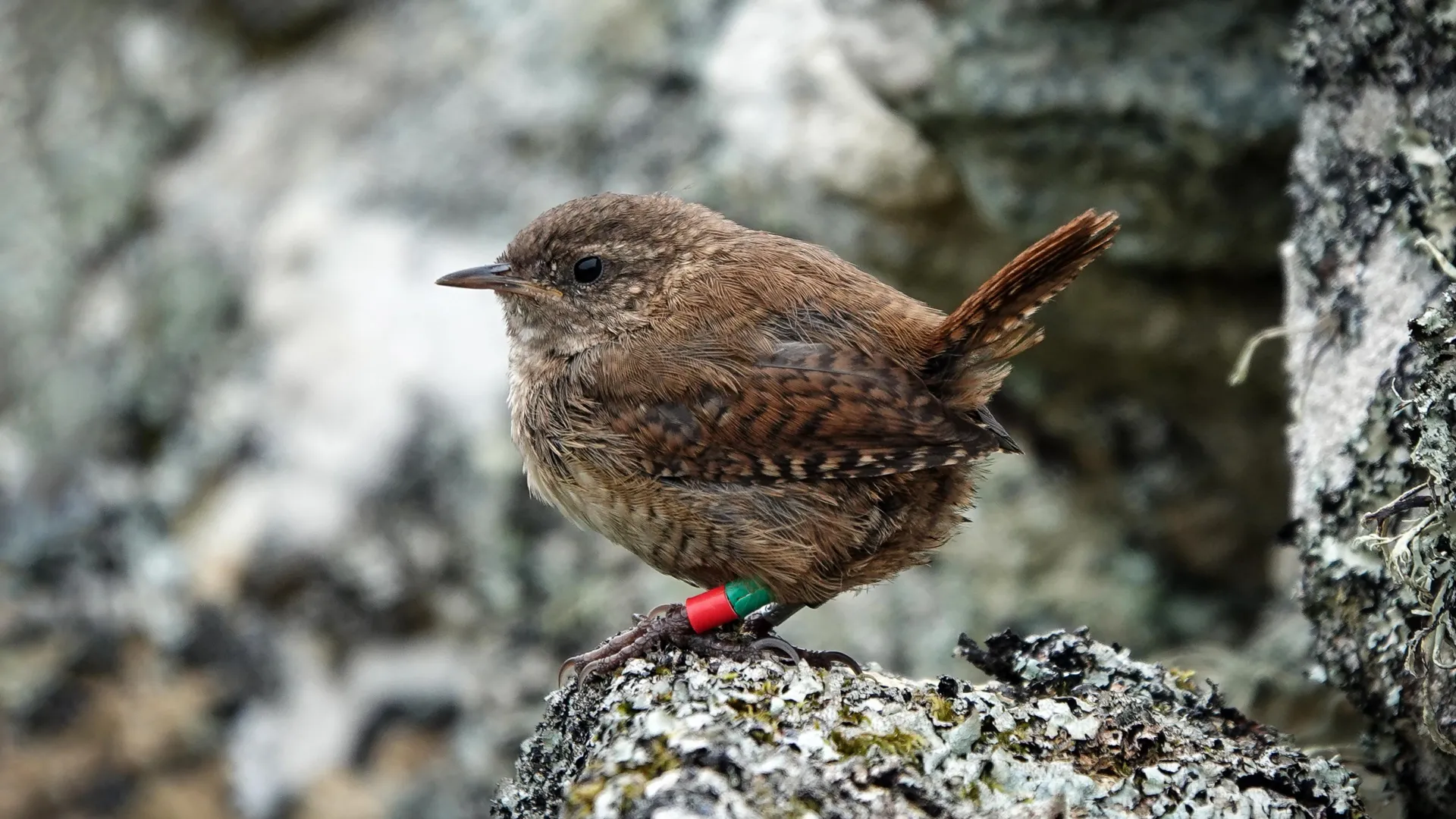
On the windswept islands of Scotland, wrens no larger than a thumb are quietly demonstrating evolution in real time, growing nearly twice the size of their mainland cousins in what scientists are calling a textbook example of island gigantism. Researchers at the University of Birmingham studying four isolated Scottish island populations—Shetland, Fair Isle, the Outer Hebrides, and St Kilda—have discovered that these tiny birds are not just changing shape, but actively diverging into distinct species right before our eyes.
The scale of transformation is striking. Mainland British wrens typically weigh between 7 and 10 grams, but St Kilda wrens tip the scales at 13 to 16 grams—making the largest island birds more than twice the weight of the smallest mainland relatives. This places them among the top 25 percent of known cases of island gigantism in birds worldwide, a phenomenon familiar from the Galápagos giant tortoises and the extinct Mauritian Dodo. Yet what makes the Scottish wrens particularly fascinating is that evolution appears to be happening not once, but independently across multiple islands, each population following its own distinct genetic pathway.
Dr. Michał Jezierski, lead author of the study published in the Evolutionary Journal of the Linnean Society, explains the significance: wrens from Shetland and St Kilda have become so genetically distinct from mainland birds—and indeed from each other—that they are likely on their way to becoming new species altogether. The genetic analysis revealed something remarkable: despite looking physically similar, the giant wrens of Shetland and St Kilda achieved their size through almost entirely different genetic changes. This is parallel evolution in action, where similar environmental pressures produce nearly identical outcomes through completely different biological mechanisms.
The researchers compared Scottish island birds with mainland wrens using body measurements, song recordings, and whole genome sequencing. They discovered far more than size differences. The island populations show distinctive plumage patterns, altered body proportions, and strikingly different songs—traits that appear to evolve together as part of what scientists call "island syndrome." Long isolation has meant little interbreeding with mainland populations, allowing these unique characteristics to accumulate and diverge.
Not all Scottish islands tell the same story. Wrens from Fair Isle and the Outer Hebrides remained more genetically similar to mainland birds, suggesting that island evolution is neither inevitable nor uniform. The very nearness of these islands to one another yet vastly different evolutionary outcomes underscores how local conditions shape the trajectory of change.
Islands, which harbor an estimated 20 to 30 percent of Earth's species, have long been laboratories of unusual evolution. Yet the mechanisms behind island syndromes—the tendency for isolated populations to develop larger bodies, longer lifespans, slower reproduction, and reduced flight ability—remain poorly understood. Co-author Will Smith notes that the Scottish wrens provide a powerful case study for understanding how island biodiversity emerges worldwide, suggesting that similar environments can consistently produce similar evolutionary results through radically different genetic routes.
The wrens of Scotland are offering scientists a rare window into speciation as it happens, not in fossil records or distant timescales, but measurable, documentable, and unfolding across generations in the present day.