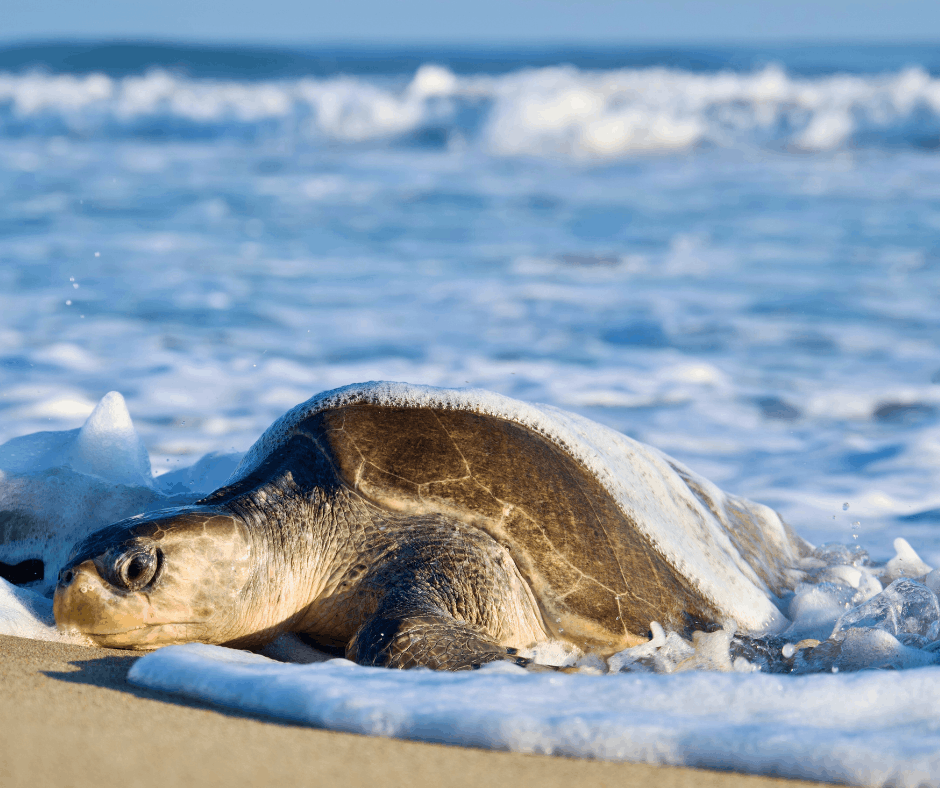
Under a silver moon on Costa Rica’s Osa Peninsula, baby Kemp’s ridley sea turtles no more than a few hours old scramble toward the Pacific, guided by instinct and the faint glimmer of the horizon. Just decades ago, such a sight would have been unimaginable—Kemp’s ridley, the world’s most endangered sea turtle, once teetered on the edge of extinction with fewer than 300 nesting females counted in 1970. Today, thanks to relentless conservation work by groups like the Amazon Conservation Team and local communities, their numbers are rising, a quiet triumph echoing across beaches from Mexico to Costa Rica.
All seven sea turtle species—from the deep-diving leatherback to the reef-loving hawksbill—have shaped ocean ecosystems for over 100 million years. They are the gardeners, engineers, and regulators of marine life: green turtles trim seagrass meadows that store carbon and shelter fish; hawksbills keep coral reefs vibrant by eating sponges; olive ridleys fuel coastal biodiversity through their mass nesting arribadas. Yet every species faces threats—plastic pollution, coastal development, bycatch, and warming sands that skew hatchling sex ratios. Climate change alone could eliminate nesting sites for flatback turtles, found only in Australian waters, within this century.
But there is hope. In Costa Rica, the Ancestral Tides program—led by Indigenous and local stewards—has not only protected nests but reconnected cultural traditions with conservation. Thousands of hatchlings are released annually, their tiny flippers imprinting on the sand that first cradled them. Meanwhile, global efforts to mandate turtle excluder devices in fishing nets have reduced accidental drownings, and bans on tortoiseshell trade have eased pressure on hawksbills. The leatherback, capable of diving deeper than 1,200 meters and migrating thousands of miles, remains a symbol of resilience—and a reminder of how much is at stake.
The comeback of the Kemp’s ridley is perhaps the most powerful proof that coordinated action works. From fewer than 300 nesting females in the 1970s to over 20,000 today, their recovery is a testament to decades of beach patrols, habitat protection, and international cooperation. This progress isn’t just about turtles—it’s about the health of coral reefs, the stability of fisheries, and the future of coastal communities that depend on thriving oceans.
As Sea Turtle Week reminds us, these ancient mariners share one ocean—and one shared future—with us all. Their survival is not a standalone mission, but a measure of our own.