When Gary's first scan came back clear but his PSA levels kept rising, his doctors in Ontario faced a familiar puzzle: how do you find cancer you can't see? A new study suggests the answer might be simpler than expected — just look again.
Researchers at the University of Toronto followed 210 men whose first PSMA PET scan showed nothing, even though their prostate-specific antigen (PSA) blood levels suggested the cancer had returned. A second scan, done later, found hidden disease in more than half of them. For nearly half of all patients, that second scan led doctors to change their treatment plan entirely.
The study, published in The Journal of Nuclear Medicine, draws from the Registry for Recurrent Prostate Cancer in Ontario. It focuses on men whose cancer has come back after initial treatment with surgery or radiation — a group that has long frustrated doctors.
"There is little information on the utility of repeating a PSMA PET after an initial negative scan," said Ur Metser, a radiology professor at the University of Toronto who led the research. "Understanding the extent of disease in patients who have initial negative PSMA PET scans provides valuable information for physicians as they create treatment plans."
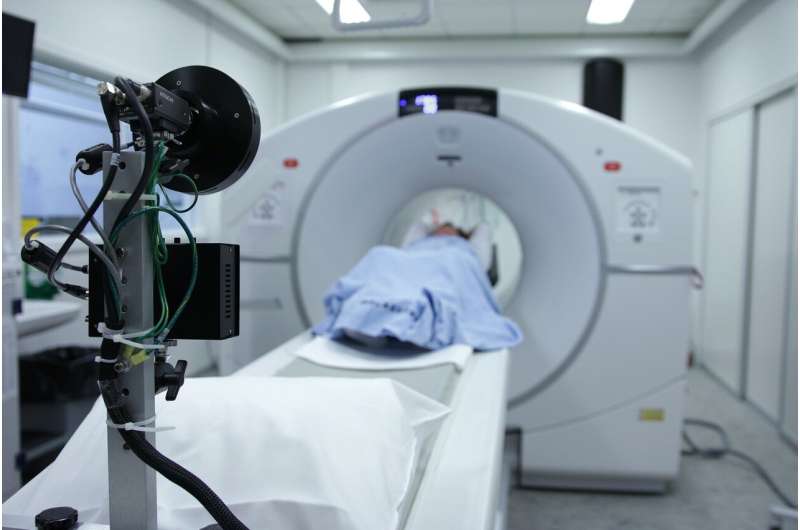
PSMA PET scans work by tagging a protein found on prostate cancer cells with a tiny radioactive marker. This makes tumors light up on the scan image. While the technology has improved detection overall, about 30% of patients still get a negative result on their first scan even when PSA levels point to recurrence. Doctors haven't known whether to try again or move on.
This research suggests they should try again. The second scan was most likely to find something in patients with higher PSA levels and a PSA doubling time of less than 12 months — meaning their cancer markers were rising quickly. These men benefited most. Patients with oligometastatic disease, meaning cancer spread to fewer than five spots, saw the biggest changes in their care.
Dr. Metser said the findings strengthen the role of PSMA PET imaging in managing men with recurrent prostate cancer. Instead of waiting for cancer to become obvious on scans, repeating the test gives doctors a clearer picture and more time to act.
For patients facing the uncertainty of a negative scan, the message is hopeful: a clear result doesn't always mean cancer-free. Sometimes it just means the scan needs a second chance.