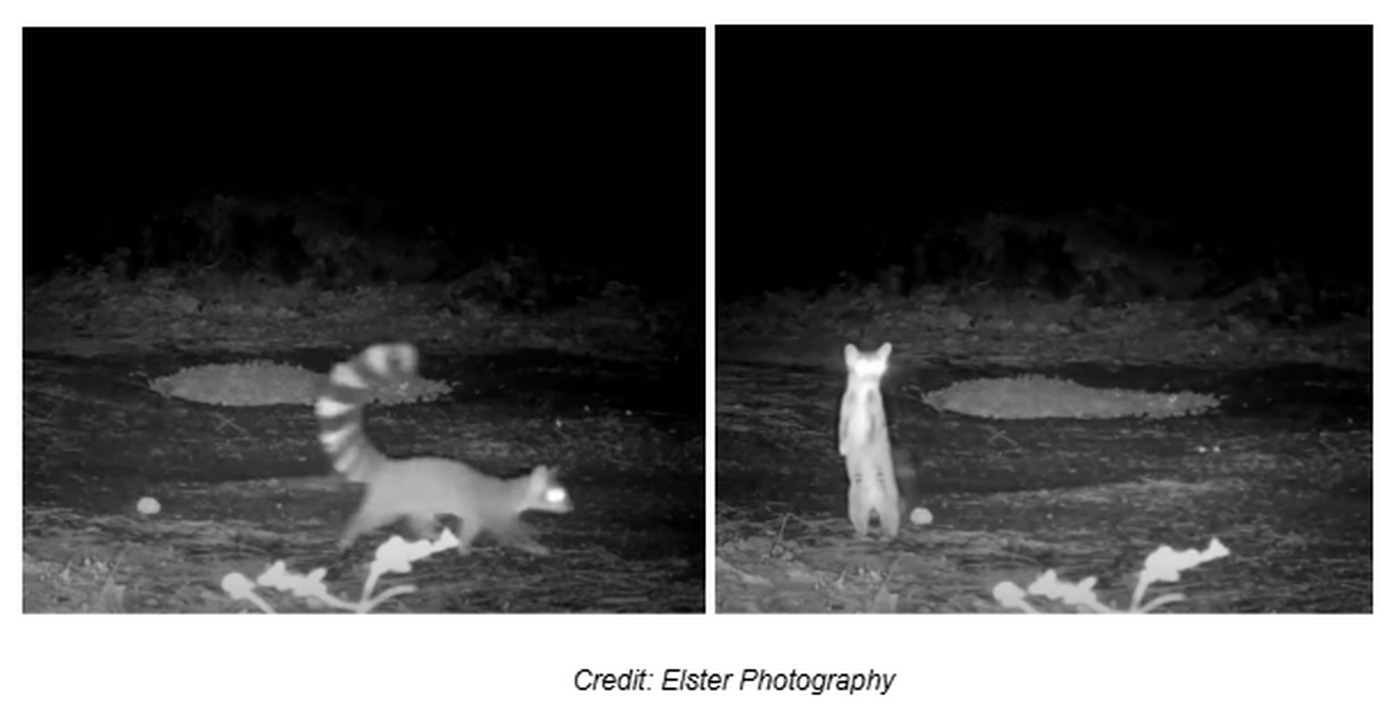
On a misty morning in the Siskiyou Mountains near Ashland, Oregon, a small, wide-eyed creature with a banded tail leaps into frame—pausing just long enough for the camera to catch its curious gaze—before vanishing into the underbrush. The 12-second clip, captured on a trail camera in the Epstein Family Forest, shows a ringtail, a reclusive mammal so rarely seen it’s earned the nickname “miner’s cat.” For Bill and Sarah Epstein, the sighting was a quiet affirmation of decades spent healing 405 acres of land once ravaged by logging and fire.
Their forest, now a sanctuary of oak woodlands, conifer stands, riparian corridors, and wetlands, was far from this thriving state when they acquired it. Decades ago, the land bore the scars of industrial logging and was further damaged by a historic 1973 wildfire. What began as a personal connection to family land evolved into a mission: to restore ecological integrity, enhance biodiversity, and model fire-resilient forest management. Their partnership with the Pacific Forest Trust has been instrumental, culminating in a working forest conservation easement that ensures the land will remain protected and ecologically managed in perpetuity.
The ringtail—neither a cat nor a pet, but a nocturnal, raccoon-family mammal prized in mining camps for its rodent-hunting skills—has become an unofficial emblem of their success. Though not endangered, it is seldom observed, making its presence a strong indicator of ecosystem health. Today, the Epstein Family Forest supports hundreds of species, from amphibians to birds to apex predators like mountain lions, their habitats seamlessly connecting across public and private boundaries.
The decision to formalize protection came during a deeply personal moment: after a family member’s stage-4 cancer diagnosis, Bill and Sarah accelerated their conservation plans, seeking peace in knowing their legacy would endure. The conservation easement legally binds future land use to sustainable forestry and biodiversity protection, ensuring the forest remains a living, breathing ecosystem for generations.
As climate pressures and habitat fragmentation grow, private land conservation like the Epsteins’ offers a powerful blueprint. Their forest doesn’t just survive—it invites life back in, one rare sighting at a time. And as the ringtail slips once more into the shadows, it carries with it a quiet promise: that care, commitment, and vision can indeed restore what was lost.