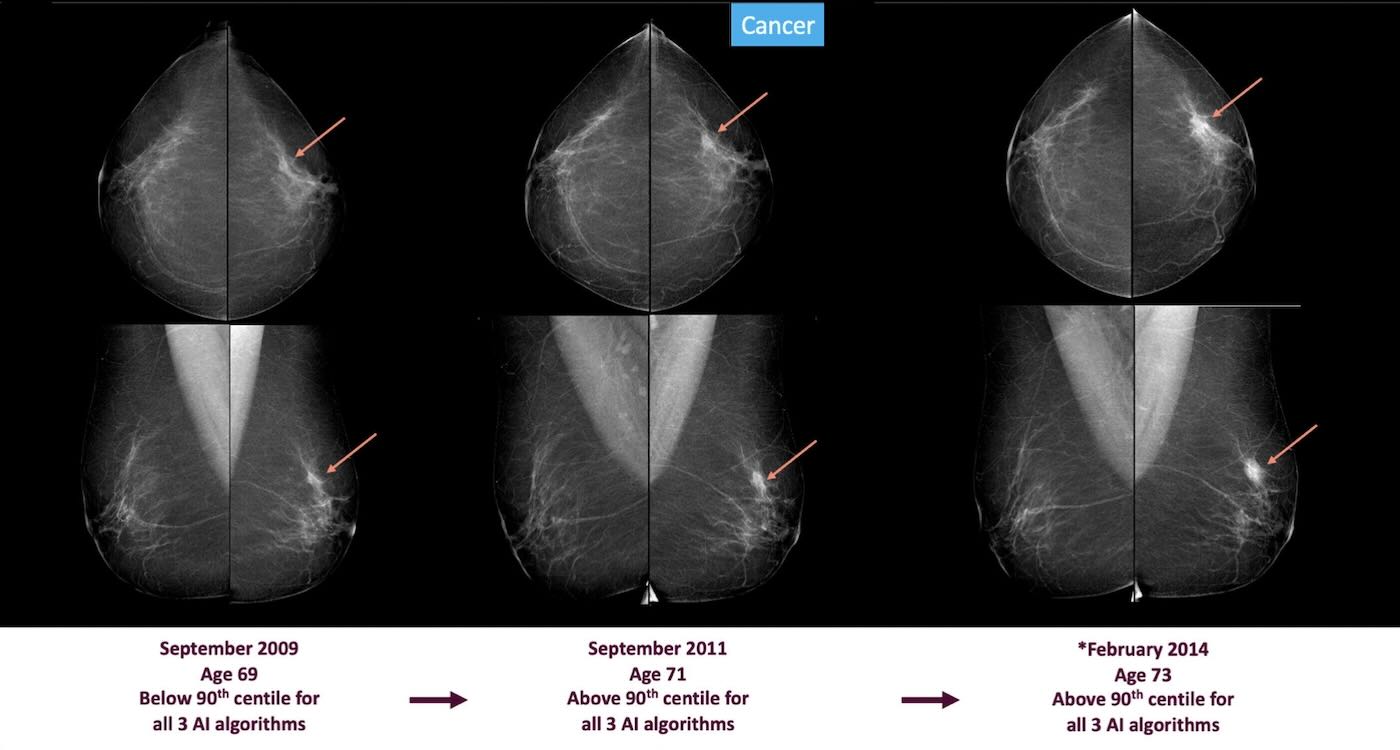
At Karolinska University Hospital in Stockholm, researchers have uncovered something that could reshape breast cancer screening: artificial intelligence systems can spot the disease's early warning signs up to six years before doctors clinically diagnose it.
The finding matters because breast cancer remains one of the world's most common cancers, and earlier detection has long been the holy grail of treatment. Catching cancer before symptoms appear dramatically improves survival rates and treatment options. This Swedish study suggests that the gap between when cancer is visually detectable and when radiologists find it could be narrowed significantly—not by asking doctors to see better, but by teaching machines to recognize patterns humans miss.
Swedish researchers, led by Professor Fredrik Strand, tested three commercially available AI-based computer-assisted detection systems on an enormous dataset: 88,963 mammograms from over 31,000 patients collected between 2008 and 2019. Participants, aged 40 to 74, underwent screening every two years over the decade-long period. The mammograms were analyzed by human radiologists, and the AI systems were then trained to look backward through screening histories of people who later developed cancer, searching for signs visible in earlier images.
The results, published in the journal Radiology, were striking. Among people eventually diagnosed with breast cancer, the AI systems assigned elevated cancer prediction scores in their earlier mammograms. For those who remained cancer-free, scores stayed low. The specificity—the ability to distinguish true cancer signals from false alarms—reached 90% in nearly 20% of participants six years before their diagnosis. Four years before diagnosis, the AI identified warning signs in up to 25% of individuals. Two years before diagnosis, that jumped to nearly 40%.
What makes this particularly significant is the scale and diversity of the study. Of the 31,000 participants, 12,072 (38.5%) were eventually diagnosed with cancer by radiologists. This wasn't a small, controlled trial but a real-world analysis of actual screening data, lending credibility to the findings.
"Approximately 20% of breast cancer cases demonstrate mammographic signs that are already visible to AI around six years before diagnosis," Strand explained. "Our study confirms the potential of AI to, in some cases, find signs of cancer in the mammograms much earlier than when radiologists detected it."
The implications stretch beyond improved early detection. If radiologists routinely analyzed AI cancer prediction scores over time—tracking how a patient's risk profile evolved across multiple screenings—they could potentially intervene years earlier than currently possible. Strand emphasized this in his closing comments: "Analyzing the AI scores of screened individuals over time could provide insight into how early detectable changes arise, potentially allowing for earlier intervention."
This builds on earlier promise. Previous research had shown AI's ability to predict five-year breast cancer risk and identify women at risk of "interval" cancers—tumors that appear between regular screenings. But looking back 6-10 years into screening history opened a new window into the disease's invisible phase.
The path forward isn't replacing radiologists but rather equipping them with smarter tools. If integrated thoughtfully into clinical practice, these AI systems could create an early alert system that gives patients and doctors years of additional time to act.