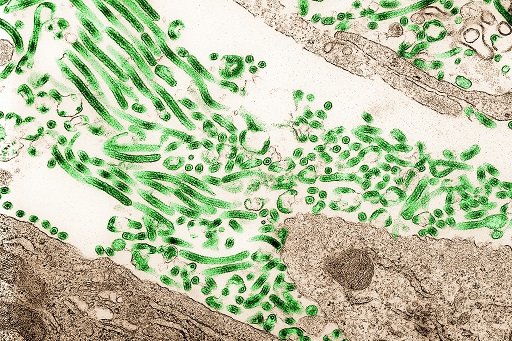
In the remote northeastern corner of the Democratic Republic of Congo, a deadly strain of Ebola called Bundibugyo has now killed 1,487 people since May. But scientists in Singapore are racing to change that.
Hilleman Laboratories, a research organization based in Singapore, announced plans to develop a new vaccine specifically targeting the Bundibugyo strain. World Health Organization experts have called the vaccine "the most promising" candidate to fight this particular outbreak. The shot uses a platform called rVSV, the same technology that powers the only officially approved Ebola vaccine, called Ervebo.
The new vaccine has one key advantage over existing options: it can stay stable in a normal refrigerator for months. Ervebo requires ultra-cold storage, making it difficult and expensive to transport to remote villages in Congo. A vaccine that works without special freezers could reach patients in places where infrastructure is limited.
Hilleman Laboratories is not working alone. The organization is a joint venture between MSD, the U.S. pharmaceutical giant known as Merck in North America, and the British charity Wellcome Trust. MSD developed Ervebo and will serve as a technical adviser on the project. The Coalition for Epidemic Preparedness Innovations, or CEPI, has also pledged funding. Together, they hope that if the vaccine passes trials, it can be produced quickly and affordably for the countries that need it most.
The outbreak in Congo is now the third-largest Ebola outbreak ever recorded. It has infected 3,360 people across the country, with cases heavily concentrated in Ituri province. Uganda, which borders the affected region, has reported 20 confirmed cases and two deaths. Ebola spreads through direct contact with infected bodily fluids, making it especially hard to contain in communities where people live in close quarters.
Scientists expect it could take seven to nine months before the new vaccine is ready for human clinical trials. In the meantime, Oxford University has already begun testing its own Bundibugyo vaccine, with the first dose given to a volunteer last month.
"We're racing to develop a Bundibugyo vaccine and make doses for clinical trials," said Raman Rao, CEO of Hilleman Laboratories. With teams on three continents working together, there is reason for cautious hope that this outbreak, too, may someday be contained.