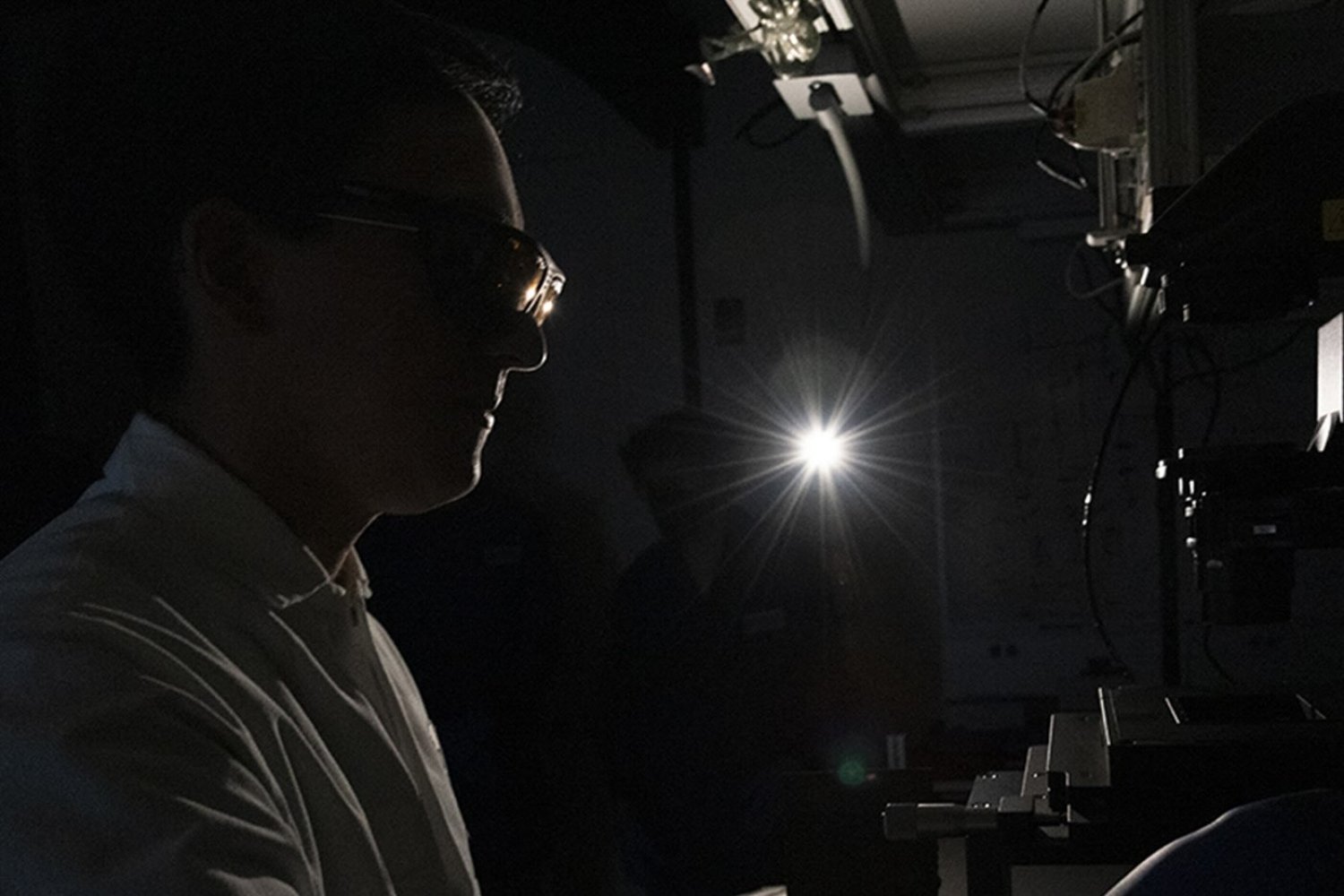
Under a microscope at the Broad Institute of MIT and Harvard, a dance of molecular pairing is unfolding for the first time in human cells—and it's revealing secrets about why cancer takes hold. Researchers led by Sam Peng, an assistant professor of chemistry at MIT, have developed a new way to watch individual cancer-related proteins move across cell membranes, connect to one another, and then let go, all in real time and over unprecedented stretches of time.
The breakthrough hinges on a deceptively simple problem: most existing tools for tracking single molecules burn out almost instantly. Scientists have long used fluorescent dyes to illuminate individual proteins, but these dyes photobleach—fading within a few seconds under the laser light used to excite them. That means researchers could capture only fleeting snapshots of molecular behavior, never the full story. "With our photostable probes, we can map out the entire lifespan of these molecules in their native environment and see things that have never been observable before," Peng explains.
Peng's lab solved this by developing upconverting nanoparticles, tiny probes embedded with rare-earth ions that emit stable signals for minutes, hours, and potentially years under laser excitation. By adjusting the types and doses of these ions, the team can engineer probes that glow in many different colors, allowing them to track multiple targets simultaneously in a single cell. This technology opens a window onto molecular conversations that have remained hidden.
For their first major study, published in Cell, the team focused on EGFR, a family of cell receptors known to drive several cancers. These receptors need to pair up—or "dimerize"—to trigger cell signals, but scientists didn't fully understand the mechanics: What triggers pairing? How long do receptors stay connected? How do they find new partners? Working with EGFR experts Matthew Meyerson and Heidi Greulich from the Broad's Cancer Program, Peng's team tagged EGFR and two related receptors, HER2 and HER3, with their new nanoparticles and watched them move in living human cells.
What they saw was startling. When activated by a stimulating molecule, EGFR receptors could remain paired for several minutes—far longer than anyone had observed before. But the real insight came from cancer-causing mutations: when EGFR carried these mutations, the dimers became even more stable, and some could form stable pairs without any external trigger at all. The more stabilizing the mutation, the more aggressive the cancer proved to be in patients. This discovery offers a direct window into how genetic changes allow cancer cells to grow uncontrollably, and potentially where therapeutic efforts might intervene.
When Peng's team tagged all three receptor types at once, they witnessed what he describes as a "vibrant scene"—receptors navigating the cell surface, partnering up, separating, and then finding new partners in an endless molecular shuffle. Beyond EGFR biology, the researchers believe this technique could transform how scientists study other proteins and understand drug mechanisms. They're already planning to make their probes smaller, brighter, and able to emit even more colors. "We think this technique could be transformative for studying molecular biology," Peng says, "because it enables dynamic biological processes to be observed with high spatiotemporal resolution over unprecedented timescales."