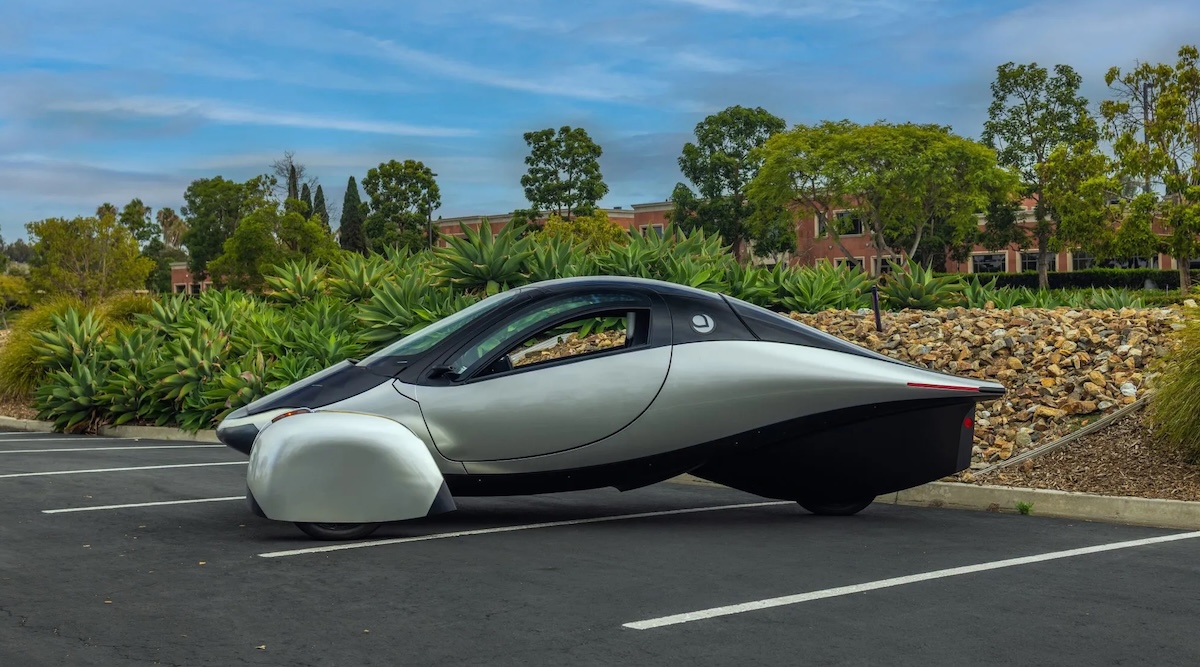
In a parking lot in San Diego, a three-wheeled electric vehicle named Atlas rotated once at noon and logged enough solar energy to travel 44 miles — on a day that began under considerable cloud cover. That single data point, captured by Aptera Motors Corp during real-world testing on June 25, represents more than a milestone for the 20-year-old startup. It suggests a future where the daily commute might require neither gasoline nor a charging cord. The vehicle's integrated solar cells, baked into every curved body panel, harvested a peak of 4.42 kilowatt-hours in a single day, exceeding the company's own projections and demonstrating that a ground-up redesign of how a car captures sunlight can yield meaningful, everyday range. The car was positioned facing east at dawn and rotated westward at midday to catch afternoon rays — a simple maneuver that unlocked an additional measure of energy as the sun tracked across the sky. On a consistently sunny day, even a stationary Atlas gathered 39 miles of added range from solar alone. The implications are significant: for a typical driver running errands, the vehicle could theoretically cover daily driving needs without ever plugging in. Aptera attributes the performance partly to a custom charge controller that optimizes energy collection across the car's entire body, rather than relying on a single flat panel. The system proved resilient even when clouds lingered. During a test day marked by morning overcast and intermittent cloud cover throughout, the car still registered 36 miles after repositioning several times for optimal sun exposure. Under a more aggressive repositioning schedule with multiple rotations, Atlas reached 4.6 kilowatt-hours — roughly 46 miles of range — despite morning clouds. The company plans to submit Atlas for third-party validation in July, a step that could quiet skeptics who have watched the startup navigate years of delays since its 2006 founding. For now, Aptera is sharing its test data publicly on its blog and YouTube channel, inviting anyone curious to dig into the numbers themselves. For drivers willing to adjust their parking habits — angling the car east-west rather than north-south to maximize the curvature of its solar skin — the returns could be even greater. Whether or not repositioning becomes commonplace, Atlas signals that solar-assisted electric vehicles are inching closer to不再是 merely a concept.
← News
Clean Energy Clean Energy Planet
Sleek, Futuristic “Atlas” Car Recharges Self With Built-In Solar Cells
4.42 kWh Daily solar generation
44 miles Range from solar alone
39 miles Fixed position (sunny day)
44 Miles range per day
4.42 KWh Daily solar generation
20 Years years in development