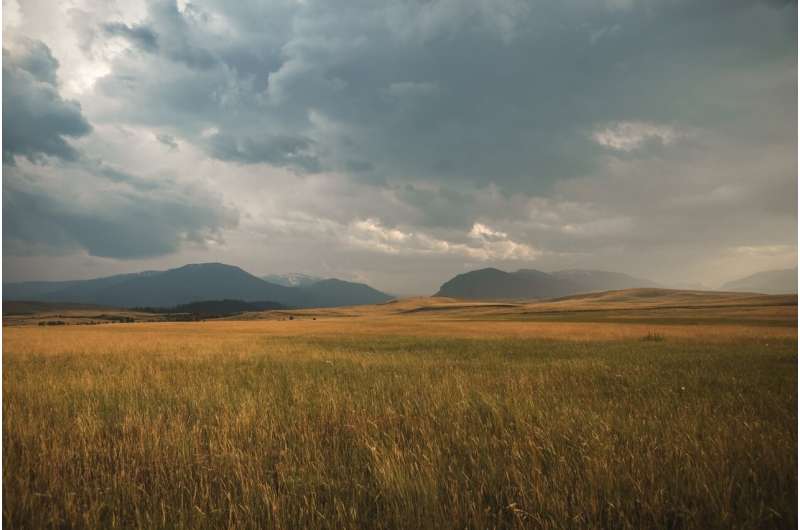
In a grassland outside Hohhot, Inner Mongolia, where the wind once whipped across endless stretches of feathergrass and sagebrush, the air has grown quieter—a nearly imperceptible hush that, it turns out, is helping the land breathe deeper. A global study led by Prof. Fu Congsheng and Prof. Yang Guishan of the Nanjing Institute of Geography and Limnology reveals that declining wind speeds across Earth’s grasslands are quietly boosting their ability to capture carbon while using less water. This subtle shift, known as “terrestrial stilling,” is proving to be a lifeline for ecosystems that cover 40% of the planet’s vegetated surface and are increasingly stressed by drought.
Grasslands are unsung heroes in the fight against climate change, quietly sequestering carbon and supporting biodiversity. But as temperatures rise and rainfall becomes erratic, their survival has come into question. The new research, published in Science Advances, offers a rare note of resilience. By analyzing data from over 1,000 observation sites, satellite imagery, and six Earth-system models, the team discovered that reduced wind speeds increase water-use efficiency (WUE)—the ratio of carbon absorbed to water lost—in more than 80% of global grasslands. This means plants are capturing more carbon dioxide while minimizing evaporation, a critical advantage in arid and semi-arid regions.
Wind speed, the study shows, is now the second most important driver of improved WUE, trailing only the rise in atmospheric CO₂. Slower winds reduce evaporation from soil and plant surfaces, allowing moisture to linger longer in the ground. This, in turn, enables stomata—the tiny pores on leaves—to stay open longer, absorbing more CO₂ without the penalty of excessive water loss. Remarkably, the effect strengthens as soil dries, meaning grasslands become more efficient precisely when they need it most: during drought.
The implications ripple far beyond ecology. With grasslands spanning continents from the steppes of Eurasia to the prairies of North America and the savannas of Africa, this newfound resilience could inform smarter conservation and land management policies. The study’s integration of field experiments, long-term observations, and future climate projections—extending to 2100—suggests this trend will persist, offering a buffer against the worst impacts of climate change.
While no single factor can offset the broader threats of global warming, the quieting of the winds reveals a hidden adaptive capacity in Earth’s grasslands. As the planet heats up, these ecosystems are not just enduring—they’re learning to thrive in new ways, one gentle breeze at a time.