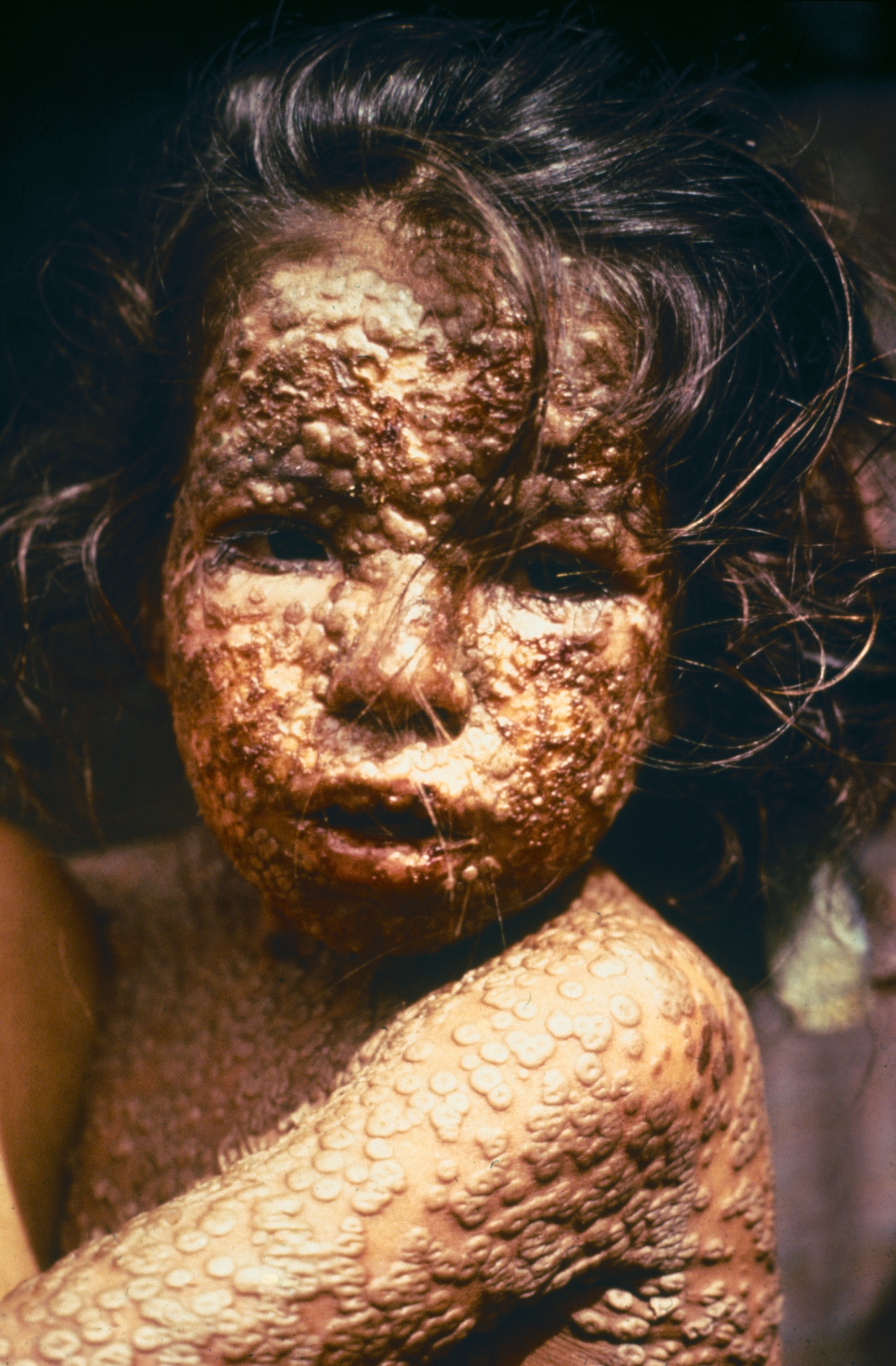
In October 1977, a Somali hospital cook named Ali Maow Maalin walked into a clinic complaining of fever and a peculiar rash—and became the last person on Earth to naturally contract smallpox. Three years later, the World Health Organization certified what seemed impossible for most of human history: a disease that had killed an estimated 300 million people in the twentieth century alone had been completely eradicated. Smallpox remains the only human disease ever to achieve this milestone.
For centuries, smallpox was an apocalyptic force. The disease struck suddenly, beginning with fever and vomiting, before transforming into the characteristic fluid-filled blisters with dimpled centers that gave the illness its name. About 30 percent of those infected died, with even higher mortality rates among infants. Those who survived often bore permanent scars or went blind. In eighteenth-century Europe alone, an estimated 400,000 people died from smallpox each year—a death toll so staggering that one-third of all blindness cases were caused by the virus. The disease spared no one, claiming European monarchs including Louis XV of France, Queen Mary II of England, and Tsar Peter II of Russia.
What makes the story of smallpox not one of tragedy but of triumph is the quiet revolution in prevention that began centuries before modern medicine. Chinese doctors discovered around the 1500s that deliberately exposing people to the disease in controlled ways—a practice called inoculation—could grant protection. By the early eighteenth century, this insight had reached Europe. Then in 1796, Edward Jenner transformed the field entirely, introducing the modern vaccine by using a related virus that conferred immunity without the danger. For the first time, humanity had a reliable shield against one of its deadliest enemies.
Yet eradication required more than medical innovation. It demanded global coordination and relentless determination. In 1967, when the WHO launched an intensified campaign to eliminate smallpox, the disease was still striking 15 million people annually. What followed was a heroic effort across continents—vaccination teams fanning out to remote villages, contact tracing that became the template for modern epidemiology, and an unwavering commitment to reach every vulnerable population. By 1977, as Ali Maow Maalin recovered from his infection, the machinery of eradication had succeeded. The last fatal case would occur just months later in a British laboratory, a tragic reminder of the virus's lethal potential.
Today, only two laboratories—one in the United States and one in Russia—retain samples of the variola virus, preserved for research but locked behind layers of biosecurity. The mere existence of these samples has sparked ongoing debate about whether they should be destroyed entirely, putting a question mark at the end of the smallpox story. Yet the fundamental truth remains undisputed: through vaccination, surveillance, and human dedication across borders, we eliminated a plague that had haunted civilization since at least 1500 BCE. In a world where infectious diseases continue to threaten us, smallpox stands as proof that eradication is possible—that disease need not be inevitable.