Owen R. Jones watched a herd of deer grazing in a field and noticed something crucial: there was always at least one animal with its head up, scanning for danger. That simple observation hints at why social animals outlive their solitary cousins—and new research published in Ecology and Evolution now quantifies it across an enormous scale.
Using data from 1,436 mammal species, researchers at the University of Southern Denmark and National University of Ireland, Galway have uncovered a striking pattern: animals that live in pairs or groups consistently live longer than solitary species, even after accounting for body size and evolutionary history. The finding matters because it reveals how behavior itself—not just anatomy or genetics—shapes how long species survive and age.
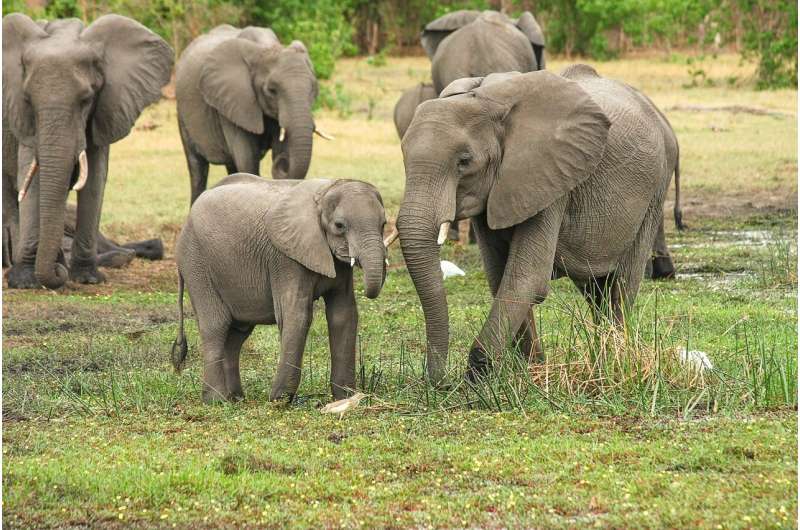
Jones, a population biologist and associate professor at the University of Southern Denmark, led the study by combining large databases of life-history traits with maximum lifespan records for each species, alongside body mass and social organization data. The researchers sorted mammals into three categories: solitary species, pair-living species (where a male and female share a territory over multiple breeding seasons), and group-living species (ranging from zebra herds and elephant families to complex primate societies).
Both pair-living and group-living mammals substantially outlive solitary ones, but here's where the research gets surprising: there is little difference between species organized around a single breeding pair and those living in larger groups with multiple breeding adults. The benefits of sociality seem to level off once you move beyond a pair. "Being social seems to pull species upward from the average lifespan expected for their body size," Jones explains, layering sociality on top of well-established patterns like body size, where bigger animals naturally live longer.
The mechanism is clearer when you understand the trade-offs. The primary advantage is protection against predators through shared vigilance and dilution—when a predator approaches a group, the probability that any single animal gets caught decreases simply because there are more targets. Multiple eyes scanning for danger means collective safety. But group-living carries a significant cost: larger groups face higher risks of infectious disease transmission between individuals. This epidemiological burden appears to offset the longevity advantages of multi-adult social structures, which may explain why doubling from two adults to ten doesn't double the lifespan benefit.
The study examined other factors—whether animals are active during day or night, for instance—but found only weak effects on lifespan compared with the dominant influences of body size and social organization. The longevity data came from maximum recorded ages for each species, drawn from both wild observations and animals under human care, giving the analysis unprecedented breadth.
The work hints at something profound: aging is not simply a medical or biological phenomenon but a reflection of how animals live together. Jones notes that in humans, social connections are strongly linked to health and longevity. Understanding how social organization shapes lifespan in other mammals offers a new lens on human aging itself.
Next, Jones plans to study a wild population of sheep on the Scottish island of St. Kilda, where researchers have monitored a flock for nearly 40 years—surveying it about 30 times annually. By tracking whether individual sheep consistently stay close to particular companions, he hopes to identify even simple signs of social connection and how those relationships affect survival. The broader message is clear: sociality is not a luxury but a fundamental life-history trait, reshaping how species age and how long they live.