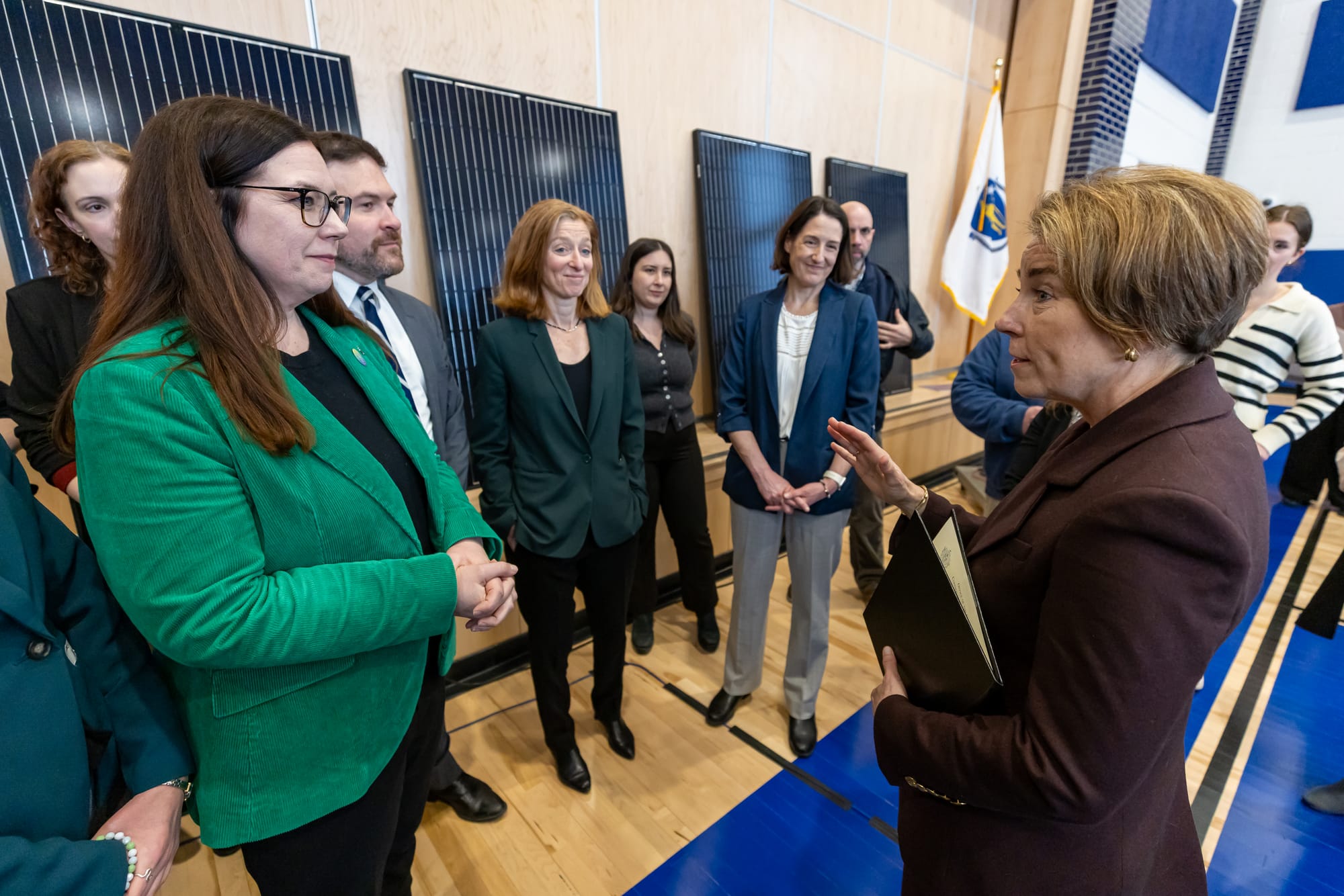
Fourth grader Maya Patel held a palm-sized solar panel aloft on a bright June morning, watching the tiny propeller attached to it spin faster as sunlight hit the surface. Around her, classmates at Lynch Elementary School in Winchester, Massachusetts, laughed and adjusted their angles, blocking the light with hands, then letting it flood back—each test a mini-experiment in energy transfer. But the real classroom was all around them: the school itself, a $94 million, 104,000-square-foot beacon of sustainable design and the town’s first net-zero-energy school. On June 8, sustainability director Ken Pruitt turned the building into a living science lesson, guiding students from ceiling cassettes to rooftop solar arrays, proving that the most powerful teaching tools aren’t always found in a textbook.
Lynch Elementary, which opened just months earlier on August 25, 2025, replaced a 1961-era building with a modern, all-electric facility powered entirely by renewable energy. With 1,200 solar panels on its roof and an array of air-source heat pumps, the school produces as much energy as it consumes over the course of a year—making it a rare example of a net-zero public elementary school in the U.S. Pruitt, who led the tour with the help of elementary science coordinator Lia Stelljes, framed every detail as a question: Why are there more air outlets in the cafeteria? Why do the window shades close automatically? Each answer tied back to energy efficiency, thermal dynamics, and the science standards students were already learning in class.
Inside classrooms, students saw ceiling cassettes that quietly circulate warm or cool air, part of a system designed to minimize energy use. Outside, Pruitt stood beneath the solar canopy, reminding students that shade isn’t just comfort—it’s captured energy. “The panels are catching what would’ve been heat on the ground and turning it into electricity,” he said. That electricity powers everything from lights to laptops, and on sunny days, excess energy flows back to the grid. Even the building’s LED lighting and automated shading systems were part of the lesson, demonstrating how small choices add up to big savings.
The tour wasn’t just about technology—it was about vision. Pruitt challenged students to think beyond Lynch: most buildings in Winchester still rely on fossil fuels, but the town aims to shift toward all-electric infrastructure powered by renewables. When he asked how solar-powered schools function at night, students quickly answered: “Batteries!” And when he asked what pulls carbon dioxide from the air, one voice rang out: “Trees!”—prompting Pruitt’s warm reply: “Trees are magic machines that take carbon dioxide out of the atmosphere.”
With the Massachusetts School Building Authority contributing $25.2 million toward construction, Lynch stands as both an educational and civic investment. It’s a place where science isn’t just taught—it’s lived. As students returned to class, many still clutching their small solar motors, they carried with them not just data points, but a sense of ownership. This school runs on sunlight. And for the children of Winchester, the future feels bright, too.