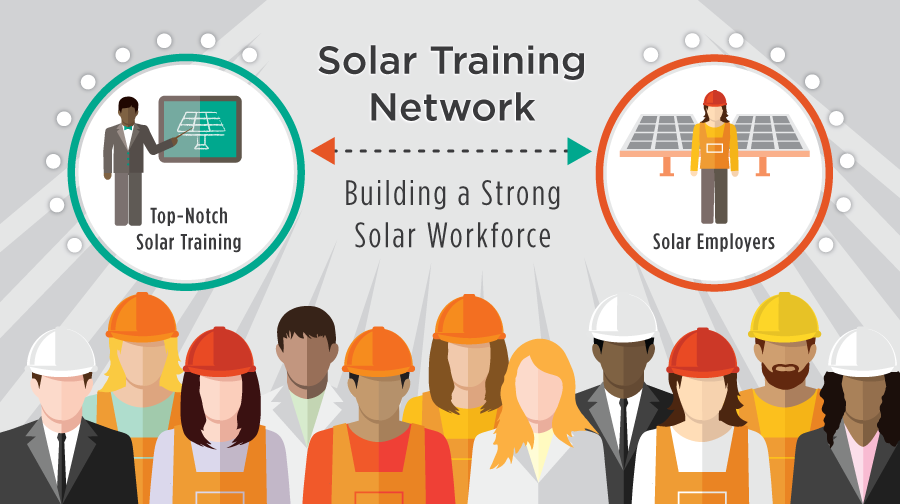
When electrician trainee Jasmine Carter enrolled in a solar installation course at Hudson Valley Community College, she wasn’t just learning how to wire panels—she was stepping into a national network that has already trained over 30,000 people for careers in solar energy. Launched in 2016 under the U.S. Department of Energy’s STEP program and administered by The Solar Foundation, the Solar Training Network is bridging the gap between job seekers and the booming solar industry, which added a record 125,000 jobs between 2010 and 2020. With solar energy expanding in communities from rural Georgia to urban Pennsylvania, the need for skilled, locally trained workers has never been greater. The Network doesn’t just connect people to courses—it connects them to employers, workforce boards, and a future in clean energy.
The program builds on the legacy of the Solar Instructor Training Network (SITN), which began in 2009 as a collaboration between the Department of Energy, Labor, and Education. That initiative transformed solar education in America, growing the number of qualified solar instructors at community colleges from just 56 in 2006 to more than 1,000 today. With a $17.5 million investment—including $10 million from the American Recovery and Reinvestment Act—the SITN partnered with over 400 institutions, from technical high schools to labor training centers, laying the groundwork for a national pipeline of solar talent. These partnerships developed standardized curricula, shared labor market insights, and even created mobile labs to bring hands-on training to remote areas.
Now, the Solar Training Network takes that foundation and supercharges it. It supports regional hubs like the Florida Solar Energy Center, the Midwest Renewable Energy Association, and the Northern Mid-Atlantic Solar Education and Resource Center at Pennsylvania State University—all still active and evolving. These centers don’t just teach theory; they offer train-the-trainer workshops, distance learning, and real-world tools, ensuring instructors are equipped to prepare students for actual solar jobs. A key innovation is the Solar Jobs Strategy Commission, a diverse group of industry leaders, workforce experts, and equity advocates guiding the Network to ensure training meets market needs and opens doors for underrepresented communities.
Unlike specialized programs such as Solar Ready Vets®, which serves transitioning military personnel, the Solar Training Network is open to all—veterans, spouses, career-changers, and newcomers alike. Its inclusive reach is vital: as the U.S. aims to achieve 100% carbon-free electricity by 2035, the demand for solar workers will only accelerate. By aligning training with employer needs and expanding access across regions, the Network isn’t just building skills—it’s building a resilient, equitable clean energy workforce.
From a single classroom in upstate New York to a veteran in North Carolina installing rooftop systems, the Solar Training Network is proving that when people get the right training, the energy transition becomes personal, local, and unstoppable.