Anthony Joshua stood at a podium in London, sunglasses perched on his head, and spoke about standing "as a soldier" for the parents of Sina Ghami and Latif Ayodele—two close friends who died in a car crash in Nigeria last December. The 36-year-old British heavyweight, a two-time world champion and 2012 Olympic gold medallist, was a passenger in that fatal vehicle. He sustained minor injuries, but the loss reframed everything about his return to professional boxing.
What makes Joshua's decision to fight again so striking is his clarity about priorities. Rather than treating his comeback as a personal redemption story, he has made it an act of purpose aimed at supporting the grieving families. In his first bout since the tragedy, he will face Kristian Prenga, a 35-year-old Albanian fighter with a record of 20 wins—all by stoppage—and one defeat, on 25 July in Riyadh. But the real significance of this moment extends far beyond the ring.
"Life is humbling at times. You never know one's fate," Joshua told the 5 Live Boxing podcast, his voice measured and thoughtful. "As a soldier, I stand strong for their parents first and foremost. This isn't about me. I feel it's important to put their parents first at the minute." He acknowledged that grief doesn't disappear; it transforms. "You never overcome it but you gain perspective in life," he said. "I'll have my time to grieve. But right now, my heart and mind tell me their parents are my main priority."
The crash happened just days after promoter Eddie Hearn had outlined ambitious plans for Joshua's year—a March fight against Rico Verhoeven, then an August showdown with Tyson Fury. For over a decade, Joshua and Fury have been the defining figures of British heavyweight boxing globally, yet have never fought each other. An agreement was already in place, with both fighters expecting career-high purses when they finally meet, likely in October or November. "And then obviously the world came crashing down," Hearn reflected.
Yet Joshua's resilience appears genuine, not performed. At the London news conference, he spoke with quiet conviction about his renewed focus. "I've still got that fire and I belong here," he said, appearing relaxed despite everything. "I don't do this as a joke. I do this because it's what I'm good at. I'm going to prove it this year and keep proving it moving forward." He detailed improvements he's made working alongside Oleksandr Usyk, a former rival now his gym-mate, saying he has sharpened his "boxing fitness, IQ and defence." His eyes, he said, are "fully locked in" again.
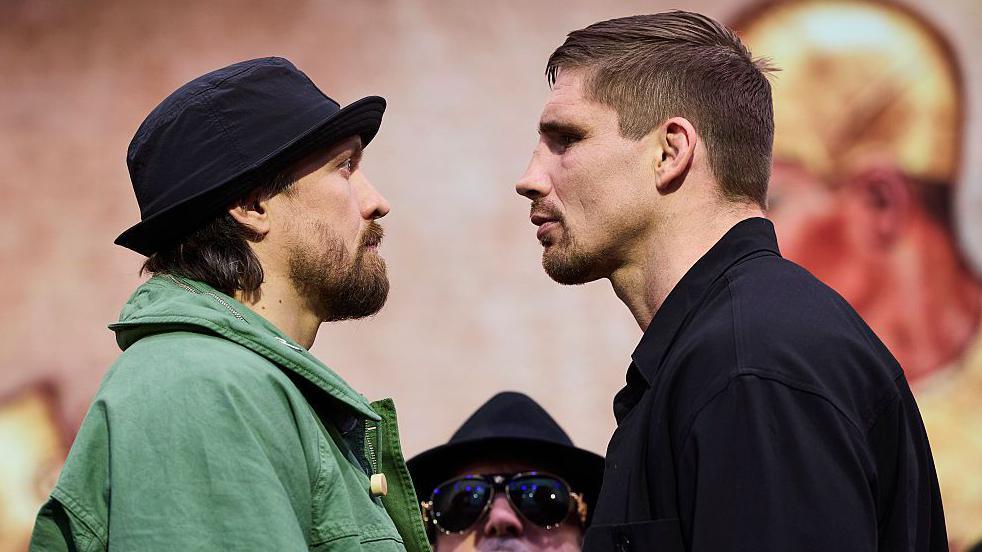
Prenga, who now lives in New Jersey and whose previous three fights all ended in first-round stoppages, arrives as a heavy underdog against a man of Joshua's stature. Yet heavyweight boxing, as Joshua knows well, produces surprises. Their face-off lasted over a minute, tense and quiet, before ending with a handshake. Prenga insisted he would show Joshua no respect; Joshua replied that he welcomed exactly that attitude. Victory here clears the path to what many in boxing have waited years to witness: Joshua versus Fury, finally, at last.