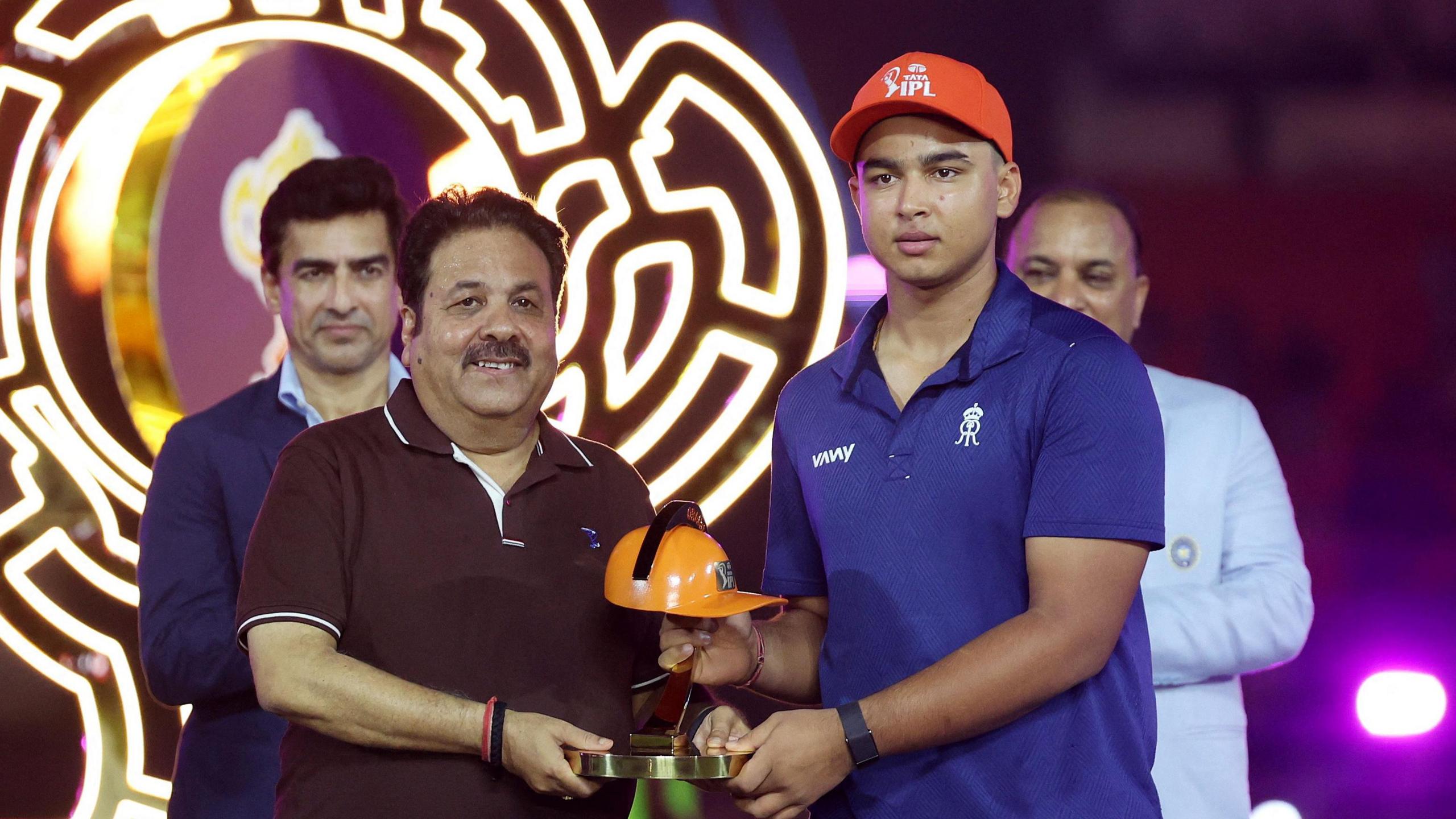
Vaibhav Sooryavanshi, just 15 years old, has become the unlikely owner of a Tata Sierra SUV—a prize he earned for a cricket season so dazzling that it redefined what teenage excellence looks like in the Indian Premier League, yet one he cannot legally drive for another three years.
The left-hander's 2026 campaign was extraordinary by any measure. Playing across 16 innings, Sooryavanshi amassed 776 runs at a striking strike rate of 237.30, a figure that speaks to both his technical skill and his fearless approach at the crease. His performances were so dominant that he became the highest run-scorer of the tournament, earning him the Orange Cap—one of cricket's most prestigious individual honors. Despite his team, Rajasthan Royals, falling short of the final, the accolades kept coming: Sooryavanshi was named Most Valuable Player for the entire 2026 campaign, a recognition that underscored his status as the tournament's standout performer. He also claimed the emerging player award, a trifecta of honors that marked him as not just a rising star, but a game-changer in one of global cricket's most competitive leagues.
The car—a mid-size SUV that has become a popular choice across Indian roads—sits as a gleaming reminder of his achievement. Yet it also embodies a peculiar irony: at 15, Sooryavanshi has already proven himself among the elite cricketers in the world's most glamorous T20 league, yet Indian law requires him to wait until he turns 18 before he can sit behind the wheel. It is a constraint that somehow makes his success feel even more striking—here is a teenager whose maturity and skill on the field have earned him world-class recognition, caught between the adult world of professional cricket and the legal realities of growing up.
Beyond the vehicle, his prize money totalled more than £30,000, a financial windfall that underscores both the rewards of elite cricket and the commercial value placed on his performances. For a 15-year-old, the figure is transformative—yet it pales beside what his meteoric rise suggests about his future trajectory.
Sooryavanshi's journey speaks to a broader trend in cricket: the sport's increasing tendency to identify and cultivate exceptional teenage talent. The IPL, in particular, has become a stage where young players can compete against the world's best and prove themselves at a level that would have been unimaginable for previous generations. What makes Sooryavanshi's story resonant is not just the prizes or the numbers, impressive as they are, but the suggestion of a career in its infancy that has already achieved what many players spend decades chasing.
For now, the Tata Sierra remains a beautiful paradox parked in his life—a trophy of triumph waiting for its driver to come of age. When Sooryavanshi turns 18 and finally takes that car onto Indian roads, he will do so as someone who has already left an indelible mark on global cricket. The question is not whether he can drive it, but rather where his remarkable career will take him next.