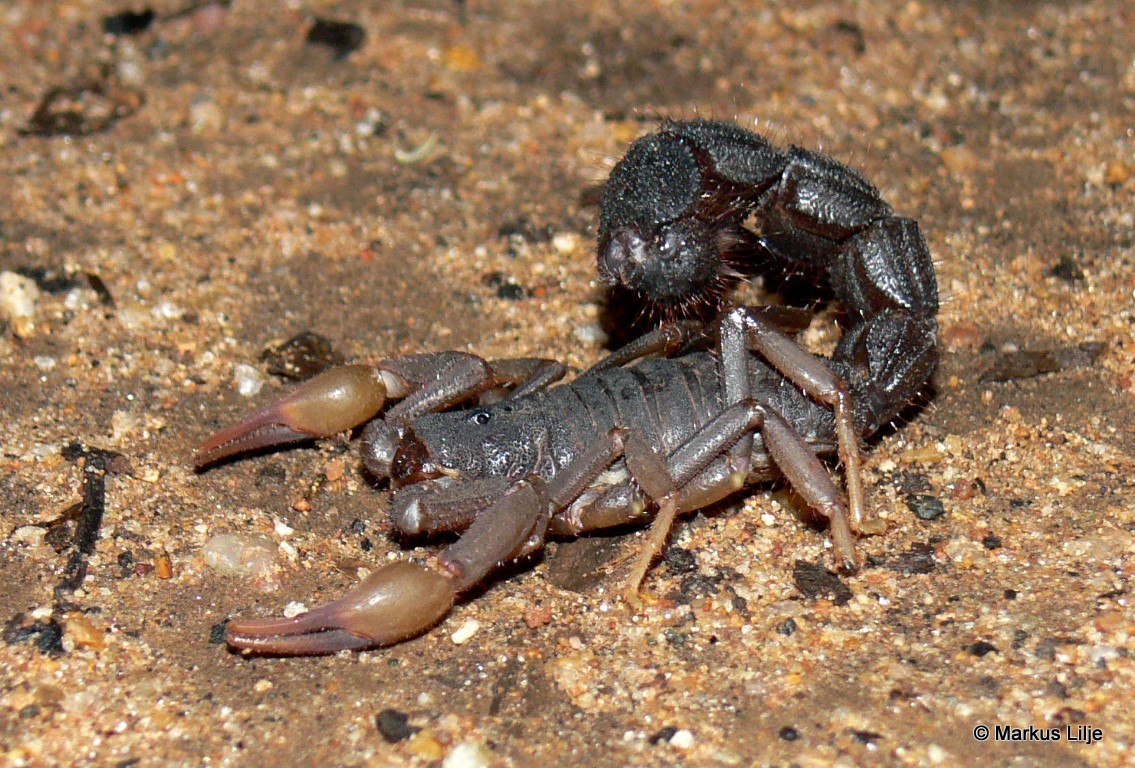
When officers at Cape Town International Airport patted down the luggage of a 28-year-old man on June 12, 2026, they didn’t expect to find 150 live venomous scorpions nestled between his clothes—each one sealed in a clear plastic pouch like illicit candy. The startling discovery, made during an intelligence-led operation by the Kuilsriver Stock Theft and Endangered Species Unit in collaboration with CapeNature, halted what could have been one of the largest illegal arachnid smuggling attempts in recent South African history. The suspect, arrested under the Nature and Environmental Ordinance Act, now faces wildlife trafficking charges as investigators work to uncover the intended destination and purpose of the haul.
Scorpions, often overlooked in global conservation efforts, are quietly becoming high-value targets in the underground wildlife trade. While the commercial worth of the seized batch remains undetermined, scorpion venom from certain species can fetch up to $10 million per liter—fueling demand in biomedical research and the cosmetics industry, where it’s used in anti-aging products akin to Botox. Some collectors also seek live specimens, particularly rare and venomous ones, driving a global exotic pet market that has seen over 863 million arachnids legally imported into the U.S. alone between 2000 and 2022.
The rescued scorpions—likely native to southern Africa, a region home to about 150 species—are now under the care of the Cape of Good Hope SPCA. Staff there are working to stabilize the animals and, whenever possible, return them to their original habitats. This case has reignited urgent calls from conservationists for stronger protections. Only five scorpion species are currently regulated under CITES, the international treaty governing wildlife trade, and a mere 1% of all scorpion species have been assessed by the IUCN Red List. As habitat loss from agriculture, mining, and urban expansion accelerates, experts warn that unregulated trade could push vulnerable species toward extinction.
"Invertebrates are singularly under-protected in trade. A very small number of arachnids and butterflies are protected under CITES," said Dr. Alice Hughes of the University of Melbourne, whose research has exposed the scale of unmonitored arachnid commerce. The implications go beyond biodiversity: losing scorpions could disrupt ecosystems, where they serve as both predators and soil aerators, and cut off potential medical breakthroughs hidden in their venom. With only a fraction of species studied, each smuggled scorpion represents not just a crime, but a stolen piece of natural possibility.
As the investigation continues, the 150 survivors in Cape Town’s care offer a rare second chance—not just for individual animals, but for how the world sees the quiet, stinging architects of the underground.