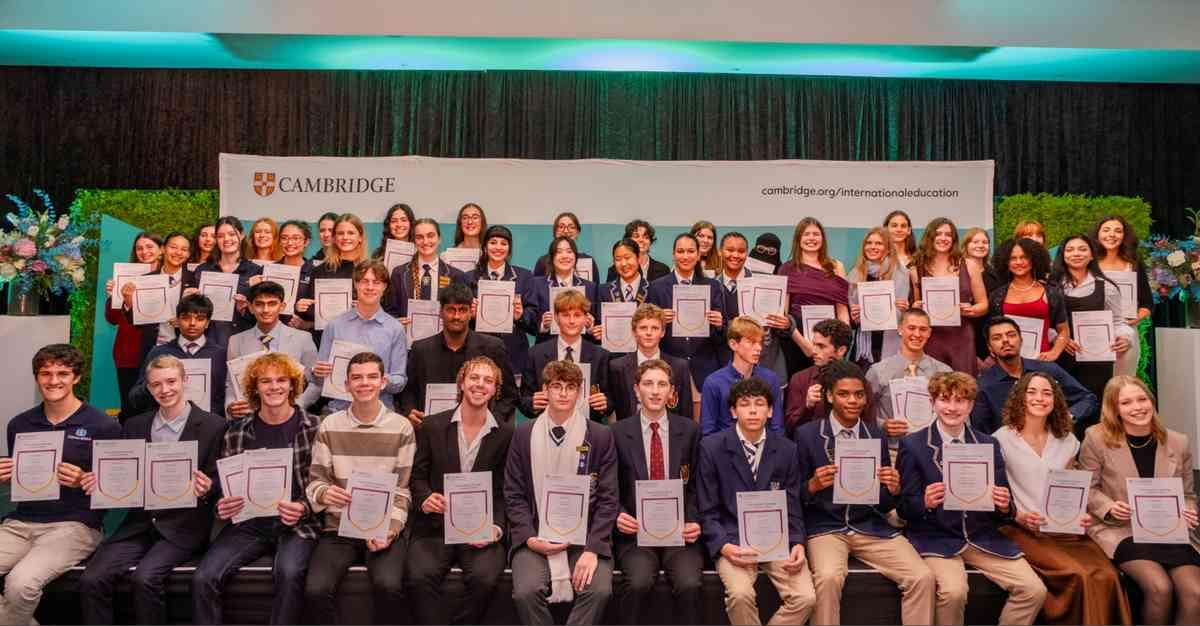
On a Thursday afternoon in Cape Town, 128 South African students walked into a ceremony to hear their names called not just as high achievers, but as some of the world's best. The Outstanding Cambridge Learner Awards ceremony, held on 28 May, recognised exceptional performance across Cambridge IGCSE and International AS & A Level examinations, with 146 awards distributed to learners from 44 schools—a figure that had grown by 12 awards compared to the previous year.
These awards matter because they signal something larger than individual success. Cambridge qualifications are recognised globally, and when South African students rank "Top in the World" or "Top in Country," they're being measured against peers across more than 40 nations. For schools and teachers in a competitive education landscape, these external benchmarks provide validation that their approach to teaching is meeting world-class standards.
The awards themselves are stratified to recognise different forms of excellence. Seventeen students received the most prestigious "Top in the World" designation, achieving the highest standard mark globally in a single subject. Seventy learners were named "Top in South Africa," while 53 more earned recognition in the "High Achievement" category for excelling in less commonly studied subjects. Six students received "Best Across" awards for attaining the highest cumulative marks across multiple subjects.
The human stories behind these numbers reveal what academic excellence feels like from inside. Kai Mallela from Reddam House Durbanville, who placed top in South Africa for IGCSE Physics, spoke of validation—the sense that countless hours of study had translated into something real. Lila Viljoen from Newberry House Montessori School, recognised for AS Level Art and Design, described joy mixed with discovery, noting how the subject had taught her that discipline extends far beyond any single classroom. Emily de Reuck from El Shaddai Christian School, who ranked top in the world for Cambridge International AS Level Language and Literature in English, emphasised how the subject had trained her to think critically and see how language shapes meaning and emotion.
These aren't throwaway comments. They reflect students who haven't just memorised content but have integrated what they've learned into how they think about the world. Juan Visser, Regional Director for Sub-Saharan Africa at Cambridge's International Education division, framed this precisely: "These awards not only honour the dedication, resilience and talent of learners, but also applaud the commitment of the teachers and schools who support them."
What makes this moment significant is the trajectory it suggests. Many Cambridge students go on to tertiary studies at both local and international institutions, turning these awards into bridges to higher education and beyond. The 146 awards presented in 2025–26 represent not just past achievement but future potential—young people equipped with critical thinking skills, discipline, and the confidence that comes from being measured against global standards and succeeding.
For South African education, the message is clear: excellence at this scale is being achieved locally, even as it commands global recognition. That's the kind of story worth celebrating.