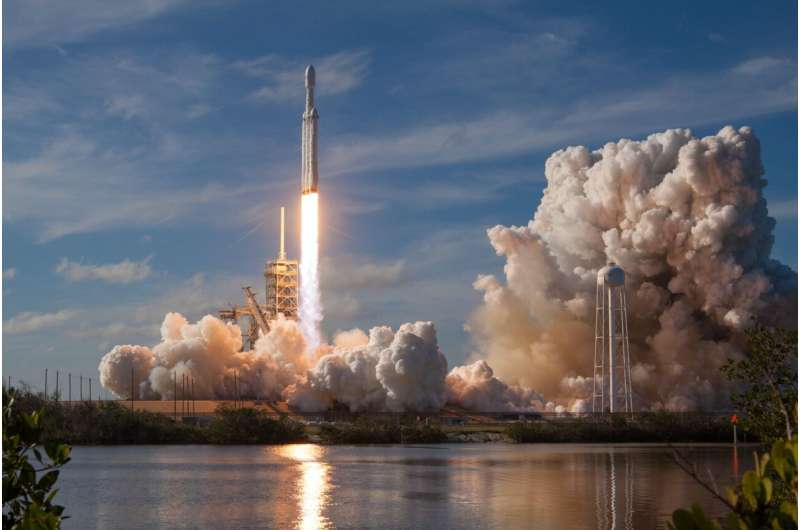
With less than an hour to go before one of Wall Street's most anticipated moments, a Falcon 9 rocket roared off the Florida coast on Friday, carrying 29 Starlink satellites toward orbit. The launch from Cape Canaveral was a fitting punctuation mark: as SpaceX prepared to ring the opening bell on the largest IPO in history, the company's workhorse rocket was already doing what it does best—delivering infrastructure for the connected world.
This milestone matters because it shows a company operating at the intersection of two massive frontiers: space technology and global connectivity. SpaceX has built something genuinely new over the past two decades—not just rockets that work, but rockets that can be reused, launched repeatedly, and trusted with critical infrastructure. The Falcon 9's track record speaks louder than any IPO prospectus ever could.
The 29 satellites that lifted off Friday are bound for the Starlink network, which has grown to encompass more than 10,000 satellites already in orbit. That constellation represents an audacious bet on internet access from space—a network that could serve remote areas, disaster zones, and underserved communities around the globe. Each launch adds another layer to this infrastructure, and Friday's mission was just the latest chapter in an ongoing expansion.
But the real story is in the numbers. The Falcon 9 has now completed more than 600 flights, a figure that underscores its dominance in the commercial and military satellite launch industry. That's not just success—it's reliability at scale. In an industry where a single launch failure can make headlines for months, the Falcon 9's 600-plus flights represent hundreds of millions of dollars in payloads successfully delivered, dozens of customers served, and a fundamental shift in how space access works. A decade ago, launching a rocket was an extraordinary event. Today, it's routine.
The IPO itself carries numbers that match the scale of ambition. SpaceX is preparing to raise $75 billion on a total company valuation of $1.77 trillion—making it not just one of the largest IPOs ever, but potentially one of the largest public offerings in Wall Street history. The company is putting more than 555 million shares up for sale at $135 each, according to SEC filings. Those figures reflect investor confidence in a company that has repeatedly done what skeptics said was impossible: land rockets vertically, reuse them dozens of times, and build a satellite internet network from scratch.
From the launch pad at Cape Canaveral, a SpaceX official captured the moment's spirit in words spoken during the live broadcast: "Go SpaceX, go Starlink to all SpaceXers, new and old. Let's see what's out there. Occupy Mars!" That closing phrase—a reference to founder Elon Musk's long-stated goal of making humanity multiplanetary—hints at how far the company's ambitions reach. But for now, Friday's launch was about something more immediate: connecting the planet and proving, once again, that the Falcon 9 is ready for whatever comes next.
The rocket that lifted off before the IPO bell is the same one that has made SpaceX indispensable to global space operations. And as the company transitions from private to public, that track record—600 successful flights and counting—is the credential that matters most.