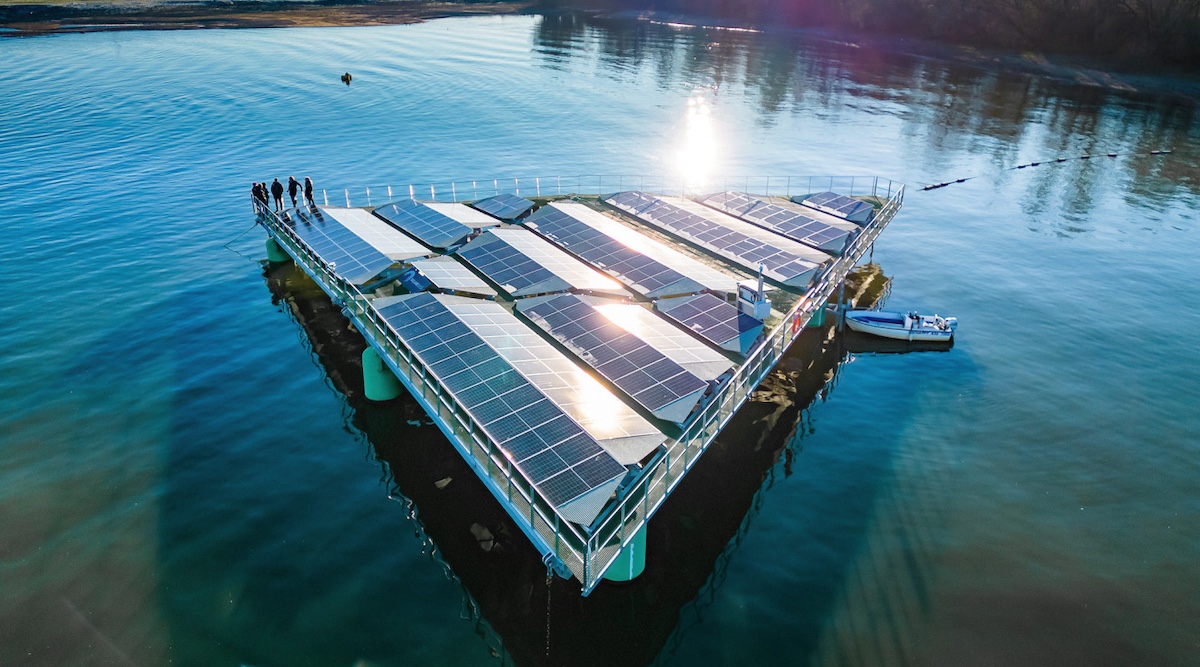
Off the sun-drenched coast of Spain, where the Atlantic meets the Cantabrian Sea, a quiet energy revolution is beginning to take shape — not on land, but on the water. Researchers from the University of A Coruña have revealed that Spain could install between 4.45 and 6.48 gigawatts of floating offshore solar capacity, a breakthrough that could supply up to 9% of the nation’s electricity demand. This isn’t speculative fantasy; it’s grounded in Spain’s Maritime Spatial Planning Plans (POEM), established under Royal Decree 150/2023, which maps out sustainable uses of its maritime zones — and now, for the first time, includes space for solar farms at sea.
While offshore wind has long dominated marine renewable discussions, floating solar PV is emerging as a powerful complement, not a competitor. The study, published in the Journal of Cleaner Production, highlights a key advantage: the cooling effect of seawater boosts solar panel efficiency by 10.2%, significantly increasing energy output compared to land-based systems. This natural enhancement means each kilowatt of installed capacity works harder, delivering more electricity when it’s needed most. With payback periods estimated between three and seven years, the economics are becoming hard to ignore.
What makes this finding especially compelling is how it fits into Spain’s broader clean energy transition. The country, already a leader in solar and wind deployment, now has a roadmap to expand its renewable footprint without competing for inland space. Coastal regions like Galicia, with abundant sunshine and maritime access, could become hubs for hybrid offshore systems — where solar floats alongside wind turbines, sharing infrastructure like transmission cables and maintenance vessels. This synergy could lower costs across the board, accelerating the path to a decarbonized grid.
The implications extend beyond Spain. As one of Europe’s sunniest countries, its success could serve as a model for Mediterranean and Atlantic nations alike. Floating solar doesn’t just add megawatts — it reimagines how we use the sea, turning vast, underutilized surfaces into clean energy generators. And unlike some emerging technologies, this one is already proving itself: companies like SolarDuck are deploying pilot projects worldwide, demonstrating resilience and performance in real ocean conditions.
With solar capacity on the water poised to deliver millions of homes with clean power, Spain is charting a course where land and sea work together. The ocean, once seen only as a barrier or a resource for fishing and transport, is becoming a partner in the energy transition — quietly, steadily, and with surprising power.