When Glauco Machado wanted to understand how fatherhood evolved in spider-like creatures, he didn't spend years traveling to museums around the world. Instead, the University of São Paulo scientist turned to ordinary people watching nature in their own backyards — and made a discovery that took science by surprise.
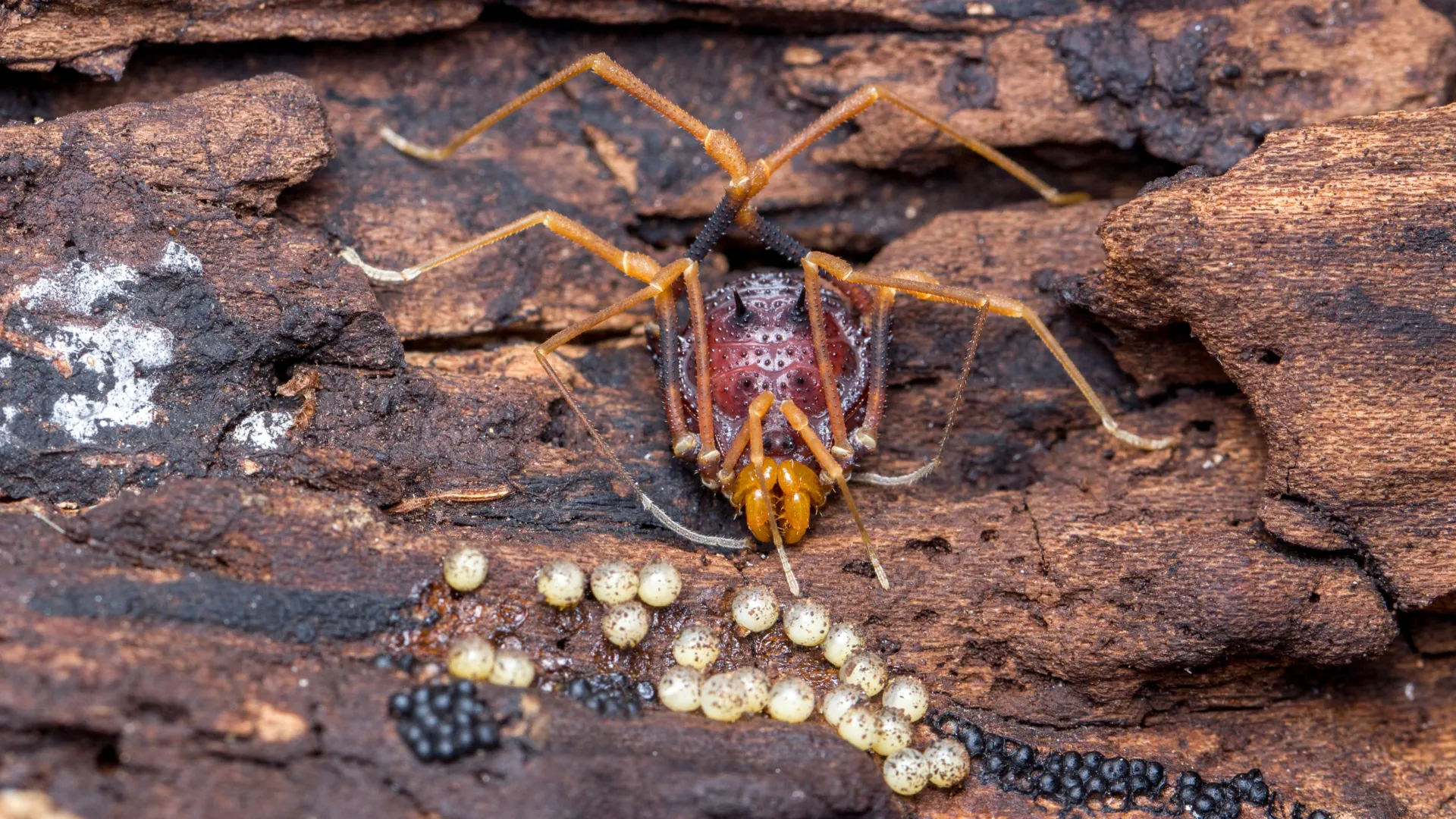
Harvestmen are arachnids that look like spiders but with one big difference: their bodies appear to be a single fused piece instead of two separate parts. More than 6,900 species have been identified, and Machado became curious about which ones showed parental care — behavior where adults protect their eggs or young from predators and weather.
The problem was that only 80 species had ever been documented showing this behavior. That seemed surprisingly low for such a large and diverse group. So Machado's team turned to iNaturalist, a free online platform where anyone can upload photos and observations of plants and animals from anywhere on Earth. Regular people — hikers, gardeners, curious kids — had been quietly building a massive database of nature sightings for years.
The search took just two days.
By combining those citizen science observations with 30 years of published research, Machado's team identified parental care in 162 harvestman species — more than doubling the previous total. Sixty-two of those new records came from iNaturalist alone. The findings were published in the Zoological Journal of the Linnean Society.
But the real surprise came when researchers traced how this parenting behavior evolved over millions of years. They discovered that maternal and paternal care followed completely different evolutionary paths. Maternal care evolved only once, directly from species showing no parental care. Paternal care, however, emerged multiple times through two different routes: either directly from non-caring ancestors, or surprisingly, from species where mothers were already guarding eggs.
"It's very rare in nature, paternal care, and this behavior evolved many times independently," Machado said. He believes that when fathers started caring for eggs alongside mothers, it may reflect sexual selection — females may have begun preferring males who were already good at parenting.
Harvestmen punch far above their weight in this regard. Though they represent only about 0.6% of all arthropod diversity on Earth, they account for more than half of all known examples where paternal care evolved separately in different species. For scientists studying how parenting evolved, harvestmen are something like a natural laboratory.
The study also highlights how citizen science is changing research itself. Machado said he never could have gathered this data by visiting museums worldwide — it would have been too expensive and too time-consuming. By using iNaturalist, he completed the work in about a week.
Yet Machado is quick to point out that everyday observers and expert scientists both remain essential. Someone still needs to correctly identify species, determine whether a guarding adult is male or female, and confirm that the behavior is truly parental care rather than something that merely looks similar. "We cannot preserve a species that doesn't have a name," he said. "Names are provided by taxonomists. It's very important."
The study opens new questions about why some species developed fatherly investment while others did not — and harvestmen, with their surprising diversity of parenting strategies, may hold more answers yet to be discovered.